
Before Memmo my notes were scattered across PDFs. Now a workspace pulls everything into one place — I see exactly what's still left to study.
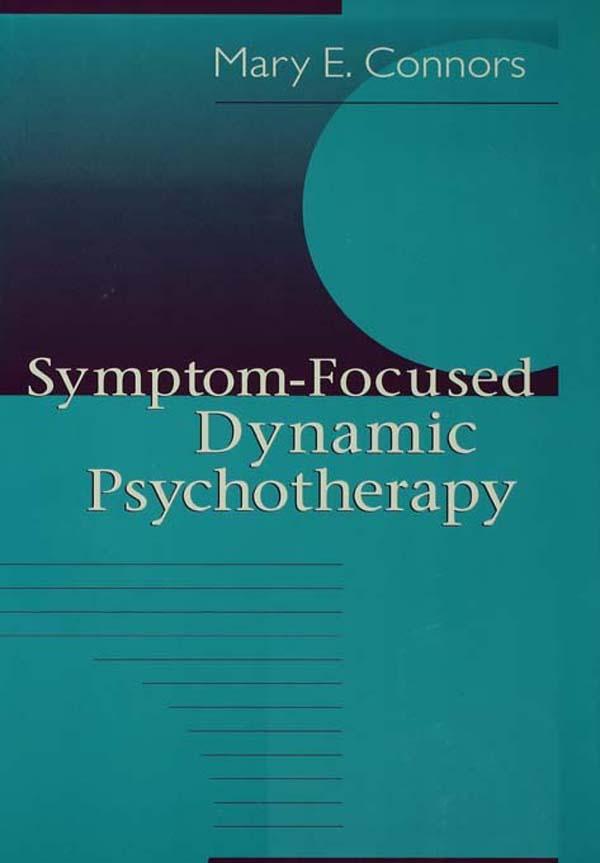
Traditionally, psychoanalytically oriented clinicians have eschewed a direct focus on symptoms, viewing it as superficial turning away from underlying psychopathology. But this assumption is an artifact of a dated classical approach; it should be reexamined in the light of contemporary relational thinking. So argues Mary Connors in Symptom-Focused Dynamic Psychotherapy, an integrative project that describes cognitive-behavioral techniques that have been demonstrated to be empirically effective and may be productively assimilated into dynamic psychotherapy.
What is the warrant for symptom-focused interventions in psychodynamic treatment? Connors argues that the deleterious impact of symptoms on the patient's physical and emotional well being often impedes psychodynamic engagement. Symptoms associated with addictive disorders, eating disorders, OCD, and posttraumatic stress receive special attention. With patients suffering from these and other symptoms, Connors finds, specific cognitive-behavior techniques may relieve symptomatic distress and facilitate a psychodynamic treatment process, with its attentiveness to the therapeutic relationship and the analysis of transference-countertransference.
Connors' model of integrative psychotherapy, which makes cognitive-behavioral techniques responsive to a comprehensive understanding of symptom etiology, offers a balanced perspective that attends to the relational embeddedness of symptoms without skirting the therapeutic obligation to alleviate symptomatic distress. In fact, Connors shows, active techniques of symptom management are frequently facilitative of treatment goals formulated in terms of relational psychoanalysis, self psychology, intersubjectivity theory, and attachment research. A discerning effort to enrich psychodynamic treatment without subverting its conceptual ground, Symptom-Focused Dynamic Psychotherapy is a bracing antidote to the timeworn mindset that makes a virtue of symptomatic suffering.
Before Memmo my notes were scattered across PDFs. Now a workspace pulls everything into one place — I see exactly what's still left to study.
Memmo's summaries are gold before exams. I don't have to re-read 800 pages two weeks before — just the important parts.
The AI chat has saved me the night before an exam more than once. I just keep asking until I get it — no waiting on a study group to reply.
The quizzes hit exactly what I need to know. Memmo tracks what I get stuck on — so I only practice what's worth it.
Flashcards with spaced repetition are magic. Memmo knows when I'm about to forget something and brings it back.
The AI podcasts are my favorite. I listen on my way to school and get a recap without sitting at a computer.

Handbok i kvalitativa metoder
281 kr

Hållbar utveckling: en introduktion för ingenjörer och andra problemlösare
334 kr

Brymans Samhällsvetenskapliga metoder
390 kr

Projektledning
491 kr

Den orättvisa hälsan: om socioekonomiska skillnader i hälsa och livslängd
326 kr

Organizational Leadership
429 kr

Vetenskapsteori för nybörjare
196 kr

På väg mot läraryrket
172 kr

Det sociala livet i skolan: Socialpsykologiska perspektiv
253 kr

Betygsättningens didaktik
151 kr

Personality
402 kr

Studying Leadership
404 kr

Managing Innovation
477 kr

Introduktion till samhällsvetenskaplig metod
347 kr

The Psychology of Sex and Gender
698 kr

Evidens och kunskap för socialt arbete
207 kr

Introduction to Leadership
605 kr