
Before Memmo my notes were scattered across PDFs. Now a workspace pulls everything into one place — I see exactly what's still left to study.
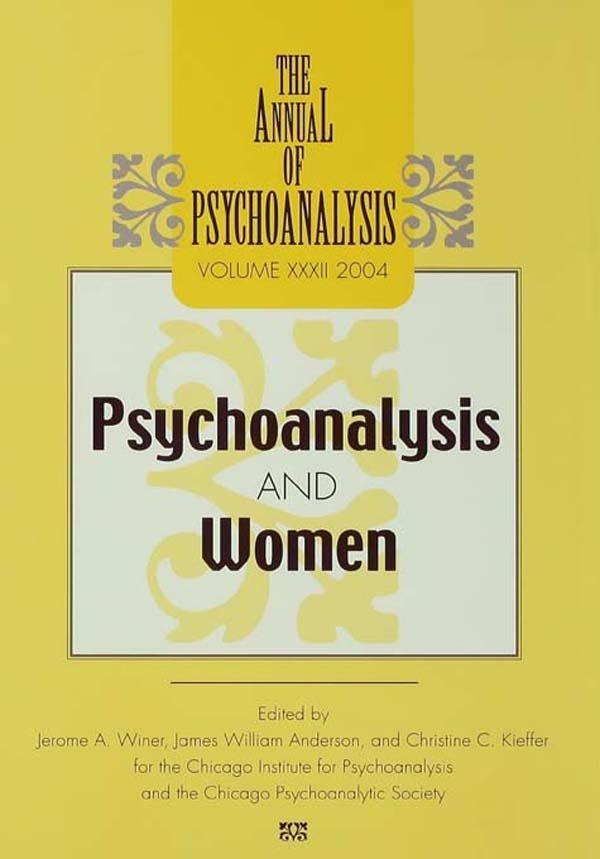
Psychoanalysis and Women, Volume 32 of The Annual of Psychoanalysis, is a stunning reprise on theoretical, developmental, and clinical issues that have engaged analysts from Freud on. It begins with clinical contributions by Joyce McDougall and Lynne Layton, two theorists at the forefront of clinical work with women; Jessica Benjamin, Julia Kristeva, and Ethel Spector Person, from their respective vantage points, all engage the issue of passivity, which Freud tended to equate with femininity. Employing a self-psychological framework, Christine Kieffer returns to the Oedipus complex and sheds new light on the typically Pyrrhic oedipal victory of little girls.
Section III broadens the historical context of contemporary theorizing about women by offering the personal reminiscences of Nancy Chodorow, Carol Gilligan, Brenda Solomon, and Malkah Notman. A final section, dedicated to "women who shared psychoanalysis," features historical essays on Ida Bauer (Freud's "Dora"), Anna Freud, Dorothy Burlingham, Edith Jacobson, and Therese Benedek, along with Linda Hopkins's revealing interview of Marion Milner. Of special note is Marian Tolpin's examination of three women - Bauer, Helene Deutch, and Anna Freud - who helped shape Freud's notion of the "femail castration complex," and Elisabeth Young-Bruehl's exploration of how two women - Anna Freud and Dorothy Burlingham - developed parent-infant observation.
Psychoanalysis and Women is an extraordinary chronicle of the distance traveled since Freud characterized women's sexual life as "the dark continent." The contributors vitalize a half century of theory with the lessons of biography, and they broaden clinical sensibilities by drawing on recent developmental, gender-related, and socio-psychological research. In doing so, they attest to the ongoing reconfiguration of Freud's dark continent and show the psychoanalytic psychology of women to be very much a revolution in progress.
Before Memmo my notes were scattered across PDFs. Now a workspace pulls everything into one place — I see exactly what's still left to study.
Memmo's summaries are gold before exams. I don't have to re-read 800 pages two weeks before — just the important parts.
The AI chat has saved me the night before an exam more than once. I just keep asking until I get it — no waiting on a study group to reply.
The quizzes hit exactly what I need to know. Memmo tracks what I get stuck on — so I only practice what's worth it.
Flashcards with spaced repetition are magic. Memmo knows when I'm about to forget something and brings it back.
The AI podcasts are my favorite. I listen on my way to school and get a recap without sitting at a computer.

Handbok i kvalitativa metoder
281 kr

Hållbar utveckling: en introduktion för ingenjörer och andra problemlösare
334 kr

Brymans Samhällsvetenskapliga metoder
390 kr

Projektledning
491 kr

Den orättvisa hälsan: om socioekonomiska skillnader i hälsa och livslängd
326 kr

Vetenskapsteori för nybörjare
196 kr

Organizational Leadership
429 kr

På väg mot läraryrket
172 kr

Det sociala livet i skolan: Socialpsykologiska perspektiv
253 kr

Betygsättningens didaktik
151 kr

Personality
402 kr

Studying Leadership
404 kr

Managing Innovation
477 kr

Introduktion till samhällsvetenskaplig metod
347 kr

The Psychology of Sex and Gender
698 kr

Evidens och kunskap för socialt arbete
207 kr

Introduction to Leadership
605 kr