
Before Memmo my notes were scattered across PDFs. Now a workspace pulls everything into one place — I see exactly what's still left to study.
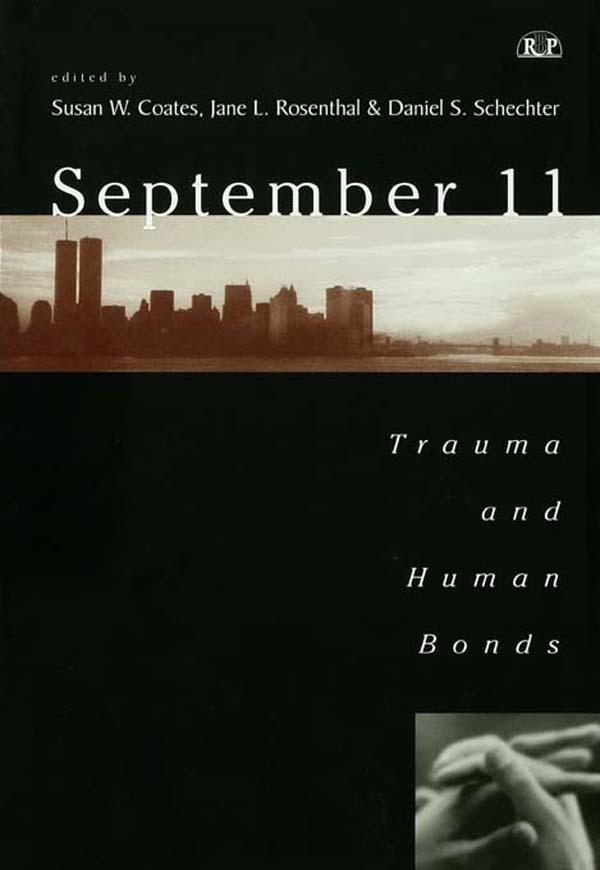
Drawing on research from a variety of domains - clinical studies of trauma, developmental psychopathology, interpersonal psychobiology, epidemiology, and social policy - September 11: Trauma and Human Bonds addresses especially the fundamental relationship of human bonds to trauma and underscores the manner in which developments in all these fields are coming together in complementary ways that sustain a key finding: that trauma must be understood in its relational and attachment contexts. The quality of early emotional attachments, differences in attachment styles to family milieus, and the psychological qualities that enable traumatized parents to avoid traumatizing their children are among the topics through which these contexts are explored. From their various disciplinary vantage points, the contributions converge to show how human relationships can either provide an anodyne to trauma or serve as the vehicle of its transmission.
As Susan Coates observes, a major legacy of 9/11 is the realization that "there are no simple truths in the world of trauma studies, no easy-to-remember anodynes or pharmacologic magic bullets or depth-psychological schematizations that will hold true for a majority or even a sizable minority of cases." Yet, in delineating the multiple connections between human relations and trauma, and in elaborating these connections from multiple disciplinary perspectives, the contributors to September 11 have taken a decisive first step to consolidate new knowledge about trauma and to demonstrate how it can assist clinicians who encounter diverse responses to trauma in their day-to-day work. A sobering reminder of shared human vulnerability in the face of devastating events, September 11 is also a heartening reminder of resiliency in the face of overwhelming loss and of the healing potential of human connection.
Before Memmo my notes were scattered across PDFs. Now a workspace pulls everything into one place — I see exactly what's still left to study.
Memmo's summaries are gold before exams. I don't have to re-read 800 pages two weeks before — just the important parts.
The AI chat has saved me the night before an exam more than once. I just keep asking until I get it — no waiting on a study group to reply.
The quizzes hit exactly what I need to know. Memmo tracks what I get stuck on — so I only practice what's worth it.
Flashcards with spaced repetition are magic. Memmo knows when I'm about to forget something and brings it back.
The AI podcasts are my favorite. I listen on my way to school and get a recap without sitting at a computer.

Handbok i kvalitativa metoder
281 kr

Hållbar utveckling: en introduktion för ingenjörer och andra problemlösare
334 kr

Brymans Samhällsvetenskapliga metoder
390 kr

Projektledning
491 kr

Den orättvisa hälsan: om socioekonomiska skillnader i hälsa och livslängd
326 kr

Organizational Leadership
429 kr

Vetenskapsteori för nybörjare
196 kr

På väg mot läraryrket
172 kr

Det sociala livet i skolan: Socialpsykologiska perspektiv
253 kr

Betygsättningens didaktik
151 kr

Personality
402 kr

Studying Leadership
404 kr

Managing Innovation
477 kr

Introduktion till samhällsvetenskaplig metod
347 kr

The Psychology of Sex and Gender
698 kr

Evidens och kunskap för socialt arbete
207 kr

Introduction to Leadership
605 kr