
Before Memmo my notes were scattered across PDFs. Now a workspace pulls everything into one place — I see exactly what's still left to study.
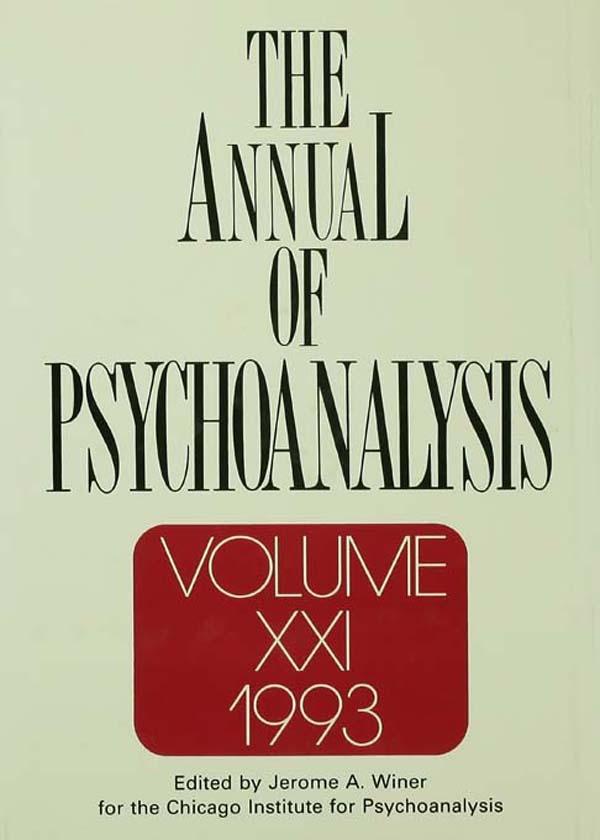
Volume 21 of The Annual of Psychoanalysis is especially welcome for bringing to English-language readers timely contributions from abroad in an opening section on "Psychoanalysis in Europe." The section begins with a translation of Helmut Thomae's substantial critique of the current state of psychoanalytic education; Thomae's proposal for comprehensive reform revolves around a redefinition of the status of the training analysis in analytic training. Diane L'Heureux-Le Beuf's clinical diary of an analysis focusing on the narcissistic elements of oedipal conflict probes the degree to which the analytic method can be applied to "nonstructured" analysands. And Nella Guidi shows the clinical value of supplementing Freud's notion of unobjectionable positive transference with the complementary notion of unobjectionable negative transference.
Section II, on "Psychoanalysis and Hysteria," offers original contributions to Freud scholarship in the form of Jules Glenn's reconsideration of Dora's "Dynamics, Diagnosis, and Treatment"; William McGrath's analysis of the way Freud's hostility to religious superstition gained expression in his early work on hysteria; and Marian Tolpin's self-psychological reprise on the case of Anne O. The section concludes with Elisabeth Young-Bruehl and Sarah Cummin's provocative "What Happened to 'Anorexie Hysterique'?" which questions the contemporary separation of anorexia from hysteria and explore the sociohistorical reasons the separation came about.
Section III, "Clinical and Theoretical Studies," begins with Nancy Kobrin's discussion of Freud's ideas about autonomy, including the terms Freud used and the way Strachey translated them into English. Her goal is to deepen our understanding of how Freud spoke and thought about an individual's sense of self. Frank Summers shows how object relations principles, which are shared by various object relations theories, can inform the conduct of analysis at all levels of pathology, including neurosis. And Henry Smith examines the meaning and value of the "analytic surface," a metaphor that highlights the relationship between the analyst's attention and the patient's attention.
A final section on "Applied Psychoanalysis" offers contemporary examples of applied analytic inquiry in anthropology, art, and literature. Roy Grinker, III and Roy Grinker, Jr., in a methodological contribution to psychoanalytic anthropology, examine what is revealed when a native people (here the Lese of northeastern Zaire in Africa) are asked to retell a story (here the story of Cain and Abel) introduced by them by their Western observers. Danielle Knafo explores the art and life of the Mexican surrealist Frida Kahlo through the concepts of the mirror, the mask, and the masquerade. And David Werman closes the volume with a comparative study of Edgar Allan Poe's and James Ensor's obsession with revenge, and the role it played in Poe's writing and Ensor's etchings, respectively.
Bringing readers the influential reform proposals of Thomae, a rich sampling of recent Freud scholarship, applied contributions traversing three disciplines, and original clinical contributions reflecting American and European sensibilities, Volume 21 of The Annual is true to the spirit of this distinguished series. It testifies to the scope of analytic inquiry, and it exemplifies the yield of such inquiry in the hands of gifted scholars and clinicians.
Before Memmo my notes were scattered across PDFs. Now a workspace pulls everything into one place — I see exactly what's still left to study.
Memmo's summaries are gold before exams. I don't have to re-read 800 pages two weeks before — just the important parts.
The AI chat has saved me the night before an exam more than once. I just keep asking until I get it — no waiting on a study group to reply.
The quizzes hit exactly what I need to know. Memmo tracks what I get stuck on — so I only practice what's worth it.
Flashcards with spaced repetition are magic. Memmo knows when I'm about to forget something and brings it back.
The AI podcasts are my favorite. I listen on my way to school and get a recap without sitting at a computer.

Handbok i kvalitativa metoder
281 kr

Hållbar utveckling: en introduktion för ingenjörer och andra problemlösare
334 kr

Brymans Samhällsvetenskapliga metoder
390 kr

Projektledning
491 kr

Den orättvisa hälsan: om socioekonomiska skillnader i hälsa och livslängd
326 kr

Vetenskapsteori för nybörjare
196 kr

Organizational Leadership
429 kr

På väg mot läraryrket
172 kr

Det sociala livet i skolan: Socialpsykologiska perspektiv
253 kr

Betygsättningens didaktik
151 kr

Personality
402 kr

Studying Leadership
404 kr

Managing Innovation
477 kr

Introduktion till samhällsvetenskaplig metod
347 kr

The Psychology of Sex and Gender
698 kr

Evidens och kunskap för socialt arbete
207 kr

Introduction to Leadership
605 kr