
Before Memmo my notes were scattered across PDFs. Now a workspace pulls everything into one place — I see exactly what's still left to study.
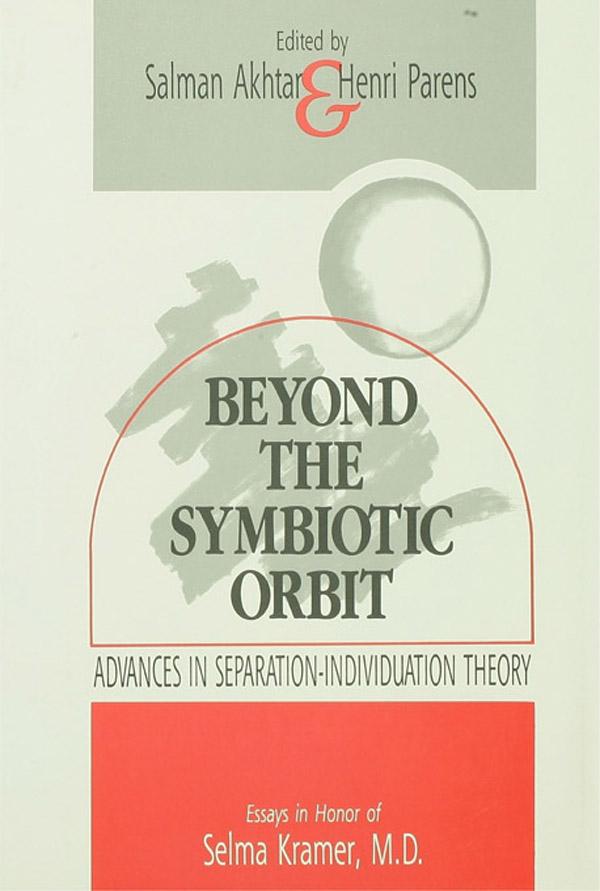
In this tribute to Selma Kramer, eminent child analyst and colleague and close friend of the late Margaret Mahler, senior analysts explore the continuing relevance of Mahler's separation-individuation theory to developmental and clinical issues. Editors Salman Akhtar and Henri Parens have grouped the original contributions to Beyond the Symbiotic Orbit into sections that reevaluate Mahler's theory.
Section I is a timely reassessment of Mahler's working model from the standpoint of contemporary clinical and research findings. It includes comparisons of Mahler with Winnicott and Kohut, and commentaries on the status of separation-individuation theory in relation to psychosexual theory, early ego development, and observational infancy research. Section II addresses the contribution of separation-individuation theory to our understanding of pathogenesis. Neurosis, severe character pathology, psychosomatic phenomena, eating disorders, and sexual perversions are among the topics of specific chapters. The final section explores the role of separation-individuation theory in the treatment of analysands of different ages and with different kinds of psychopathology; it also considers separation-individuation theory with respect to specific aspects of the treatment process, including reconstruction, transference, and termination.
A fresh reappraisal of a major perspective on early development, Beyond the Symbiotic Orbit is a fitting testimonial to Selma Kramer, who has played so important a role in elaborating Mahler's theory. Following from Kramer's own example, the contributors show how separation-individuation theory, in its ability to accomodate ongoing clinical and research findings, is subject to continuing growth and refinement. They not only advance our understanding of Mahler's working model, but pursue the implications of this model in new directions, underscoring the many areas of exploration that separation-individuation theory opens to us.
Before Memmo my notes were scattered across PDFs. Now a workspace pulls everything into one place — I see exactly what's still left to study.
Memmo's summaries are gold before exams. I don't have to re-read 800 pages two weeks before — just the important parts.
The AI chat has saved me the night before an exam more than once. I just keep asking until I get it — no waiting on a study group to reply.
The quizzes hit exactly what I need to know. Memmo tracks what I get stuck on — so I only practice what's worth it.
Flashcards with spaced repetition are magic. Memmo knows when I'm about to forget something and brings it back.
The AI podcasts are my favorite. I listen on my way to school and get a recap without sitting at a computer.

Handbok i kvalitativa metoder
281 kr

Hållbar utveckling: en introduktion för ingenjörer och andra problemlösare
334 kr

Brymans Samhällsvetenskapliga metoder
390 kr

Projektledning
491 kr

Den orättvisa hälsan: om socioekonomiska skillnader i hälsa och livslängd
326 kr

Vetenskapsteori för nybörjare
196 kr

Organizational Leadership
429 kr

På väg mot läraryrket
172 kr

Det sociala livet i skolan: Socialpsykologiska perspektiv
253 kr

Betygsättningens didaktik
151 kr

Personality
402 kr

Studying Leadership
404 kr

Managing Innovation
477 kr

Introduktion till samhällsvetenskaplig metod
347 kr

The Psychology of Sex and Gender
698 kr

Evidens och kunskap för socialt arbete
207 kr

Introduction to Leadership
605 kr