
Before Memmo my notes were scattered across PDFs. Now a workspace pulls everything into one place — I see exactly what's still left to study.
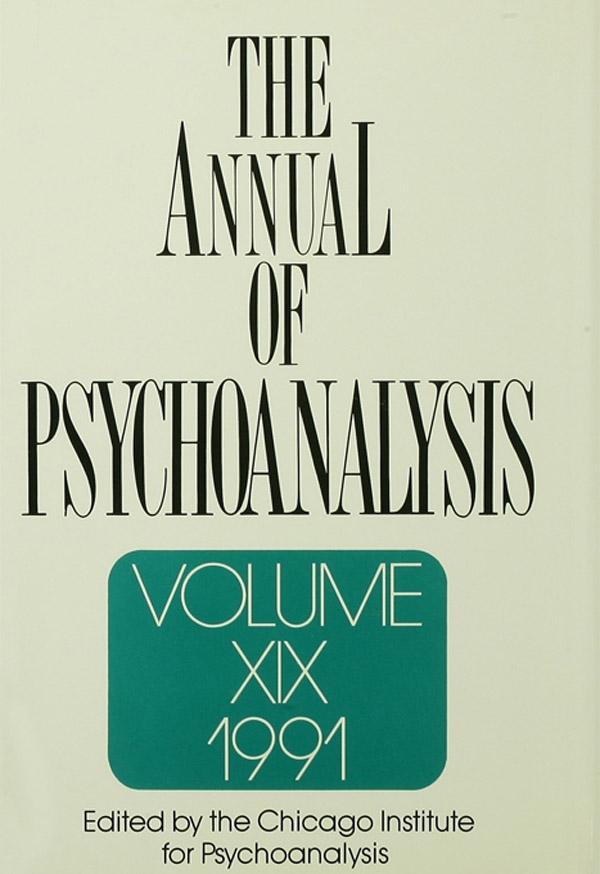
Volume 19 of The Annual of Psychoanalysis turns to the ever-intriguing relationship between "Psychoanalysis and Art." This introductory section begins with Donald Kuspit's scholarly reflections on the role of analysis in visual art and art criticism, and then proceeds to a series of topical studies on Freud and art introduced by Harry Trosman. Egyptologist Lorelei Corcoran explores the Egypt of Freud's imagination, thereby illuminating our understanding of the archaeological metaphor. Marion Tolpin offers new insights into Freud's analysis of the American writer Hilda Doolittle by focusing on the meaning of the Goddess Athene - whose statue rested on Freud's desk - to both analyst and analysand. Stephen Toulmin examines Freud's artistic sensibility - and places the historical significance of Freud's art collection in bold relief - by looking at the many contemporary art objects Freud chose not to collect. Danielle Knafo identifies key events in the early life of Austrian Expressionist Egon Schiele that were "primary determinants" of the content and form of his self-portraits. And Barbara Almond examines the spontaneous healing process depicted in Margaret Drabble's novel The Needle's Eye as an analogue to the kind of growth and development mobilized by the psychoanalytic process.
Section II, "Psychoanalysis and Development," begins with Barbara Fajardo's appreciation of the contribution of biology to analyzability; she reviews findings from both infant research and biogenetic research that tend toward an understanding of "constitution" as resilience in development and, subsequently, in treatment. Benjamin Garber adds to the psychoanalytic understanding of childhood learning disabilities by presenting the three-and-a-half-year analysis of a learning-disabled child. In a fascinating two-part contribution, "Bridging the Chasm Between Developmental Theory and Clinical Theory," Joseph Palombo sheds light on some of the knottiest problems in contemporary analysis, including the relationship between childhood events and the reconstruction of those events in treatment.
In Section III, "Psychoanalysis and Empathy," Mary Newsome presents case material in support of her claim that the analyst's empathic understanding catalyzes the coalescence of the patient's affect and aim, that is, the patient's capacity to believe in and then realize his ambitions. The acquisition of the capacity, she contends, not only betokens a specific kind of structure formation, but is the bedrock of emerging self-cohesion. Her challenging paper is thoughtfully discussed by David Terman and Jerome Winer.
Section IV of The Annual offers Jerome Kavka's appreciation of the work of N. Lionel Blitzsten (1893-1952). Blitzsten, the first Chicago psychoanalyst and one of America's most gifted clinicians and teachers, anticipated modern concepts of narcissism in identifying "narcissistic neuroses" with special treatment requirements. Morris Sklansky furthers our understanding of Blitzsten in his discussion of Kavka's essay.
Ranging across the analytic canvas with presentations as edifying as they are provocative, volume 19 of The Annual of Psychoanalysis challenges readers to wrestle with issues at the cutting edge of the discipline. It takes a well-deserved place in the preeminent continuing series in the field.
Before Memmo my notes were scattered across PDFs. Now a workspace pulls everything into one place — I see exactly what's still left to study.
Memmo's summaries are gold before exams. I don't have to re-read 800 pages two weeks before — just the important parts.
The AI chat has saved me the night before an exam more than once. I just keep asking until I get it — no waiting on a study group to reply.
The quizzes hit exactly what I need to know. Memmo tracks what I get stuck on — so I only practice what's worth it.
Flashcards with spaced repetition are magic. Memmo knows when I'm about to forget something and brings it back.
The AI podcasts are my favorite. I listen on my way to school and get a recap without sitting at a computer.

Handbok i kvalitativa metoder
281 kr

Hållbar utveckling: en introduktion för ingenjörer och andra problemlösare
334 kr

Brymans Samhällsvetenskapliga metoder
390 kr

Projektledning
491 kr

Den orättvisa hälsan: om socioekonomiska skillnader i hälsa och livslängd
326 kr

Vetenskapsteori för nybörjare
196 kr

Organizational Leadership
429 kr

På väg mot läraryrket
172 kr

Det sociala livet i skolan: Socialpsykologiska perspektiv
253 kr

Betygsättningens didaktik
151 kr

Personality
402 kr

Studying Leadership
404 kr

Managing Innovation
477 kr

Introduktion till samhällsvetenskaplig metod
347 kr

The Psychology of Sex and Gender
698 kr

Evidens och kunskap för socialt arbete
207 kr

Introduction to Leadership
605 kr