
Before Memmo my notes were scattered across PDFs. Now a workspace pulls everything into one place — I see exactly what's still left to study.
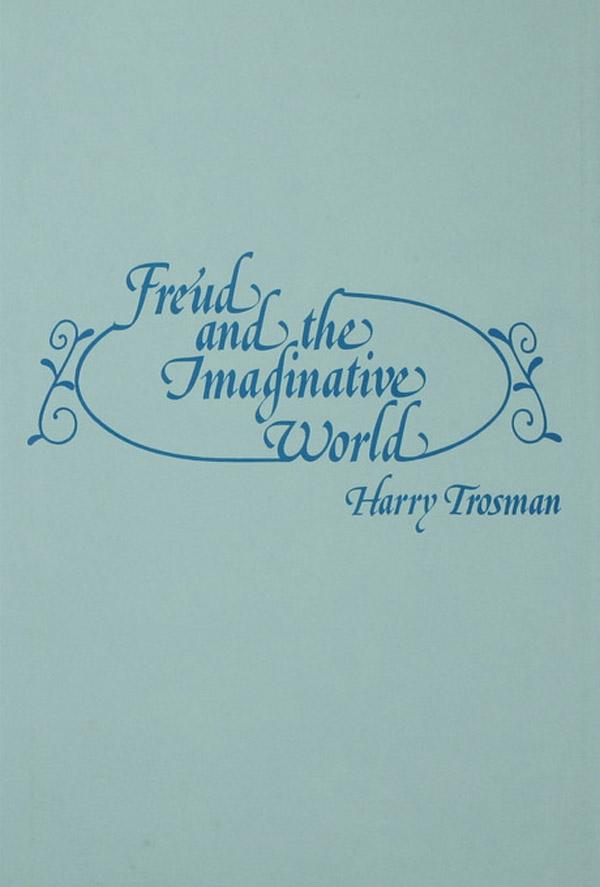
The current resurgence of interest in the scientific origins of psychoanalysis has overshadowed the artistic and literary models to which Freud had recourse time and again in the development and presentation of his theories. It is this neglected aesthetic wellspring of psychoanalysis to which Harry Trosman calls attention in Freud and the Imaginative World.
Trosman enriches our understanding of psychoanalysis by demonstrating how Freud's cultural and humanistic commitments guided his pursuit of a science of mind. Toward this end, he undertakes a number of challenging tasks: to situate Freud in the formative culture of his time, to adumbrate the human concerns that infromed his work in the natural sciences, and to delineate the multiple "modes of influence" that fostered his creativity. The second part of the book moves from the cultural sources of Freud's creativity to the psychoanalytic contribution to our understanding of art and literature. Here, Trosman focuses on the consumer of art and literature, tracing psychoanalytic perspectives on aesthetic responsiveness from Freud to the present. Trosman's critical review of the da Vinci and Hamlet literature illustrates the limitations as well as the explanatory potential of the two principal genres of applied psychoanalytic work, and leads naturally to the reflective estimation of psychoanalysis and creativity that concludes the work.
Throughout, Trosman is a well-informed and engaging guide, both to the imaginative Freud and to the abundant literature on psychoanalysis and the arts. He documents Freud's continuing indebtedness to the literary models that nourished his theorizing and gave shape to his narrative clinical expositions, even as he takes pains to show how psychoanalysis has, in many ways, outgrown Freud's own reductive explanations of aesthetic phenomena. A skillfully crafted overview, Freud and the Imaginative World is an exemplary introduction to a crucial aspect of the Freudian legacy.
Before Memmo my notes were scattered across PDFs. Now a workspace pulls everything into one place — I see exactly what's still left to study.
Memmo's summaries are gold before exams. I don't have to re-read 800 pages two weeks before — just the important parts.
The AI chat has saved me the night before an exam more than once. I just keep asking until I get it — no waiting on a study group to reply.
The quizzes hit exactly what I need to know. Memmo tracks what I get stuck on — so I only practice what's worth it.
Flashcards with spaced repetition are magic. Memmo knows when I'm about to forget something and brings it back.
The AI podcasts are my favorite. I listen on my way to school and get a recap without sitting at a computer.

Handbok i kvalitativa metoder
281 kr

Hållbar utveckling: en introduktion för ingenjörer och andra problemlösare
334 kr

Brymans Samhällsvetenskapliga metoder
390 kr

Projektledning
491 kr

Den orättvisa hälsan: om socioekonomiska skillnader i hälsa och livslängd
326 kr

Organizational Leadership
429 kr

Vetenskapsteori för nybörjare
196 kr

På väg mot läraryrket
172 kr

Det sociala livet i skolan: Socialpsykologiska perspektiv
253 kr

Betygsättningens didaktik
151 kr

Personality
402 kr

Studying Leadership
404 kr

Managing Innovation
477 kr

Introduktion till samhällsvetenskaplig metod
347 kr

The Psychology of Sex and Gender
698 kr

Evidens och kunskap för socialt arbete
207 kr

Introduction to Leadership
605 kr