
Before Memmo my notes were scattered across PDFs. Now a workspace pulls everything into one place — I see exactly what's still left to study.
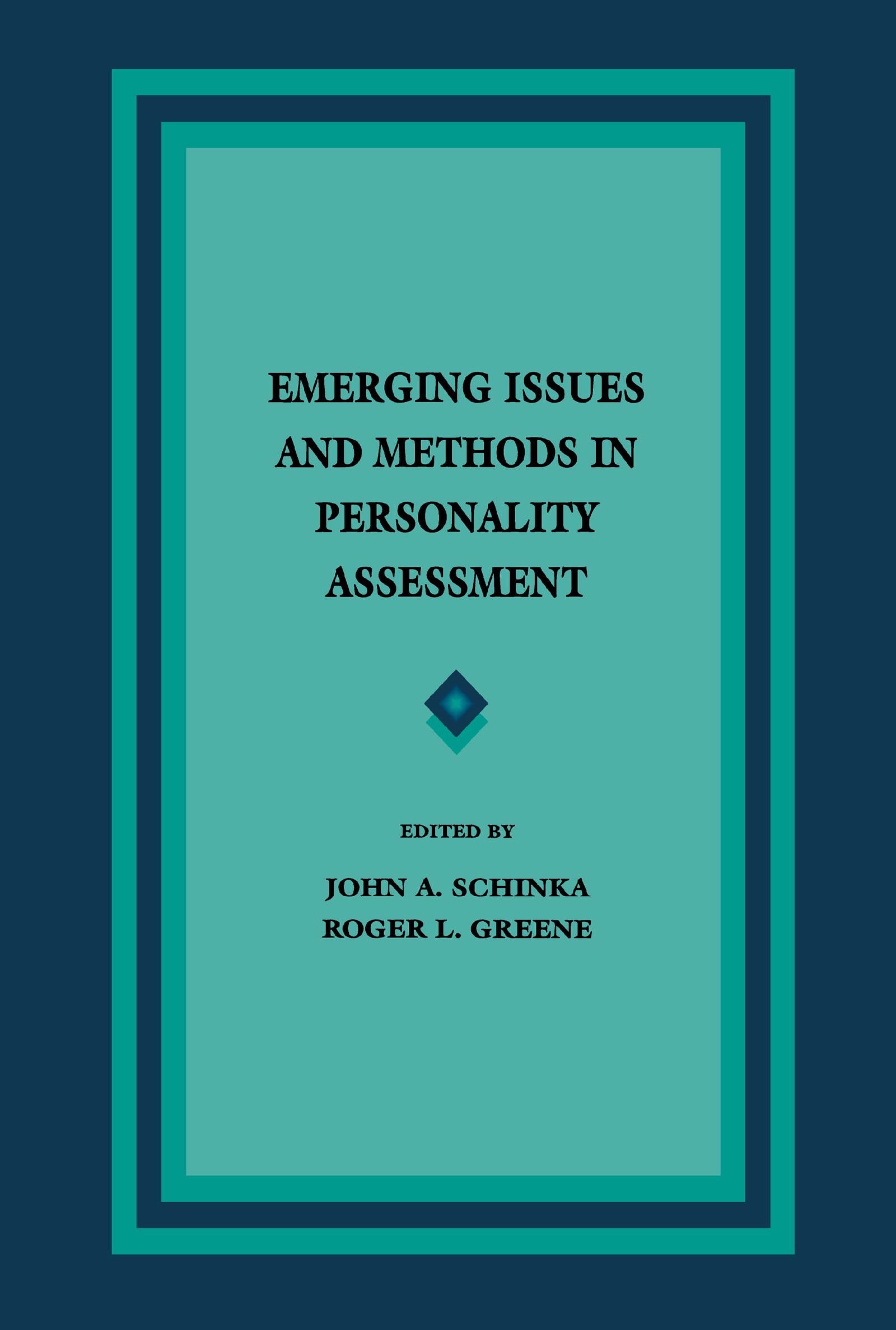
This book constitutes a collection of articles that were written for, and recently published as, special sections in three consecutive issues of the Journal of Personality Assessment.
Part I provides lucid commentaries on the current status of and future issues regarding the Rorschach and MMPI-2 and other instruments, including the Minnesota Multiphasic Personality Inventory -- Adolescent (MMPI-A), the Interpersonal Adjective Scales (IAS-R), the Inventory of Interpersonal Problems -- Circumplex version (IIP-C), the revised NEO Personality Inventory (NEO-PI-R), and the third edition of the Millon Clinical Multiaxial Inventory (MCMI-III). The authors not only participated in the dvelopment of the instruments, but continue to lead the research effort in their application in both clinical and research settings.
Part II addresses several issues that have been recurring themes, and often topics of debate, in the research and professional literature. The contributors discuss the impact of the five-factor model on personality assessment, the issue of deception in personality assessment, and various critical issues in the measurement of mood states. Other articles focus on the integration of the MMPI-2 and Rorschach and the process that clinicians should follow when applying scientific knowledge to clinical practice.
Part III is primarily devoted to overviews of several statistical methods that are employed infrequently in personality assessment research, but have great potential in contributing to the understanding of the complex data sets often encountered in the measurement and study of personality. These articles serve as both an introduction and a brief tutorial for personality researchers who are unfamiliar with the subject matter. They are valuable references that will form the basis for evaluating the appropriate use of these methods in published research in their areas of interest.
Before Memmo my notes were scattered across PDFs. Now a workspace pulls everything into one place — I see exactly what's still left to study.
Memmo's summaries are gold before exams. I don't have to re-read 800 pages two weeks before — just the important parts.
The AI chat has saved me the night before an exam more than once. I just keep asking until I get it — no waiting on a study group to reply.
The quizzes hit exactly what I need to know. Memmo tracks what I get stuck on — so I only practice what's worth it.
Flashcards with spaced repetition are magic. Memmo knows when I'm about to forget something and brings it back.
The AI podcasts are my favorite. I listen on my way to school and get a recap without sitting at a computer.

Handbok i kvalitativa metoder
281 kr

Hållbar utveckling: en introduktion för ingenjörer och andra problemlösare
334 kr

Brymans Samhällsvetenskapliga metoder
390 kr

Projektledning
491 kr

Den orättvisa hälsan: om socioekonomiska skillnader i hälsa och livslängd
326 kr

Organizational Leadership
429 kr

Vetenskapsteori för nybörjare
196 kr

På väg mot läraryrket
172 kr

Det sociala livet i skolan: Socialpsykologiska perspektiv
253 kr

Betygsättningens didaktik
151 kr

Personality
402 kr

Studying Leadership
404 kr

Managing Innovation
477 kr

Introduktion till samhällsvetenskaplig metod
347 kr

The Psychology of Sex and Gender
698 kr

Evidens och kunskap för socialt arbete
207 kr

Introduction to Leadership
605 kr