
Before Memmo my notes were scattered across PDFs. Now a workspace pulls everything into one place — I see exactly what's still left to study.
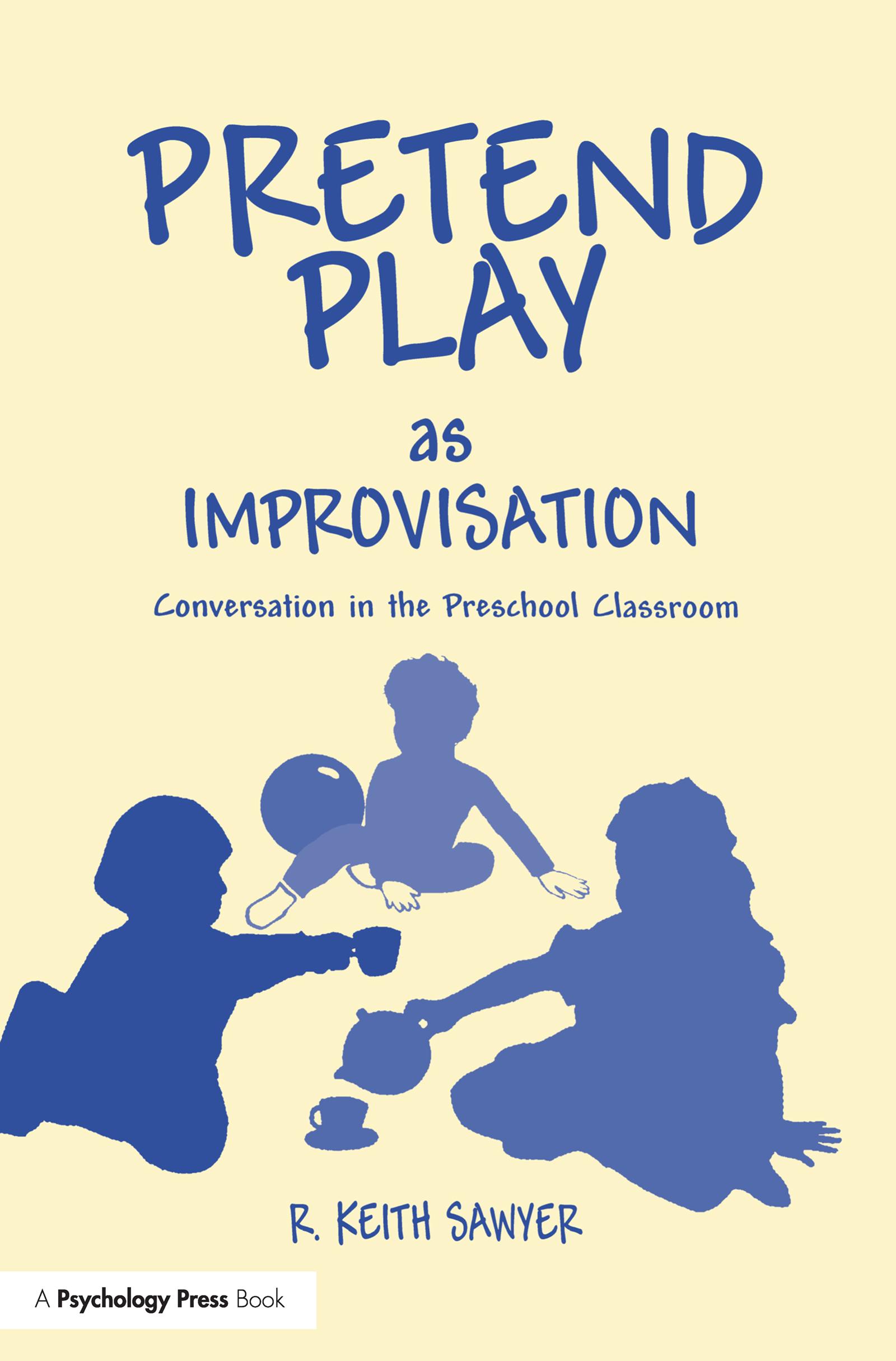
Everyday conversations including gossip, boasting, flirting, teasing, and informative discussions are highly creative, improvised interactions. Children's play is also an important, often improvisational activity. One of the most improvisational games among 3- to 5-year-old children is social pretend play--also called fantasy play, sociodramatic play, or role play. Children's imaginations have free reign during pretend play. Conversations in these play episodes are far more improvisational than the average adult conversation. Because pretend play occurs in a dramatized, fantasy world, it is less constrained by social and physical reality.
This book adds to our understanding of preschoolers' pretend play by examining it in the context of a theory of improvisational performance genres. This theory, derived from in-depth analyses of the implicit and explicit rules of theatrical improvisation, proves to generalize to pretend play as well. The two genres share several characteristics:
* There is no script; they are created in the moment.
* There are loose outlines of structure which guide the performance.
* They are collective; no one person decides what will happen.
Because group improvisational genres are collective and unscripted, improvisational creativity is a collective social process.
The pretend play literature states that this improvisational behavior is most prevalent during the same years that many other social and cognitive skills are developing. Children between the ages of 3 and 5 begin to develop representations of their own and others' mental states as well as learn to represent and construct narratives. Freudian psychologists and other personality theorists have identified these years as critical in the development of the personality. The author believes that if we can demonstrate that children's improvisational abilities develop during these years--and that their fantasy improvisations become more complex and creative--it might suggest that these social skills are linked to the child's developing ability to improvise with other creative performers.
Before Memmo my notes were scattered across PDFs. Now a workspace pulls everything into one place — I see exactly what's still left to study.
Memmo's summaries are gold before exams. I don't have to re-read 800 pages two weeks before — just the important parts.
The AI chat has saved me the night before an exam more than once. I just keep asking until I get it — no waiting on a study group to reply.
The quizzes hit exactly what I need to know. Memmo tracks what I get stuck on — so I only practice what's worth it.
Flashcards with spaced repetition are magic. Memmo knows when I'm about to forget something and brings it back.
The AI podcasts are my favorite. I listen on my way to school and get a recap without sitting at a computer.

Handbok i kvalitativa metoder
281 kr

Hållbar utveckling: en introduktion för ingenjörer och andra problemlösare
334 kr

Brymans Samhällsvetenskapliga metoder
390 kr

Projektledning
491 kr

Den orättvisa hälsan: om socioekonomiska skillnader i hälsa och livslängd
326 kr

Organizational Leadership
429 kr

Vetenskapsteori för nybörjare
196 kr

På väg mot läraryrket
172 kr

Det sociala livet i skolan: Socialpsykologiska perspektiv
253 kr

Betygsättningens didaktik
151 kr

Personality
402 kr

Studying Leadership
404 kr

Managing Innovation
477 kr

Introduktion till samhällsvetenskaplig metod
347 kr

The Psychology of Sex and Gender
698 kr

Evidens och kunskap för socialt arbete
207 kr

Introduction to Leadership
605 kr