
Before Memmo my notes were scattered across PDFs. Now a workspace pulls everything into one place — I see exactly what's still left to study.
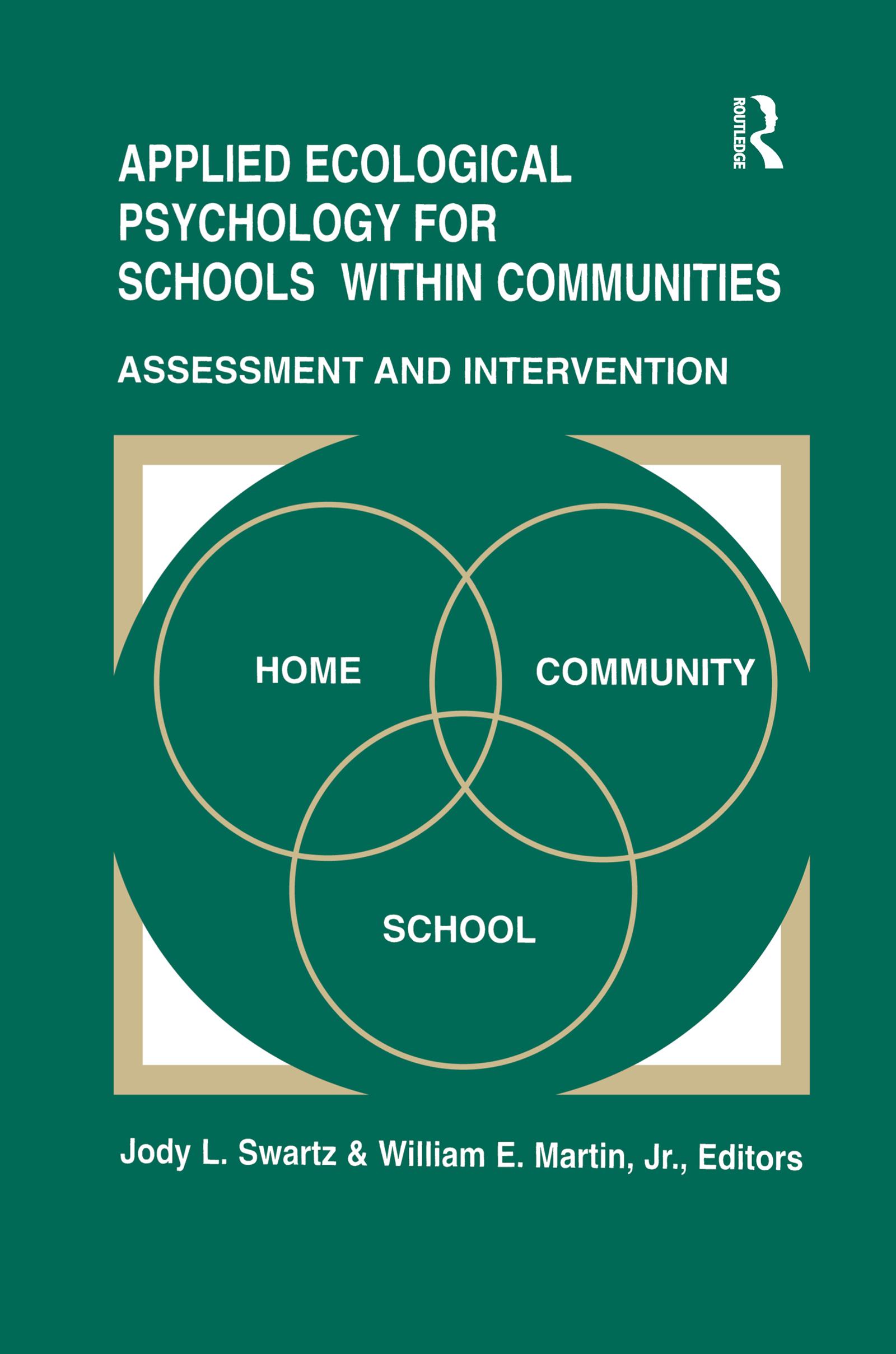
This volume provides a thorough examination of the interplay between individuals and their environment in the development and maintenance of problem behaviors, and delineates procedures for conducting assessment, intervention, and prevention within the child's ecosystem. As individuals structure, change, and organize their environments, their environments work to do the same. Environmental or contextual and individual variables act reciprocally to shape an individual's behavior. For school-aged youth, this reality necessitates an ecological approach to assessment, intervention, and prevention. Specifically, problem behaviors are partly developed and maintained by a combination of factors present in the child's psychosocial ecosystem -- home, school, and community. Although there is an abundance of theoretical applications and research supporting this concept, the predominant trend has been to emphasize the properties of the person. As a result, one is left to assume that the genesis of difficulties in adaptation lies in internal or personal states and traits of the individual.
In contrast to traditional psychology theories which focus primarily on the individual, incorporation of ecological psychology concepts allows for a more comprehensive and in-depth analysis of sources contributing to the individual's ability to adapt to their psychosocial environment. Ecological theories which drive assessment, intervention, and prevention efforts provide the necessary framework for assisting school-aged youth and their associated ecological networks to cope with and overcome the multidetermined, multifaceted concerns that arise during the school years. However, this is an often difficult and cumbersome task for educators, parents, and school systems to undertake.
To this end, this volume focuses on the functional application of ecological psychology for schools within communities. Each of the 10 chapters -- written by key figures in school, family, counseling, and community psychology -- explores the use of ecological theory from a different perspective, ranging from focus on the child, the child within the classroom, the classroom teacher, and the community to considerations in working with special populations such as juvenile delinquents and in planning for developmental issues such as school-to-work-transition. The final chapter summarizes and integrates the previous chapters and provides suggestions for future directions in the field.
Before Memmo my notes were scattered across PDFs. Now a workspace pulls everything into one place — I see exactly what's still left to study.
Memmo's summaries are gold before exams. I don't have to re-read 800 pages two weeks before — just the important parts.
The AI chat has saved me the night before an exam more than once. I just keep asking until I get it — no waiting on a study group to reply.
The quizzes hit exactly what I need to know. Memmo tracks what I get stuck on — so I only practice what's worth it.
Flashcards with spaced repetition are magic. Memmo knows when I'm about to forget something and brings it back.
The AI podcasts are my favorite. I listen on my way to school and get a recap without sitting at a computer.

Handbok i kvalitativa metoder
281 kr

Hållbar utveckling: en introduktion för ingenjörer och andra problemlösare
334 kr

Brymans Samhällsvetenskapliga metoder
390 kr

Projektledning
491 kr

Den orättvisa hälsan: om socioekonomiska skillnader i hälsa och livslängd
326 kr

Organizational Leadership
429 kr

Vetenskapsteori för nybörjare
196 kr

På väg mot läraryrket
172 kr

Det sociala livet i skolan: Socialpsykologiska perspektiv
253 kr

Betygsättningens didaktik
151 kr

Personality
402 kr

Studying Leadership
404 kr

Managing Innovation
477 kr

Introduktion till samhällsvetenskaplig metod
347 kr

The Psychology of Sex and Gender
698 kr

Evidens och kunskap för socialt arbete
207 kr

Introduction to Leadership
605 kr