
Before Memmo my notes were scattered across PDFs. Now a workspace pulls everything into one place — I see exactly what's still left to study.
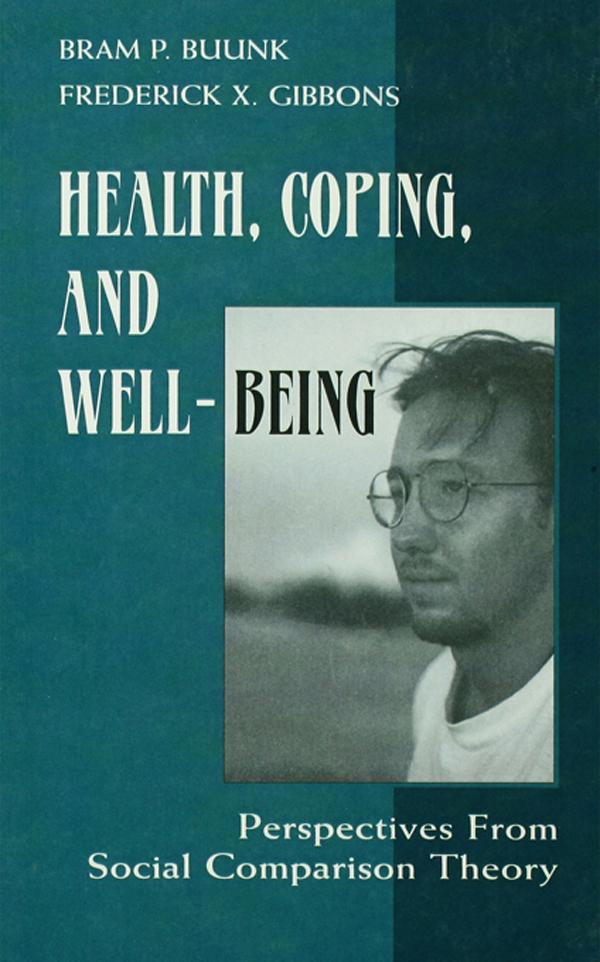
Over the past decades, the field of health psychology has witnessed a tremendous growth, and social psychologists have contributed substantially to the theoretical foundation of this field. Their research has focused on a wide variety of health-relevant topics such as how individuals decide to respond to threats to their health and well-being, how and why they change their behavior to avoid such threats, and especially, how they adjust to or cope with the risk of threatening disease and with the diseases themselves. As diverse as this literature may be, however, there does appear to be a common theme throughout much of it--the observation that comparison of oneself and one's health status and coping efforts with others is an integral part of the coping process. Consequently, social comparison theory is increasingly becoming recognized as a fruitful framework for illuminating health related issues. A still expanding literature is exploring the role of social comparisons with respect to coping with a wide range of health problems, including cancer, physical decline among the aged, rheumatoid arthritis, AIDS, stress at work and occupational burnout, and eating disorders.
Social comparison theory has augmented knowledge about the ways in which people cope with stressful events, and thus has contributed significantly to it. At a more basic level, research in this applied context has made significant contributions to the development of social comparison theory itself. The present volume presents an overview of the various ways in which social comparison theory has been applied to issues related to health, coping, and well-being, and also points out how these applications have contributed to our insight into the way humans employ social comparison information. Given the attention paid to theoretical and applied issues, this volume will appeal to a wide audience, including social and health psychologists, as well as therapists, physicians, clinicians, medical sociologists, nurses, and those involved in the growing field of nursing research.
Before Memmo my notes were scattered across PDFs. Now a workspace pulls everything into one place — I see exactly what's still left to study.
Memmo's summaries are gold before exams. I don't have to re-read 800 pages two weeks before — just the important parts.
The AI chat has saved me the night before an exam more than once. I just keep asking until I get it — no waiting on a study group to reply.
The quizzes hit exactly what I need to know. Memmo tracks what I get stuck on — so I only practice what's worth it.
Flashcards with spaced repetition are magic. Memmo knows when I'm about to forget something and brings it back.
The AI podcasts are my favorite. I listen on my way to school and get a recap without sitting at a computer.

Handbok i kvalitativa metoder
281 kr

Hållbar utveckling: en introduktion för ingenjörer och andra problemlösare
334 kr

Brymans Samhällsvetenskapliga metoder
390 kr

Projektledning
491 kr

Den orättvisa hälsan: om socioekonomiska skillnader i hälsa och livslängd
326 kr

Organizational Leadership
429 kr

Vetenskapsteori för nybörjare
196 kr

På väg mot läraryrket
172 kr

Det sociala livet i skolan: Socialpsykologiska perspektiv
253 kr

Betygsättningens didaktik
151 kr

Personality
402 kr

Studying Leadership
404 kr

Managing Innovation
477 kr

Introduktion till samhällsvetenskaplig metod
347 kr

The Psychology of Sex and Gender
698 kr

Evidens och kunskap för socialt arbete
207 kr

Introduction to Leadership
605 kr