
Before Memmo my notes were scattered across PDFs. Now a workspace pulls everything into one place — I see exactly what's still left to study.
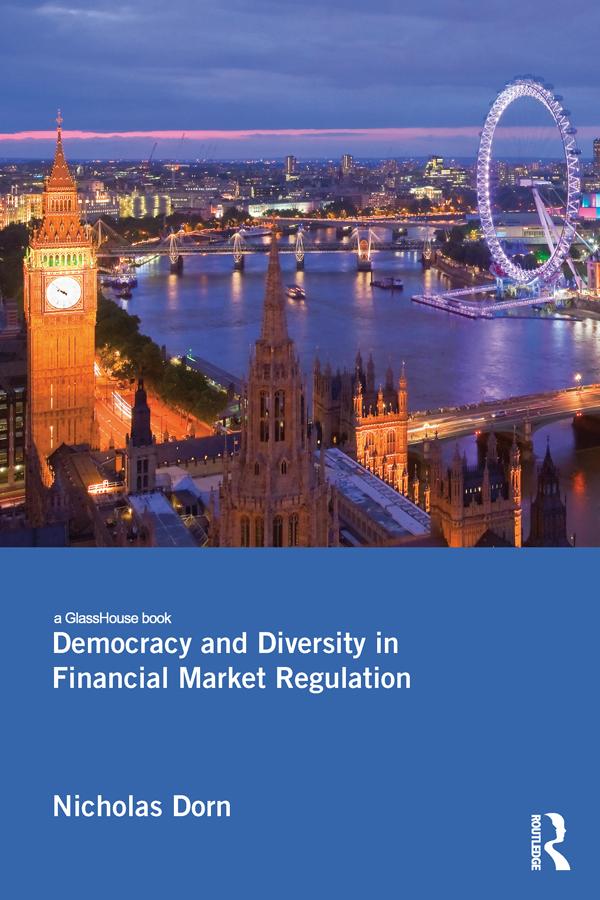
Financial markets have become acknowledged as a source of crisis, and discussion of them has shifted from economics, through legal and regulatory studies, to politics. Events from 2008 onwards raise important, cross-disciplinary questions: must financial markets drive states into political and existential crisis, must public finances take over private losses, must citizens endure austerity? This book argues that there is an alternative. If the financial system were less 'connected', contagion within the market would be reduced and crises would become more localised and intermittent, less global and pervasive. The question then becomes how to reduce connectedness within financial markets.
This book argues that the democratic direction of financial market policies can deliver this. Politicising financial market policies – taking discussion of these issues out of the sphere of the 'technical' and putting it into the same democratically contested space as, for example, health and welfare policies – would encourage differing policies to emerge in different countries. Diversity of regulatory regimes would result in some business models being attracted to some jurisdictions, others to others. The resulting heterogeneity, when viewed from a global perspective, would be a reversal of recent and current tendencies towards one single/global 'level playing field', within which all financial firms and sectors have become closely connected and across which contagion inevitably reigns.
No doubt the democratisation of financial market policy would be opposed by big firms – their interests being served by regulatory convergence – and considered macabre by some financial regulators and central bankers, who are coalescing into an elite community. However, everyone else, Nicholas Dorn argues here, would be better off in a financial world characterised by greater diversity.
Before Memmo my notes were scattered across PDFs. Now a workspace pulls everything into one place — I see exactly what's still left to study.
Memmo's summaries are gold before exams. I don't have to re-read 800 pages two weeks before — just the important parts.
The AI chat has saved me the night before an exam more than once. I just keep asking until I get it — no waiting on a study group to reply.
The quizzes hit exactly what I need to know. Memmo tracks what I get stuck on — so I only practice what's worth it.
Flashcards with spaced repetition are magic. Memmo knows when I'm about to forget something and brings it back.
The AI podcasts are my favorite. I listen on my way to school and get a recap without sitting at a computer.

Handbok i kvalitativa metoder
281 kr

Hållbar utveckling: en introduktion för ingenjörer och andra problemlösare
334 kr

Brymans Samhällsvetenskapliga metoder
390 kr

Projektledning
491 kr

Den orättvisa hälsan: om socioekonomiska skillnader i hälsa och livslängd
326 kr

Vetenskapsteori för nybörjare
196 kr

Organizational Leadership
429 kr

På väg mot läraryrket
172 kr

Det sociala livet i skolan: Socialpsykologiska perspektiv
253 kr

Betygsättningens didaktik
151 kr

Personality
402 kr

Studying Leadership
404 kr

Managing Innovation
477 kr

Introduktion till samhällsvetenskaplig metod
347 kr

The Psychology of Sex and Gender
698 kr

Evidens och kunskap för socialt arbete
207 kr

Introduction to Leadership
605 kr