
Before Memmo my notes were scattered across PDFs. Now a workspace pulls everything into one place — I see exactly what's still left to study.
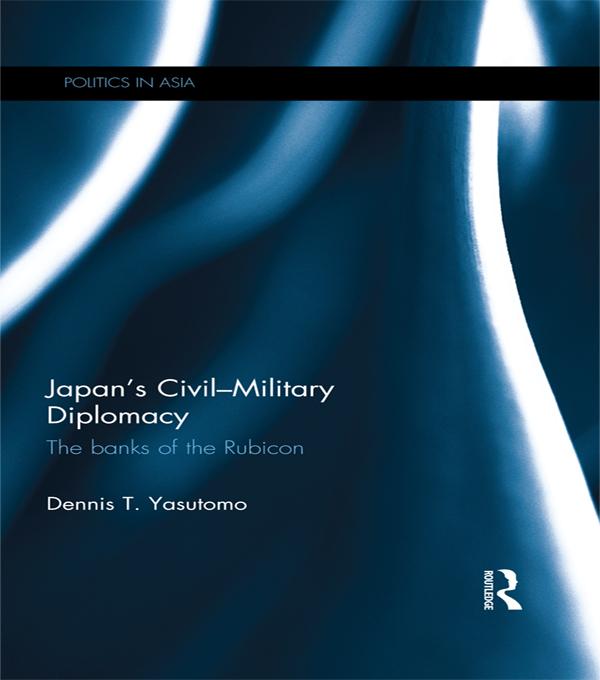
Since the early 1990s, there has been a clear evolution in the military dimension of Japanese diplomacy. From Gulf War I in 1991 to the present day, an incremental but unmistakable acceptance of, and resort to, military dispatches has taken place, and yet crucially, Japan has not morphed into a traditional military power.
Exploring Japan’s involvement in both Afghanistan and Iraq, this book examines the evolution and nature of the new civil-military dimension in Japanese foreign policy. It shows how foreign aid, Japan’s traditional non-military diplomatic tool, was merged with the operations of the Japanese Self-Defense Force in Iraq and the activities of NATO-ISAF forces in Afghanistan, and emphasises the centrality of civilian power to Japanese foreign policy and diplomacy. However, Dennis Yasutomo argues that while a new civil-military security culture is replacing the old merchant state culture of pacifism and anti-militarism, Japan does not yet qualify as a military "normal nation". Further, the book’s exploration of the increased utilization of military power within the context of civilian objectives and non-military diplomatic instruments, sheds light on the current build-up of Japanese military power in East and Southeast Asia amid territorial disputes and nuclear threats, and highlights the impact that Japan’s new civil-military diplomacy may have on wider international affairs in the 21st Century.
Drawing on interviews with key actors in Tokyo, as well as with practitioners who have served on the ground in Iraq and Afghanistan, this book will have broad appeal to students and scholars working on Japanese politics and diplomacy, military and security studies and international relations.
Before Memmo my notes were scattered across PDFs. Now a workspace pulls everything into one place — I see exactly what's still left to study.
Memmo's summaries are gold before exams. I don't have to re-read 800 pages two weeks before — just the important parts.
The AI chat has saved me the night before an exam more than once. I just keep asking until I get it — no waiting on a study group to reply.
The quizzes hit exactly what I need to know. Memmo tracks what I get stuck on — so I only practice what's worth it.
Flashcards with spaced repetition are magic. Memmo knows when I'm about to forget something and brings it back.
The AI podcasts are my favorite. I listen on my way to school and get a recap without sitting at a computer.

Handbok i kvalitativa metoder
281 kr

Hållbar utveckling: en introduktion för ingenjörer och andra problemlösare
334 kr

Brymans Samhällsvetenskapliga metoder
390 kr

Projektledning
491 kr

Den orättvisa hälsan: om socioekonomiska skillnader i hälsa och livslängd
326 kr

Vetenskapsteori för nybörjare
196 kr

Organizational Leadership
429 kr

På väg mot läraryrket
172 kr

Det sociala livet i skolan: Socialpsykologiska perspektiv
253 kr

Betygsättningens didaktik
151 kr

Personality
402 kr

Studying Leadership
404 kr

Managing Innovation
477 kr

Introduktion till samhällsvetenskaplig metod
347 kr

The Psychology of Sex and Gender
698 kr

Evidens och kunskap för socialt arbete
207 kr

Introduction to Leadership
605 kr