
Before Memmo my notes were scattered across PDFs. Now a workspace pulls everything into one place — I see exactly what's still left to study.
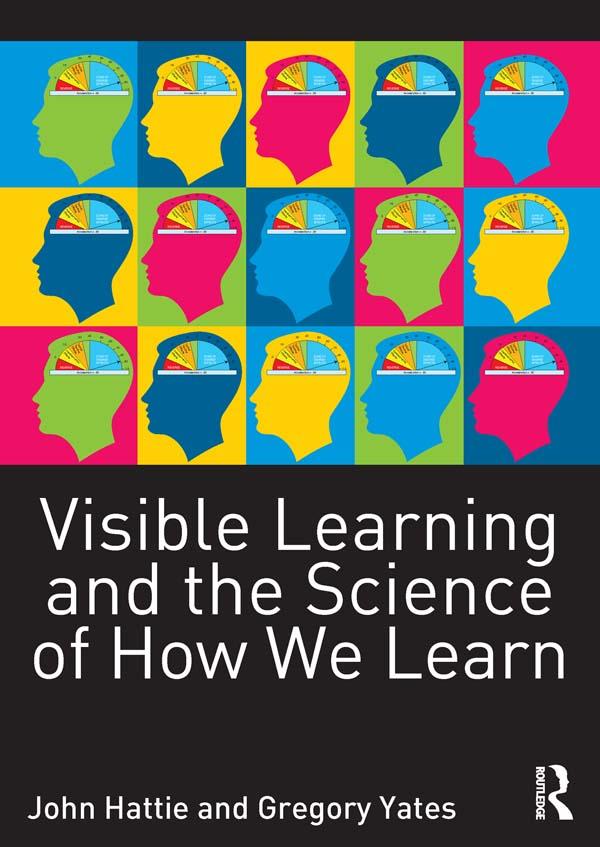
On publication in 2009 John Hattie’s Visible Learning presented the biggest ever collection of research into what actually work in schools to improve children’s learning. Not what was fashionable, not what political and educational vested interests wanted to champion, but what actually produced the best results in terms of improving learning and educational outcomes. It became an instant bestseller and was described by the TES as revealing education’s ‘holy grail’.
Now in this latest book, John Hattie has joined forces with cognitive psychologist Greg Yates to build on the original data and legacy of the Visible Learning project, showing how it’s underlying ideas and the cutting edge of cognitive science can form a powerful and complimentary framework for shaping learning in the classroom and beyond.
Visible Learning and the Science of How We Learn explains the major principles and strategies of learning, outlining why it can be so hard sometimes, and yet easy on other occasions. Aimed at teachers and students, it is written in an accessible and engaging style and can be read cover to cover, or used on a chapter-by-chapter basis for essay writing or staff development.
The book is structured in three parts – ‘learning within classrooms’, ‘learning foundations’, which explains the cognitive building blocks of knowledge acquisition and ‘know thyself’ which explores, confidence and self-knowledge. It also features extensive interactive appendices containing study guide questions to encourage critical thinking, annotated bibliographic entries with recommendations for further reading, links to relevant websites and YouTube clips. Throughout, the authors draw upon the latest international research into how the learning process works and how to maximise impact on students, covering such topics as:
This fascinating book is aimed at any student, teacher or parent requiring an up-to-date commentary on how research into human learning processes can inform our teaching and what goes on in our schools. It takes a broad sweep through findings stemming mainly from social and cognitive psychology and presents them in a useable format for students and teachers at all levels, from preschool to tertiary training institutes.
Before Memmo my notes were scattered across PDFs. Now a workspace pulls everything into one place — I see exactly what's still left to study.
Memmo's summaries are gold before exams. I don't have to re-read 800 pages two weeks before — just the important parts.
The AI chat has saved me the night before an exam more than once. I just keep asking until I get it — no waiting on a study group to reply.
The quizzes hit exactly what I need to know. Memmo tracks what I get stuck on — so I only practice what's worth it.
Flashcards with spaced repetition are magic. Memmo knows when I'm about to forget something and brings it back.
The AI podcasts are my favorite. I listen on my way to school and get a recap without sitting at a computer.

Handbok i kvalitativa metoder
281 kr

Hållbar utveckling: en introduktion för ingenjörer och andra problemlösare
334 kr

Brymans Samhällsvetenskapliga metoder
390 kr

Projektledning
491 kr

Den orättvisa hälsan: om socioekonomiska skillnader i hälsa och livslängd
326 kr

Vetenskapsteori för nybörjare
196 kr

Organizational Leadership
429 kr

På väg mot läraryrket
172 kr

Det sociala livet i skolan: Socialpsykologiska perspektiv
253 kr

Betygsättningens didaktik
151 kr

Personality
402 kr

Studying Leadership
404 kr

Managing Innovation
477 kr

Introduktion till samhällsvetenskaplig metod
347 kr

The Psychology of Sex and Gender
698 kr

Evidens och kunskap för socialt arbete
207 kr

Introduction to Leadership
605 kr