
Before Memmo my notes were scattered across PDFs. Now a workspace pulls everything into one place — I see exactly what's still left to study.
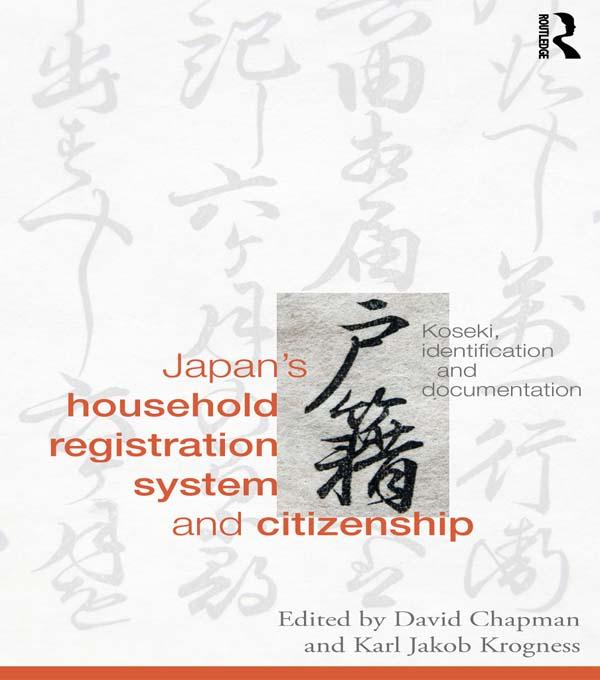
Japan’s Household Registration System (koseki seido) is an extremely powerful state instrument, and is socially entrenched with a long history of population governance, social control and the maintenance of social order. It provides identity whilst at the same time imposing identity upon everyone registered, and in turn, the state receives validity and legitimacy from the registration of its inhabitants. The study of the procedures and mechanisms for identifying and documenting people provides an important window into understanding statecraft, and by examining the koseki system, this book provides a keen insight into social and political change in Japan.
By looking through the lens of the koseki system, the book takes both an historical as well as a contemporary approach to understanding Japanese society. In doing so, it develops our understanding of contemporary Japan within the historical context of population management and social control; reveals the social effects and influence of the koseki system throughout its history; and presents new insights into citizenship, nationality and identity. Furthermore, this book develops our knowledge of state functions and indeed the nation state itself, through engaging critically with important issues relating to the koseki while at the same time providing a platform for further investigation. The contributors to this volume utilise a variety of disciplinary areas including history, gender studies, sociology, law and anthropology, and each chapter provides insights that bring us closer to a comprehensive grasp of the role, effects and historical background of what is a crucial and influential instrument of the Japanese state.
This book will be of great interest to students and scholars of Japanese history, Japanese culture and society, Japanese studies, Asian social policy and demography more generally.
Before Memmo my notes were scattered across PDFs. Now a workspace pulls everything into one place — I see exactly what's still left to study.
Memmo's summaries are gold before exams. I don't have to re-read 800 pages two weeks before — just the important parts.
The AI chat has saved me the night before an exam more than once. I just keep asking until I get it — no waiting on a study group to reply.
The quizzes hit exactly what I need to know. Memmo tracks what I get stuck on — so I only practice what's worth it.
Flashcards with spaced repetition are magic. Memmo knows when I'm about to forget something and brings it back.
The AI podcasts are my favorite. I listen on my way to school and get a recap without sitting at a computer.

Handbok i kvalitativa metoder
281 kr

Hållbar utveckling: en introduktion för ingenjörer och andra problemlösare
334 kr

Brymans Samhällsvetenskapliga metoder
390 kr

Projektledning
491 kr

Den orättvisa hälsan: om socioekonomiska skillnader i hälsa och livslängd
326 kr

Vetenskapsteori för nybörjare
196 kr

Organizational Leadership
429 kr

På väg mot läraryrket
172 kr

Det sociala livet i skolan: Socialpsykologiska perspektiv
253 kr

Betygsättningens didaktik
151 kr

Personality
402 kr

Studying Leadership
404 kr

Managing Innovation
477 kr

Introduktion till samhällsvetenskaplig metod
347 kr

The Psychology of Sex and Gender
698 kr

Evidens och kunskap för socialt arbete
207 kr

Introduction to Leadership
605 kr