
Before Memmo my notes were scattered across PDFs. Now a workspace pulls everything into one place — I see exactly what's still left to study.
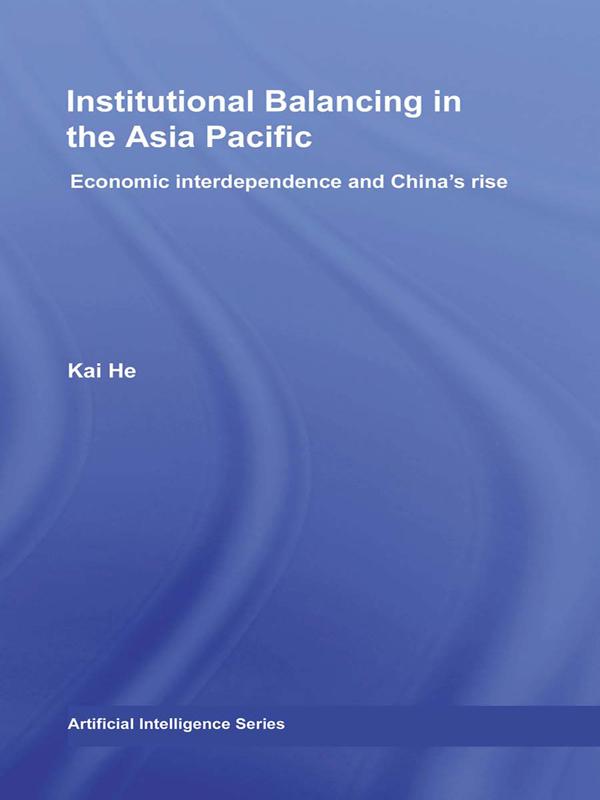
This book examines the strategic interactions among China, the United States, Japan, and Southeast Asian States in the context of China’s rise and globalization after the cold war. Engaging the mainstream theoretical debates in international relations, the author introduces a new theoretical framework—institutional realism—to explain the institutionalization of world politics in the Asia-Pacific after the cold war.
Institutional realism suggests that deepening economic interdependence creates a condition under which states are more likely to conduct a new balancing strategy—institutional balancing, i.e., countering pressures or threats through initiating, utilizing, and dominating multilateral institutions—to pursue security under anarchy. To test the validity of institutional realism, Kai He examines the foreign policies of the U.S., Japan, the ASEAN states, and China toward four major multilateral institutions, Asia-Pacific Economic Cooperation (APEC), the Association of Southeast Asian Nations (ASEAN) Regional Forum (ARF), ASEAN Plus Three (APT), and East Asian Summit (EAS). Challenging the popular pessimistic view regarding China’s rise, the book concludes that economic interdependence and structural constraints may well soften the "dragon’s teeth." China’s rise does not mean a dark future for the region.
Institutional Balancing in the Asia Pacific will be of great interest to policy makers and scholars of Asian security, international relations, Chinese foreign policy, and U.S. foreign policy.
Before Memmo my notes were scattered across PDFs. Now a workspace pulls everything into one place — I see exactly what's still left to study.
Memmo's summaries are gold before exams. I don't have to re-read 800 pages two weeks before — just the important parts.
The AI chat has saved me the night before an exam more than once. I just keep asking until I get it — no waiting on a study group to reply.
The quizzes hit exactly what I need to know. Memmo tracks what I get stuck on — so I only practice what's worth it.
Flashcards with spaced repetition are magic. Memmo knows when I'm about to forget something and brings it back.
The AI podcasts are my favorite. I listen on my way to school and get a recap without sitting at a computer.

Handbok i kvalitativa metoder
281 kr

Hållbar utveckling: en introduktion för ingenjörer och andra problemlösare
334 kr

Brymans Samhällsvetenskapliga metoder
390 kr

Projektledning
491 kr

Den orättvisa hälsan: om socioekonomiska skillnader i hälsa och livslängd
326 kr

Organizational Leadership
429 kr

Vetenskapsteori för nybörjare
196 kr

På väg mot läraryrket
172 kr

Det sociala livet i skolan: Socialpsykologiska perspektiv
253 kr

Betygsättningens didaktik
151 kr

Personality
402 kr

Studying Leadership
404 kr

Managing Innovation
477 kr

Introduktion till samhällsvetenskaplig metod
347 kr

The Psychology of Sex and Gender
698 kr

Evidens och kunskap för socialt arbete
207 kr

Introduction to Leadership
605 kr