
Before Memmo my notes were scattered across PDFs. Now a workspace pulls everything into one place — I see exactly what's still left to study.
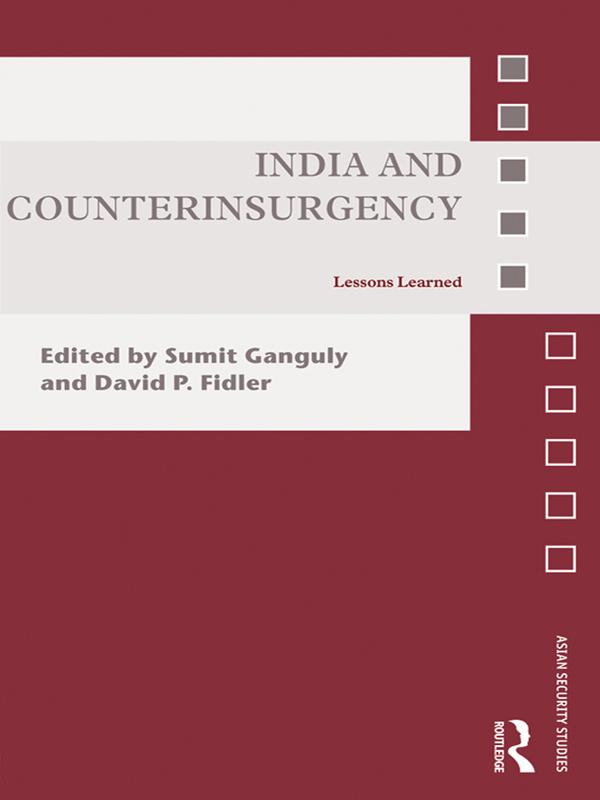
This edited volume focuses on India's experiences waging counterinsurgency campaigns since its independence in 1947.
Filling a clear gap in the literature, the book traces and assess the origins, evolution and current state of India's counterinsurgency strategies and capabilities, focusing on key counterinsurgency campaigns waged by India within and outside its territory. It also analyzes the development of Indian doctrine on counterinsurgency, and locates this within the overall ebb and flow of India's defense and security policies. The central argument is that counterinsurgency has been an integral part of India's overall security policy and can thereby impart much to political and military leaders in other states. Since its emergence from British colonialism, India's defence policies have not merely sought to protect and preserve India's inherited colonial borders from threats by rival states, but have also sought to prevent and suppress secessionist movements. In countering insurgencies, the Indian state has fashioned strategies that seek to repress militarily any secessionist movement, while simultaneously forging a range of civilian administrative and institutional arrangements that attempt to address the grievances of disaffected populations.
The book highlights key strategic and tactical innovations that the Indian Army and security forces made to deal with a range of insurgent movements. Simultaneously, it also examines how the civilian-military nexus enabled India's policy makers to utilize existing, and formulate novel, institutional means to address extant political grievances. India has been most successful where it has managed to use calibrated force, obtained the trust of much of the aggrieved population and made persuasive commitments to political and institutional reform. Examination of these elements of India's counterinsurgency performance can be compared to counterinsurgency doctrine developed by other countries, including the United States, and thus yield comparative policy prescriptions and recommendations that can be applied to other counterinsurgency contexts.
This book will be of great interest to students of counterinsurgency and irregular warfare, Indian politics, Asian Security Studies and Strategic Studies in general.
Before Memmo my notes were scattered across PDFs. Now a workspace pulls everything into one place — I see exactly what's still left to study.
Memmo's summaries are gold before exams. I don't have to re-read 800 pages two weeks before — just the important parts.
The AI chat has saved me the night before an exam more than once. I just keep asking until I get it — no waiting on a study group to reply.
The quizzes hit exactly what I need to know. Memmo tracks what I get stuck on — so I only practice what's worth it.
Flashcards with spaced repetition are magic. Memmo knows when I'm about to forget something and brings it back.
The AI podcasts are my favorite. I listen on my way to school and get a recap without sitting at a computer.

Handbok i kvalitativa metoder
281 kr

Hållbar utveckling: en introduktion för ingenjörer och andra problemlösare
334 kr

Brymans Samhällsvetenskapliga metoder
390 kr

Projektledning
491 kr

Den orättvisa hälsan: om socioekonomiska skillnader i hälsa och livslängd
326 kr

Vetenskapsteori för nybörjare
196 kr

Organizational Leadership
429 kr

På väg mot läraryrket
172 kr

Det sociala livet i skolan: Socialpsykologiska perspektiv
253 kr

Betygsättningens didaktik
151 kr

Personality
402 kr

Studying Leadership
404 kr

Managing Innovation
477 kr

Introduktion till samhällsvetenskaplig metod
347 kr

The Psychology of Sex and Gender
698 kr

Evidens och kunskap för socialt arbete
207 kr

Introduction to Leadership
605 kr