
Before Memmo my notes were scattered across PDFs. Now a workspace pulls everything into one place — I see exactly what's still left to study.
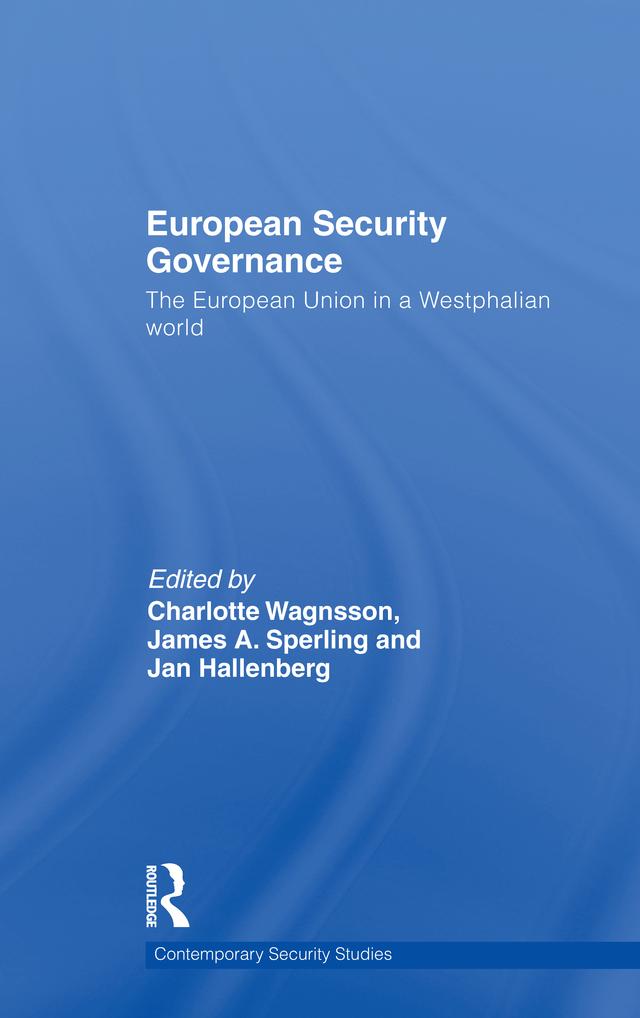
This book focuses on the problems of, and prospects for, strengthening the global system of security governance in a manner consistent with the aspirations and practices of the EU. The EU approach to security governance has been successful in its immediate neighbourhood: it has successfully exported its preferred norms and principles to applicant countries, thereby 'pacifying' its immediate neighbourhood and making all of Europe more secure. The EU governance orientation ultimately seeks to enlarge the European security community and expand the geopolitical area within which armed conflicts are inconceivable, and where state and private actors converge around a set of norms and rules of behaviour and engagement.
The EU's success along its immediate boundaries has not yet been replicated on a global scale; it remains an open question whether the EU system of governance can be exported globally, owing to different normative structures (for example, a tolerance of armed conflict or non-democratic governance internally), great-power competition (such as US--China), or ongoing processes of securitization that has made it difficult to find a commonly accepted definition of security. Moreover, the EU system of security governance clashes with the continuing unwillingness of other major powers to cede or pool sovereignty as well as varying preferences for unilateral as opposed to multilateral forms of statecraft. This edited volume addresses both the practical and political aspects of security governance and the barriers to the globalization of the EU system of security governance, particularly in the multipolar post-Cold War era.
This book will be of great interest to students of security governance, EU politics, European Security and IR in general.
James Sperling is Professor of Political Science at the University of Akron, Ohio, USA. Jan Hallenberg is Professor of Political Science at the Department of Security and Strategic Studies, Swedish National Defence College. Charlotte Wagnsson is Assistant Professor in the Department of Strategic and Security Studies at the Swedish National Defence College.
Before Memmo my notes were scattered across PDFs. Now a workspace pulls everything into one place — I see exactly what's still left to study.
Memmo's summaries are gold before exams. I don't have to re-read 800 pages two weeks before — just the important parts.
The AI chat has saved me the night before an exam more than once. I just keep asking until I get it — no waiting on a study group to reply.
The quizzes hit exactly what I need to know. Memmo tracks what I get stuck on — so I only practice what's worth it.
Flashcards with spaced repetition are magic. Memmo knows when I'm about to forget something and brings it back.
The AI podcasts are my favorite. I listen on my way to school and get a recap without sitting at a computer.

Handbok i kvalitativa metoder
281 kr

Hållbar utveckling: en introduktion för ingenjörer och andra problemlösare
334 kr

Brymans Samhällsvetenskapliga metoder
390 kr

Projektledning
491 kr

Den orättvisa hälsan: om socioekonomiska skillnader i hälsa och livslängd
326 kr

Organizational Leadership
429 kr

Vetenskapsteori för nybörjare
196 kr

På väg mot läraryrket
172 kr

Det sociala livet i skolan: Socialpsykologiska perspektiv
253 kr

Betygsättningens didaktik
151 kr

Personality
402 kr

Studying Leadership
404 kr

Managing Innovation
477 kr

Introduktion till samhällsvetenskaplig metod
347 kr

The Psychology of Sex and Gender
698 kr

Evidens och kunskap för socialt arbete
207 kr

Introduction to Leadership
605 kr