
Before Memmo my notes were scattered across PDFs. Now a workspace pulls everything into one place — I see exactly what's still left to study.
A comprehensive overview of atomistic computational electrochemistry, discussing methods, implementation, and state-of-the-art applications in the field
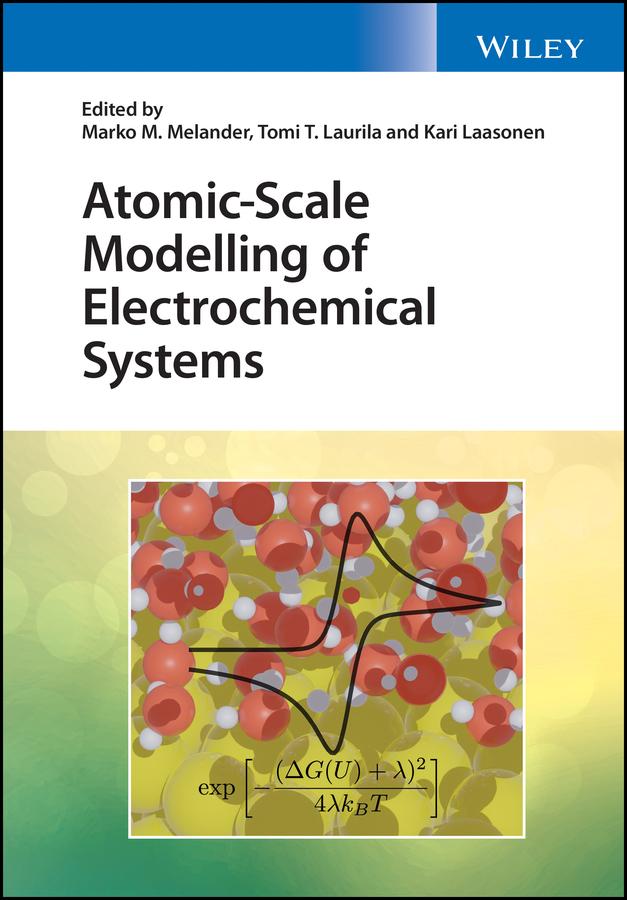
The first book to review state-of-the-art computational and theoretical methods for modelling, understanding, and predicting the properties of electrochemical interfaces. This book presents a detailed description of the current methods, their background, limitations, and use for addressing the electrochemical interface and reactions. It also highlights several applications in electrocatalysis and electrochemistry.
Atomic-Scale Modelling of Electrochemical Systems discusses different ways of including the electrode potential in the computational setup and fixed potential calculations within the framework of grand canonical density functional theory. It examines classical and quantum mechanical models for the solid-liquid interface and formation of an electrochemical double-layer using molecular dynamics and/or continuum descriptions. A thermodynamic description of the interface and reactions taking place at the interface as a function of the electrode potential is provided, as are novel ways to describe rates of heterogeneous electron transfer, proton-coupled electron transfer, and other electrocatalytic reactions. The book also covers multiscale modelling, where atomic level information is used for predicting experimental observables to enable direct comparison with experiments, to rationalize experimental results, and to predict the following electrochemical performance.
Written by a team of experts within the field of computational electrochemistry and the wider computational condensed matter community, this book serves as an introduction to the subject for readers entering the field of atom-level electrochemical modeling, while also serving as an invaluable reference for advanced practitioners already working in the field.
Before Memmo my notes were scattered across PDFs. Now a workspace pulls everything into one place — I see exactly what's still left to study.
Memmo's summaries are gold before exams. I don't have to re-read 800 pages two weeks before — just the important parts.
The AI chat has saved me the night before an exam more than once. I just keep asking until I get it — no waiting on a study group to reply.
The quizzes hit exactly what I need to know. Memmo tracks what I get stuck on — so I only practice what's worth it.
Flashcards with spaced repetition are magic. Memmo knows when I'm about to forget something and brings it back.
The AI podcasts are my favorite. I listen on my way to school and get a recap without sitting at a computer.

Handbok i kvalitativa metoder
281 kr

Hållbar utveckling: en introduktion för ingenjörer och andra problemlösare
334 kr

Brymans Samhällsvetenskapliga metoder
390 kr

Projektledning
491 kr

Den orättvisa hälsan: om socioekonomiska skillnader i hälsa och livslängd
326 kr

Organizational Leadership
429 kr

Vetenskapsteori för nybörjare
196 kr

På väg mot läraryrket
172 kr

Det sociala livet i skolan: Socialpsykologiska perspektiv
253 kr

Betygsättningens didaktik
151 kr

Personality
402 kr

Studying Leadership
404 kr

Managing Innovation
477 kr

Introduktion till samhällsvetenskaplig metod
347 kr

The Psychology of Sex and Gender
698 kr

Evidens och kunskap för socialt arbete
207 kr

Introduction to Leadership
605 kr