
Before Memmo my notes were scattered across PDFs. Now a workspace pulls everything into one place — I see exactly what's still left to study.
Provides a comprehensive and up-to-date review of the development of the science behind the psychology of false confessions
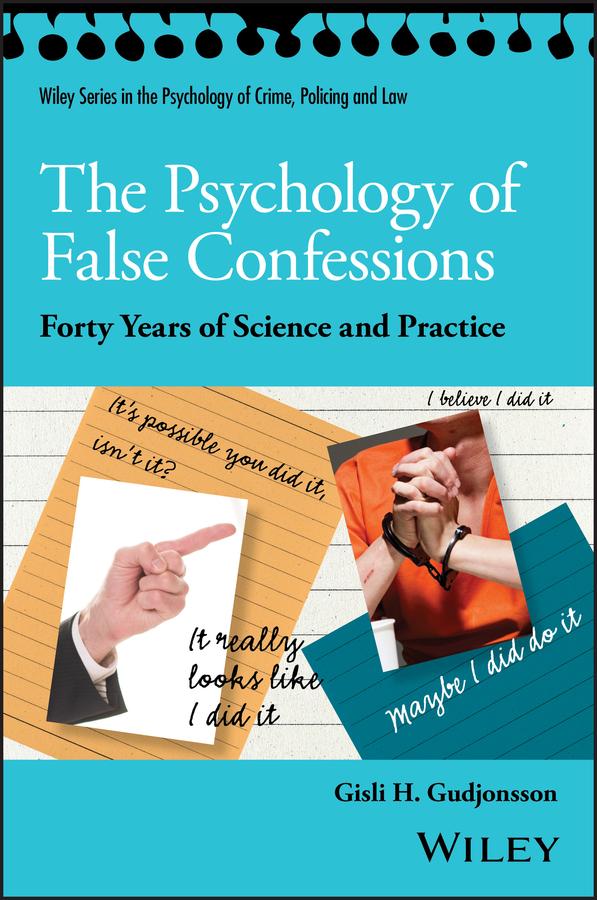
Four decades ago, little was known or understood about false confessions and the reasons behind them. So much has changed since then due in part to the diligent work done by Gisli H. Gudjonsson. This eye-opening book by the Icelandic/British clinical forensic psychologist, who in the mid 1970s had worked as detective in Reykjavik, offers a complete and current analysis of how the study of the psychology of false confessions came about, including the relevant theories and empirical/experimental evidence base. It also provides a reflective review of the gradual development of the science and how it can be applied to real life cases.
Based on Gudjonsson’s personal account of the biggest murder investigations in Iceland’s history, as well as other landmark cases, The Psychology of False Confessions: Forty Years of Science and Practice takes readers inside the minds of those who sit on both sides of the interrogation table to examine why confessions to crimes occur even when the confessor is innocent. Presented in three parts, the book covers how the science of studying false confessions emerged and grew to become a regular field of practice. It then goes deep into the investigation of the mid-1970s assumed murders of two men in Iceland and the people held responsible for them. It finishes with an in-depth psychological analysis of the confessions of the six people convicted.
The Psychology of False Confessions: Forty Years of Science and Practice is an important source book for students, academics, criminologists, and clinical, forensic, and social psychologists and psychiatrists.
Before Memmo my notes were scattered across PDFs. Now a workspace pulls everything into one place — I see exactly what's still left to study.
Memmo's summaries are gold before exams. I don't have to re-read 800 pages two weeks before — just the important parts.
The AI chat has saved me the night before an exam more than once. I just keep asking until I get it — no waiting on a study group to reply.
The quizzes hit exactly what I need to know. Memmo tracks what I get stuck on — so I only practice what's worth it.
Flashcards with spaced repetition are magic. Memmo knows when I'm about to forget something and brings it back.
The AI podcasts are my favorite. I listen on my way to school and get a recap without sitting at a computer.

Handbok i kvalitativa metoder
281 kr

Hållbar utveckling: en introduktion för ingenjörer och andra problemlösare
334 kr

Brymans Samhällsvetenskapliga metoder
390 kr

Projektledning
491 kr

Den orättvisa hälsan: om socioekonomiska skillnader i hälsa och livslängd
326 kr

Vetenskapsteori för nybörjare
196 kr

Organizational Leadership
429 kr

På väg mot läraryrket
172 kr

Det sociala livet i skolan: Socialpsykologiska perspektiv
253 kr

Betygsättningens didaktik
151 kr

Personality
402 kr

Studying Leadership
404 kr

Managing Innovation
477 kr

Introduktion till samhällsvetenskaplig metod
347 kr

The Psychology of Sex and Gender
698 kr

Evidens och kunskap för socialt arbete
207 kr

Introduction to Leadership
605 kr