
Before Memmo my notes were scattered across PDFs. Now a workspace pulls everything into one place — I see exactly what's still left to study.
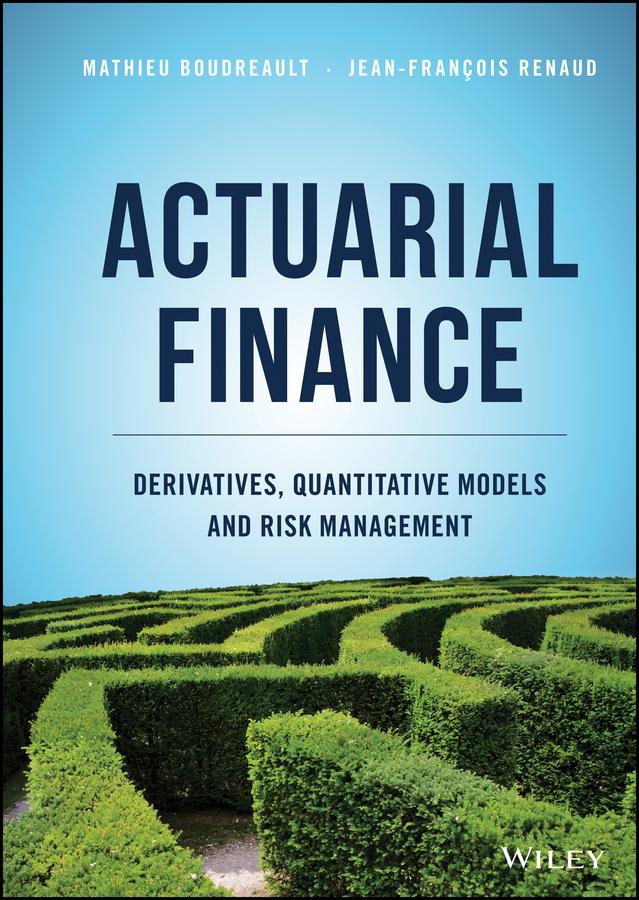
A new textbook offering a comprehensive introduction to models and techniques for the emerging field of actuarial Finance
Drs. Boudreault and Renaud answer the need for a clear, application-oriented guide to the growing field of actuarial finance with this volume, which focuses on the mathematical models and techniques used in actuarial finance for the pricing and hedging of actuarial liabilities exposed to financial markets and other contingencies. With roots in modern financial mathematics, actuarial finance presents unique challenges due to the long-term nature of insurance liabilities, the presence of mortality or other contingencies and the structure and regulations of the insurance and pension markets.
Motivated, designed and written for and by actuaries, this book puts actuarial applications at the forefront in addition to balancing mathematics and finance at an adequate level to actuarial undergraduates. While the classical theory of financial mathematics is discussed, the authors provide a thorough grounding in such crucial topics as recognizing embedded options in actuarial liabilities, adequately quantifying and pricing liabilities, and using derivatives and other assets to manage actuarial and financial risks.
Actuarial applications are emphasized and illustrated with about 300 examples and 200 exercises. The book also comprises end-of-chapter point-form summaries to help the reader review the most important concepts. Additional topics and features include:
This text will prove itself a firm foundation for undergraduate courses in financial mathematics or economics, actuarial mathematics or derivative markets. It is also highly applicable to current and future actuaries preparing for the exams or actuary professionals looking for a valuable addition to their reference shelf.
As of 2019, the book covers significant parts of the Society of Actuaries’ Exams FM, IFM and QFI Core, and the Casualty Actuarial Society’s Exams 2 and 3F. It is assumed the reader has basic skills in calculus (differentiation and integration of functions), probability (at the level of the Society of Actuaries’ Exam P), interest theory (time value of money) and, ideally, a basic understanding of elementary stochastic processes such as random walks.
Before Memmo my notes were scattered across PDFs. Now a workspace pulls everything into one place — I see exactly what's still left to study.
Memmo's summaries are gold before exams. I don't have to re-read 800 pages two weeks before — just the important parts.
The AI chat has saved me the night before an exam more than once. I just keep asking until I get it — no waiting on a study group to reply.
The quizzes hit exactly what I need to know. Memmo tracks what I get stuck on — so I only practice what's worth it.
Flashcards with spaced repetition are magic. Memmo knows when I'm about to forget something and brings it back.
The AI podcasts are my favorite. I listen on my way to school and get a recap without sitting at a computer.

Handbok i kvalitativa metoder
281 kr

Hållbar utveckling: en introduktion för ingenjörer och andra problemlösare
334 kr

Brymans Samhällsvetenskapliga metoder
390 kr

Projektledning
491 kr

Den orättvisa hälsan: om socioekonomiska skillnader i hälsa och livslängd
326 kr

Organizational Leadership
429 kr

Vetenskapsteori för nybörjare
196 kr

På väg mot läraryrket
172 kr

Det sociala livet i skolan: Socialpsykologiska perspektiv
253 kr

Betygsättningens didaktik
151 kr

Personality
402 kr

Studying Leadership
404 kr

Managing Innovation
477 kr

Introduktion till samhällsvetenskaplig metod
347 kr

The Psychology of Sex and Gender
698 kr

Evidens och kunskap för socialt arbete
207 kr

Introduction to Leadership
605 kr