
Before Memmo my notes were scattered across PDFs. Now a workspace pulls everything into one place — I see exactly what's still left to study.
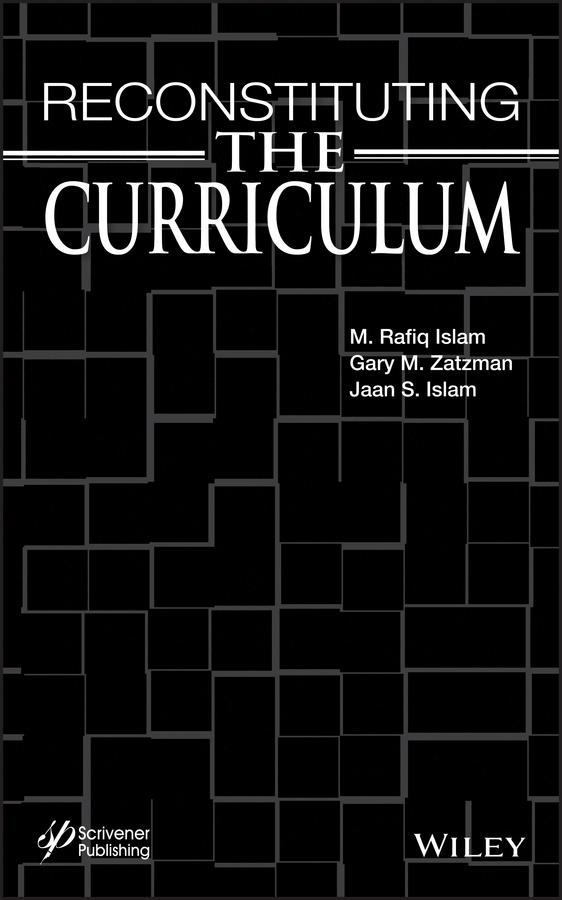
Based on groundbreaking new ideas, this treatise signals a return to a rebuilding and reshaping of the curriculum as the primary tool for education
This book presents a new definition of "curriculum" and what it should consist of, with a view toward creating a more ethical, educated, and thinking person. Rather than treating students as "products" for society, this approach returns to a view of the curriculum as a tool for educating students to reason through problems, be bold in creating new solutions, and contribute to a more vibrant, just world.
The university curriculum introduced in the post-Renaissance era, dominated by doctrinal philosophy, is based on "learning" or "skill development," suitable for creating a "learned" society that would eventually serve the establishment. This curriculum has been promoted as the only form suitable for the modern education system. It has introduced a tremendous amount of tangible advancement in all fields of the structured education system. These tangible gains are often promoted as "knowledge." This has created confusion between education (acquiring knowledge) and learning, training or skill development.
This book seeks to clarify the difference between these two divergent views of education. It has been shown that the current curriculum is not conducive to increasing a student's knowledge because it is based on consolidating preconceived ideas that have been either passed on from previous generations or gained through personal experience. In most cases, this mode of cognition will not create a pathway for gaining knowledge that brings one closer to discovery. The term "education," on the other hand, is always meant to be a process of "bringing forth" one's inherent qualities and unique traits, necessary and sufficient for increasing one's knowledge.
Before Memmo my notes were scattered across PDFs. Now a workspace pulls everything into one place — I see exactly what's still left to study.
Memmo's summaries are gold before exams. I don't have to re-read 800 pages two weeks before — just the important parts.
The AI chat has saved me the night before an exam more than once. I just keep asking until I get it — no waiting on a study group to reply.
The quizzes hit exactly what I need to know. Memmo tracks what I get stuck on — so I only practice what's worth it.
Flashcards with spaced repetition are magic. Memmo knows when I'm about to forget something and brings it back.
The AI podcasts are my favorite. I listen on my way to school and get a recap without sitting at a computer.

Handbok i kvalitativa metoder
281 kr

Hållbar utveckling: en introduktion för ingenjörer och andra problemlösare
334 kr

Brymans Samhällsvetenskapliga metoder
390 kr

Projektledning
491 kr

Den orättvisa hälsan: om socioekonomiska skillnader i hälsa och livslängd
326 kr

Organizational Leadership
429 kr

Vetenskapsteori för nybörjare
196 kr

På väg mot läraryrket
172 kr

Det sociala livet i skolan: Socialpsykologiska perspektiv
253 kr

Betygsättningens didaktik
151 kr

Personality
402 kr

Studying Leadership
404 kr

Managing Innovation
477 kr

Introduktion till samhällsvetenskaplig metod
347 kr

The Psychology of Sex and Gender
698 kr

Evidens och kunskap för socialt arbete
207 kr

Introduction to Leadership
605 kr