
Before Memmo my notes were scattered across PDFs. Now a workspace pulls everything into one place — I see exactly what's still left to study.
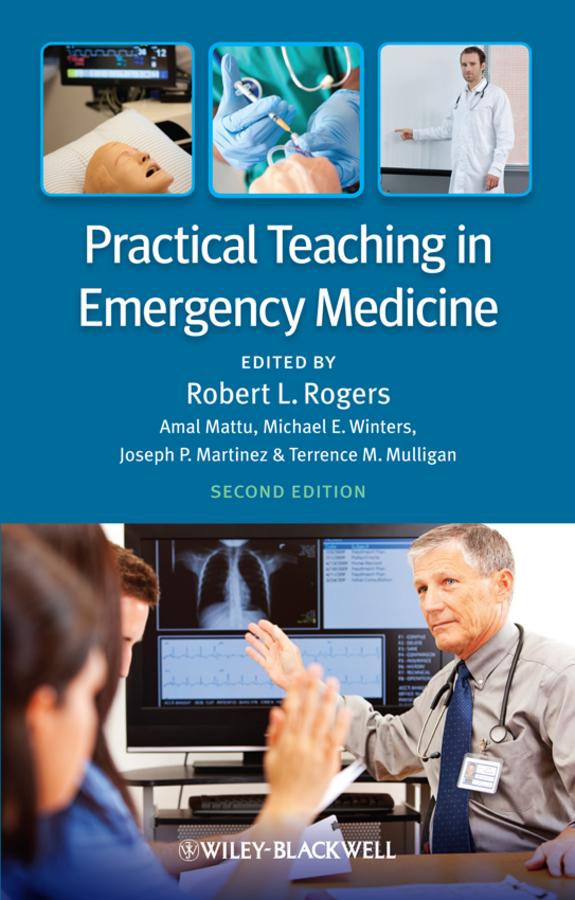
Emergency medicine attendings who wish to hone their teaching skills can find a number of books on educational strategies written by physicians from other disciplines. However, until the publication of the first edition of this book, they did not have access to a text written by emergency medicine physicians on methods of teaching that are directly applicable to teaching EM. This book was compiled to meet that need.
Following the introductory section, which provides important background information, the book’s contents are organized into 4 sections that correspond to the core needs and interests of EM educators: Section 2 focuses on practical and ethical considerations of teaching in the ED; Section 3 provides strategies for teaching specific groups of learners; Section 4 looks at the skills that are characteristic of the best EM educators; and Section 5 looks indepthly at specific teaching techniques and strategies.
Now more than ever this book addresses the needs of physician educators from all over the world. New chapters discuss lecturing to an international audience; using simulation as a teaching tool; how to make journal club work for you, and other topics that are of broad interest to medical educators in this field. In general, each chapter has been updated and reviewed to make sure the content was something that emergency physician educators could use in any country.
The chapter contributors are widely regarded as leaders in the field of emergency medicine education and faculty development. Authors were given free rein to develop their chapters and write in their own style. They were asked to present their personal views on how to successfully teach the art of emergency medicine, rather than review evidence-based guidelines regarding medical education. As a result, most of the chapters have few references. This first-person approach to a multi-authored textbook yields a compilation that varies in style from chapter to chapter and exposes the reader to a variety of communication techniques.
Before Memmo my notes were scattered across PDFs. Now a workspace pulls everything into one place — I see exactly what's still left to study.
Memmo's summaries are gold before exams. I don't have to re-read 800 pages two weeks before — just the important parts.
The AI chat has saved me the night before an exam more than once. I just keep asking until I get it — no waiting on a study group to reply.
The quizzes hit exactly what I need to know. Memmo tracks what I get stuck on — so I only practice what's worth it.
Flashcards with spaced repetition are magic. Memmo knows when I'm about to forget something and brings it back.
The AI podcasts are my favorite. I listen on my way to school and get a recap without sitting at a computer.

Handbok i kvalitativa metoder
281 kr

Hållbar utveckling: en introduktion för ingenjörer och andra problemlösare
334 kr

Brymans Samhällsvetenskapliga metoder
390 kr

Projektledning
491 kr

Den orättvisa hälsan: om socioekonomiska skillnader i hälsa och livslängd
326 kr

Vetenskapsteori för nybörjare
196 kr

Organizational Leadership
429 kr

På väg mot läraryrket
172 kr

Det sociala livet i skolan: Socialpsykologiska perspektiv
253 kr

Betygsättningens didaktik
151 kr

Personality
402 kr

Studying Leadership
404 kr

Managing Innovation
477 kr

Introduktion till samhällsvetenskaplig metod
347 kr

The Psychology of Sex and Gender
698 kr

Evidens och kunskap för socialt arbete
207 kr

Introduction to Leadership
605 kr