
Before Memmo my notes were scattered across PDFs. Now a workspace pulls everything into one place — I see exactly what's still left to study.
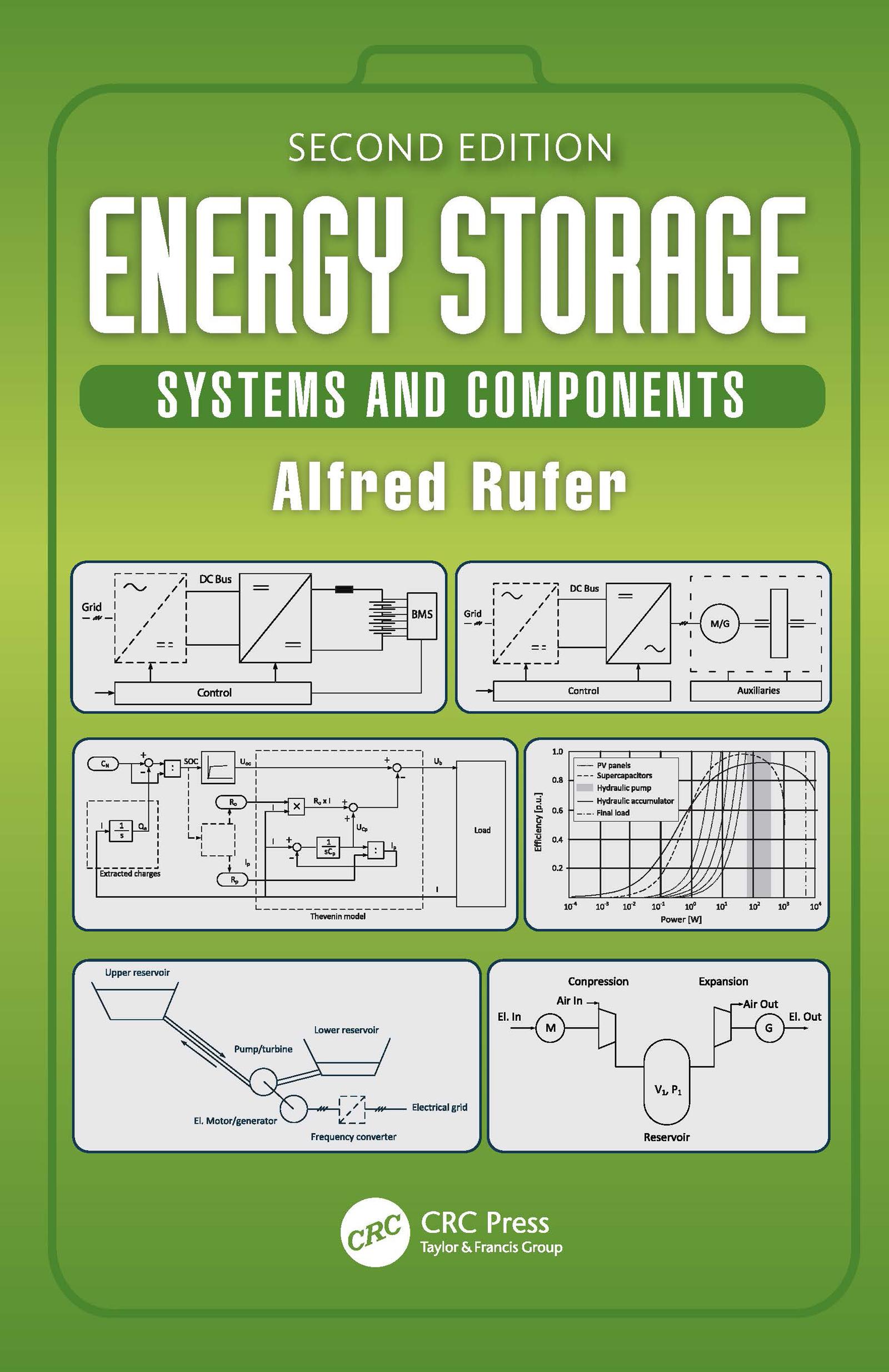
This updated edition explores the critical field of energy storage technologies in today’s evolving energy landscape. It serves as an essential reference describing various methods of storing energy in the context of renewable energy integration and efficient resource utilization.
Energy Storage: Systems and Components, Second Edition, provides a thorough examination of current storage technologies and analytical frameworks. The book explores systems using electrochemical transformations, classical battery storage elements, flow batteries, fuel cells and hydrogen storage while also investigating storage systems based on physical principles such as gravitational potential forces, air compression and rotational kinetic energy. The book begins with generalities on energy storage systems, establishing fundamental parameter sets for analyzing efficiency and performance characteristics, with special attention to usable energy density across different technologies. It then methodically reviews major storage technologies with detailed technical descriptions and models, covering everything from physics-based solutions like mechanical gravitational systems and pumped hydro to compressed air storage, various electrochemical solutions and chemical transformations. This new edition includes expanded sections on emerging topics like e-methanol production, synfuels for seasonal storage and dry gravitational technology. Readers will benefit from the inclusion of Ragone plot theory, which enables evaluation of real energy release potential relative to power dependency during discharge processes.
This book is ideally suited for practicing engineers and researchers in the energy domain who need comprehensive technical information on storage applications and design principles. It also serves engineering students studying energy systems, renewable integration and storage technologies, providing them with fundamental concepts and practical exercises to enhance understanding.
Before Memmo my notes were scattered across PDFs. Now a workspace pulls everything into one place — I see exactly what's still left to study.
Memmo's summaries are gold before exams. I don't have to re-read 800 pages two weeks before — just the important parts.
The AI chat has saved me the night before an exam more than once. I just keep asking until I get it — no waiting on a study group to reply.
The quizzes hit exactly what I need to know. Memmo tracks what I get stuck on — so I only practice what's worth it.
Flashcards with spaced repetition are magic. Memmo knows when I'm about to forget something and brings it back.
The AI podcasts are my favorite. I listen on my way to school and get a recap without sitting at a computer.

Handbok i kvalitativa metoder
281 kr

Hållbar utveckling: en introduktion för ingenjörer och andra problemlösare
334 kr

Brymans Samhällsvetenskapliga metoder
390 kr

Projektledning
491 kr

Den orättvisa hälsan: om socioekonomiska skillnader i hälsa och livslängd
326 kr

Organizational Leadership
429 kr

Vetenskapsteori för nybörjare
196 kr

På väg mot läraryrket
172 kr

Det sociala livet i skolan: Socialpsykologiska perspektiv
253 kr

Betygsättningens didaktik
151 kr

Personality
402 kr

Studying Leadership
404 kr

Managing Innovation
477 kr

Introduktion till samhällsvetenskaplig metod
347 kr

The Psychology of Sex and Gender
698 kr

Evidens och kunskap för socialt arbete
207 kr

Introduction to Leadership
605 kr