
Before Memmo my notes were scattered across PDFs. Now a workspace pulls everything into one place — I see exactly what's still left to study.
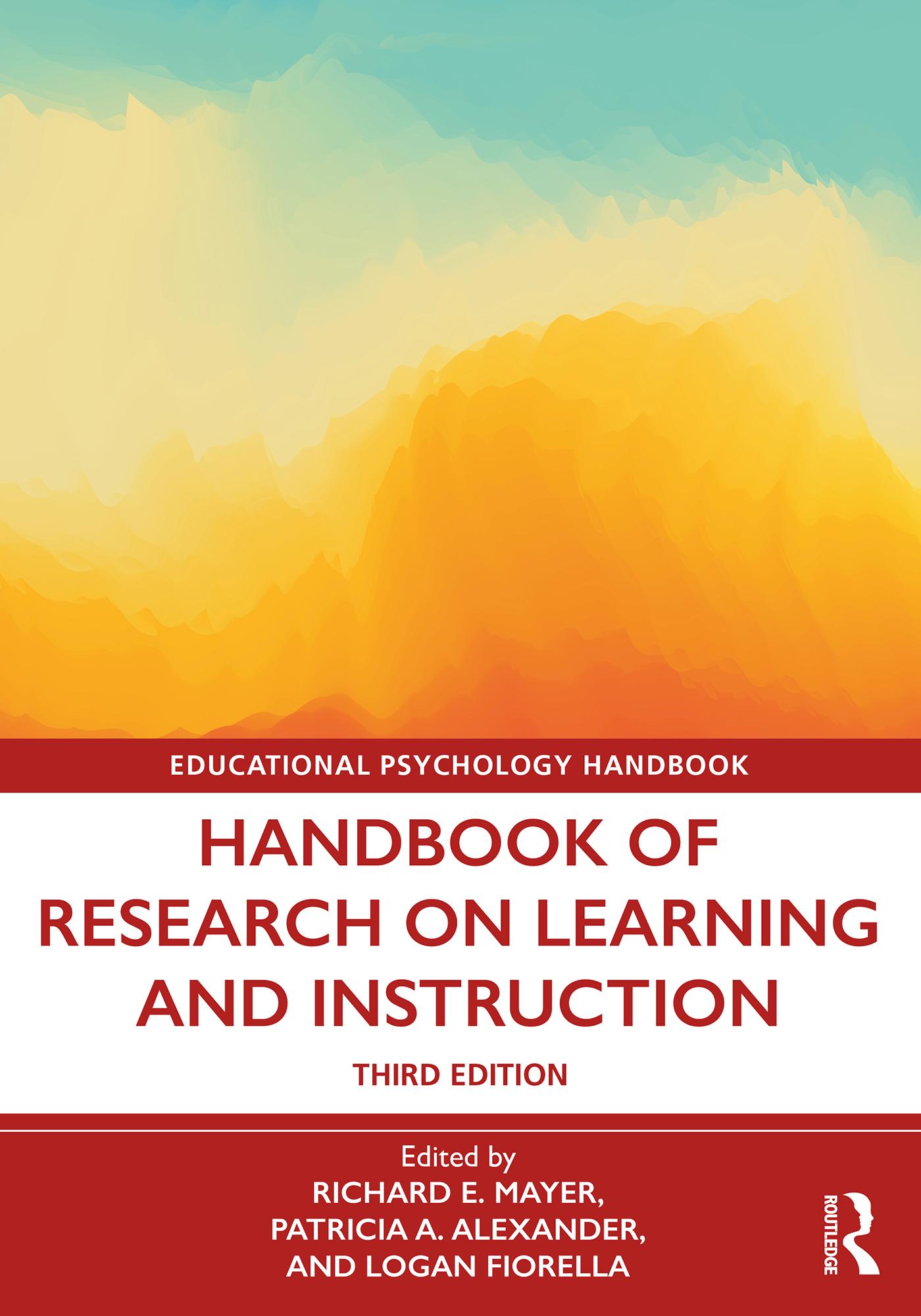
The third edition of the Handbook of Research on Learning and Instruction provides an overview of contemporary research advances in the science of learning (how people learn) and the science of instruction (how to help people learn). With chapters written by leading researchers from around the world, this volume examines learning and instruction in a variety of learning environments, including in and out of K-16 and adult learning classrooms. Contributors to this volume demonstrate how and why educational practice should be guided by research evidence concerning what works in instruction. The book is written at a level that is appropriate for students, researchers, and practitioners interested in evidence-based approaches to learning and instruction.
The book is divided into two sections: learning and instruction. The learning section consists of chapters on how people learn in a variety of domains, from reading and writing to science and math and beyond, as well as how people acquire the knowledge and processes required for critical thinking, self-regulation, motivation, and more. The instruction section consists of chapters on effective instructional methods—feedback, visualizations, active learning, self-explanation, collaboration, inquiry, games simulations, adaptive learning technologies, among others.
Each chapter in this third edition has been thoroughly revised to integrate recent advances in the field of educational psychology. Selected returning chapters have been merged for concision and comprehensiveness, while new chapters reflect cutting-edge insights into socioemotional learning, educational neuroscience, active learning in lecture classes, and generative learning strategies. As with the previous two editions, this foundational volume showcases the highest quality research being done on learning and instruction by traversing a broad array of academic domains, learning constructs, and instructional methods.
Before Memmo my notes were scattered across PDFs. Now a workspace pulls everything into one place — I see exactly what's still left to study.
Memmo's summaries are gold before exams. I don't have to re-read 800 pages two weeks before — just the important parts.
The AI chat has saved me the night before an exam more than once. I just keep asking until I get it — no waiting on a study group to reply.
The quizzes hit exactly what I need to know. Memmo tracks what I get stuck on — so I only practice what's worth it.
Flashcards with spaced repetition are magic. Memmo knows when I'm about to forget something and brings it back.
The AI podcasts are my favorite. I listen on my way to school and get a recap without sitting at a computer.

Handbok i kvalitativa metoder
281 kr

Hållbar utveckling: en introduktion för ingenjörer och andra problemlösare
334 kr

Brymans Samhällsvetenskapliga metoder
390 kr

Projektledning
491 kr

Den orättvisa hälsan: om socioekonomiska skillnader i hälsa och livslängd
326 kr

Vetenskapsteori för nybörjare
196 kr

Organizational Leadership
429 kr

På väg mot läraryrket
172 kr

Det sociala livet i skolan: Socialpsykologiska perspektiv
253 kr

Betygsättningens didaktik
151 kr

Personality
402 kr

Studying Leadership
404 kr

Managing Innovation
477 kr

Introduktion till samhällsvetenskaplig metod
347 kr

The Psychology of Sex and Gender
698 kr

Evidens och kunskap för socialt arbete
207 kr

Introduction to Leadership
605 kr