
Before Memmo my notes were scattered across PDFs. Now a workspace pulls everything into one place — I see exactly what's still left to study.
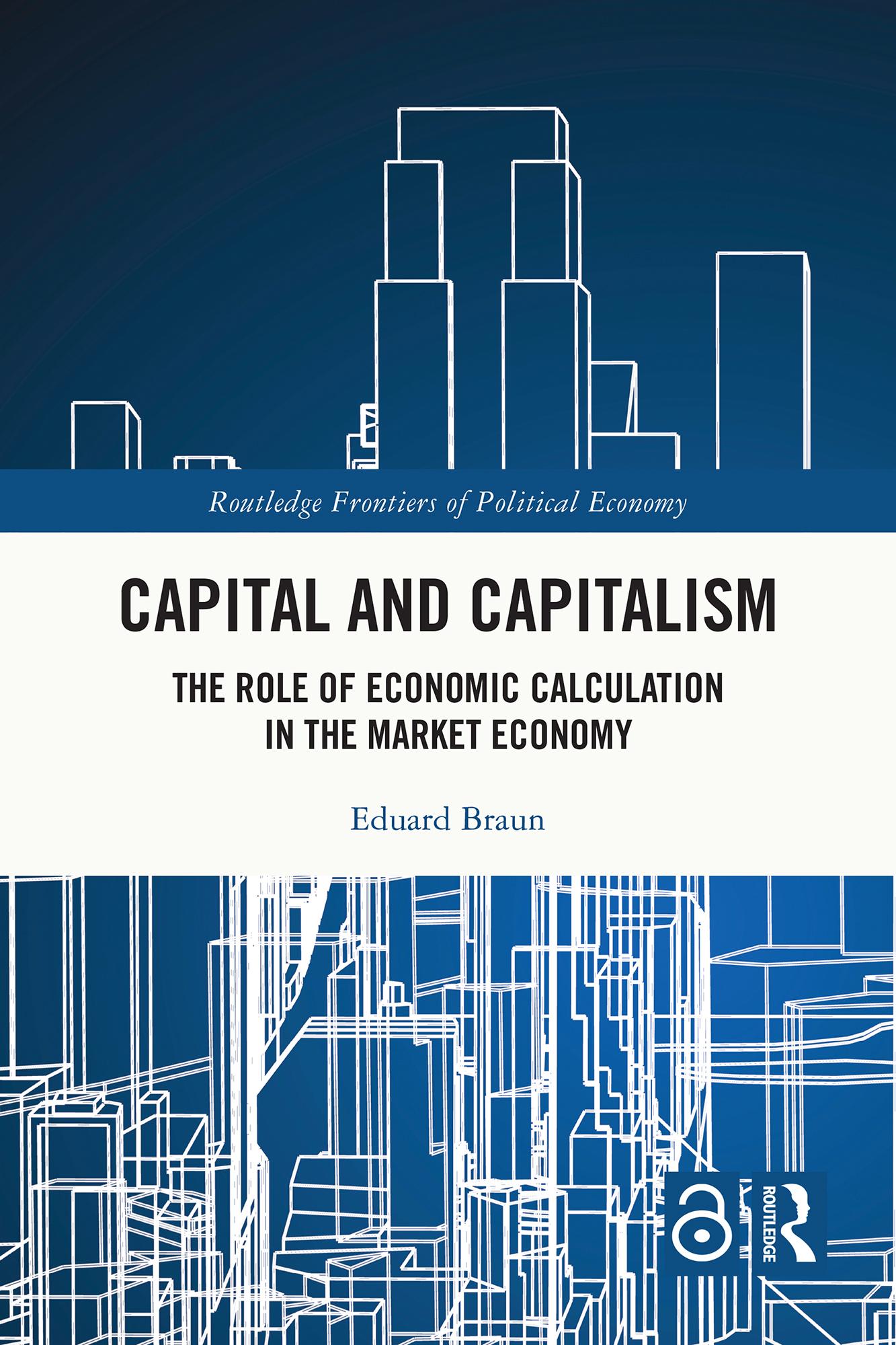
Capitalism is an economic system where almost all production and trade activities are organised by enterprises whose purpose is to maximise the return on the capital that has been invested in them. Economists, however, have almost universally defined capital in a way that makes it impossible for them to analyse important practical and societal aspects of the economic calculations of capital-based enterprises in capitalism.
In contrast, this book develops a theory of capital that is, at the same time, a theory of capitalism. Based on the definition of capital provided by the Historical and Institutional Schools, and later developed by Carl Menger and Ludwig von Mises, the theory of capital in this book takes account of the term “capital” as understood and used in actual business life. A theory of capital that is successful in explaining the rationale of economic calculations of profit-oriented enterprises in the market economy will necessarily also explain how the societal production process is organised in capitalism. Starting from the positive analysis of capital and capitalism, the book discusses the fair value and shareholder value revolutions of recent decades. These approaches, sometimes summarised under the label of “value-orientation,” have introduced theoretical neoclassical equilibrium concepts into the practice of enterprises in capitalism. The book argues that this has led to paradoxical and unsustainable results. It does not make sense to reform the institutions of economic calculation on the basis of a theory that does not, in any significant way, deal with these institutions.
The book will be of great interest to readers in the areas of Austrian economics, institutional economics, history of economic thought, varieties of capitalism, and financial accounting.
The Open Access version of this book, available at http://www.taylorfrancis.com, has been made available under a Creative Commons Attribution (CC-BY) 4.0 International license.
Before Memmo my notes were scattered across PDFs. Now a workspace pulls everything into one place — I see exactly what's still left to study.
Memmo's summaries are gold before exams. I don't have to re-read 800 pages two weeks before — just the important parts.
The AI chat has saved me the night before an exam more than once. I just keep asking until I get it — no waiting on a study group to reply.
The quizzes hit exactly what I need to know. Memmo tracks what I get stuck on — so I only practice what's worth it.
Flashcards with spaced repetition are magic. Memmo knows when I'm about to forget something and brings it back.
The AI podcasts are my favorite. I listen on my way to school and get a recap without sitting at a computer.

Handbok i kvalitativa metoder
281 kr

Hållbar utveckling: en introduktion för ingenjörer och andra problemlösare
334 kr

Brymans Samhällsvetenskapliga metoder
390 kr

Projektledning
491 kr

Den orättvisa hälsan: om socioekonomiska skillnader i hälsa och livslängd
326 kr

Vetenskapsteori för nybörjare
196 kr

Organizational Leadership
429 kr

På väg mot läraryrket
172 kr

Det sociala livet i skolan: Socialpsykologiska perspektiv
253 kr

Betygsättningens didaktik
151 kr

Personality
402 kr

Studying Leadership
404 kr

Managing Innovation
477 kr

Introduktion till samhällsvetenskaplig metod
347 kr

The Psychology of Sex and Gender
698 kr

Evidens och kunskap för socialt arbete
207 kr

Introduction to Leadership
605 kr