
Before Memmo my notes were scattered across PDFs. Now a workspace pulls everything into one place — I see exactly what's still left to study.
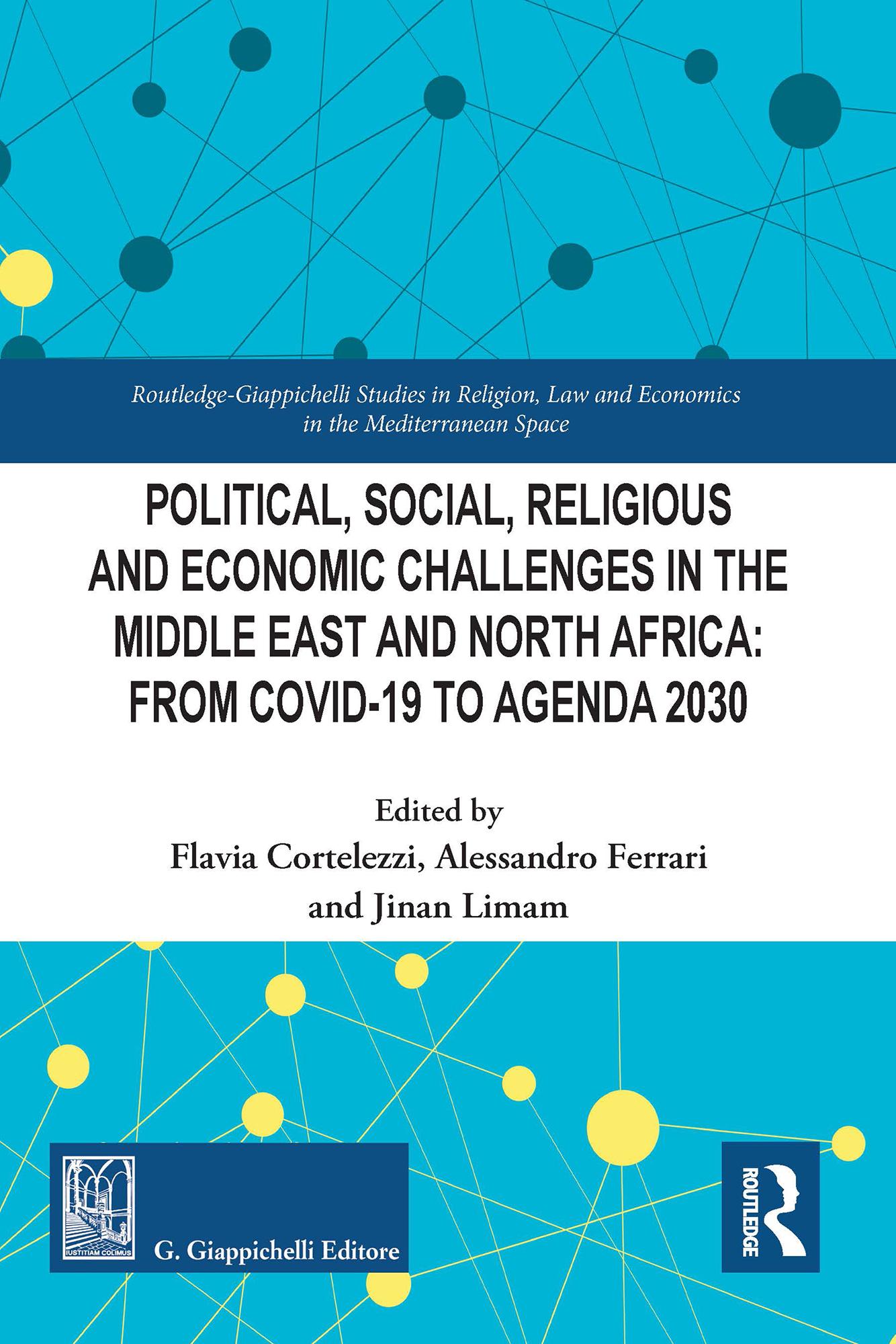
A decade after the “Arab springs”, the book aims to provide a concise perspective on the political, social and economic challenges of the southern shore of the Mediterranean a decade after the “Arab springs”. The volume, both from a sociolegal and economic perspective, aims to offer readers an analytical and up-todate
picture of the transformations in several particularly significant countries in the area under consideration. The volume thus covers the entire north African and near Eastern coastal belt, from Morocco to Lebanon, and extends its focus into the Gulf. In particular, keeping in the background the Agenda 2020-2030, the book explores, on the one side, the role of the religious factor in the transformation of the constitutional orders and, on the other, the perspectives of economies of MENA region in the decade that followed the “Arab springs”. In a different way, the Arab springs were characterized, from a constitutional point of view, by the attempt at a different relationship between political power and religion. This new arrangement, particularly evident in the Tunisian Constitution, but not absent in other contemporary experiences, was associated with favorable and expanding economic prospects. The book questions the relevance of this reading and how economic and political factors affected subsequent transformations. The situation of each country is individual in that it differs depending on many factors, starting with historical and geographical factors that have profoundly influenced social, political and economic structures. What is to be expected for the MENA region in the light of Agenda 2020-2030? Which are the major opportunities for growth and reform and which are the main risks? By adopting a multidisciplinary approach this book will offer a comprehensive picture of the main political and economic challenges for MENA region.
Before Memmo my notes were scattered across PDFs. Now a workspace pulls everything into one place — I see exactly what's still left to study.
Memmo's summaries are gold before exams. I don't have to re-read 800 pages two weeks before — just the important parts.
The AI chat has saved me the night before an exam more than once. I just keep asking until I get it — no waiting on a study group to reply.
The quizzes hit exactly what I need to know. Memmo tracks what I get stuck on — so I only practice what's worth it.
Flashcards with spaced repetition are magic. Memmo knows when I'm about to forget something and brings it back.
The AI podcasts are my favorite. I listen on my way to school and get a recap without sitting at a computer.

Handbok i kvalitativa metoder
281 kr

Hållbar utveckling: en introduktion för ingenjörer och andra problemlösare
334 kr

Brymans Samhällsvetenskapliga metoder
390 kr

Projektledning
491 kr

Den orättvisa hälsan: om socioekonomiska skillnader i hälsa och livslängd
326 kr

Vetenskapsteori för nybörjare
196 kr

Organizational Leadership
429 kr

På väg mot läraryrket
172 kr

Det sociala livet i skolan: Socialpsykologiska perspektiv
253 kr

Betygsättningens didaktik
151 kr

Personality
402 kr

Studying Leadership
404 kr

Managing Innovation
477 kr

Introduktion till samhällsvetenskaplig metod
347 kr

The Psychology of Sex and Gender
698 kr

Evidens och kunskap för socialt arbete
207 kr

Introduction to Leadership
605 kr