
Before Memmo my notes were scattered across PDFs. Now a workspace pulls everything into one place — I see exactly what's still left to study.
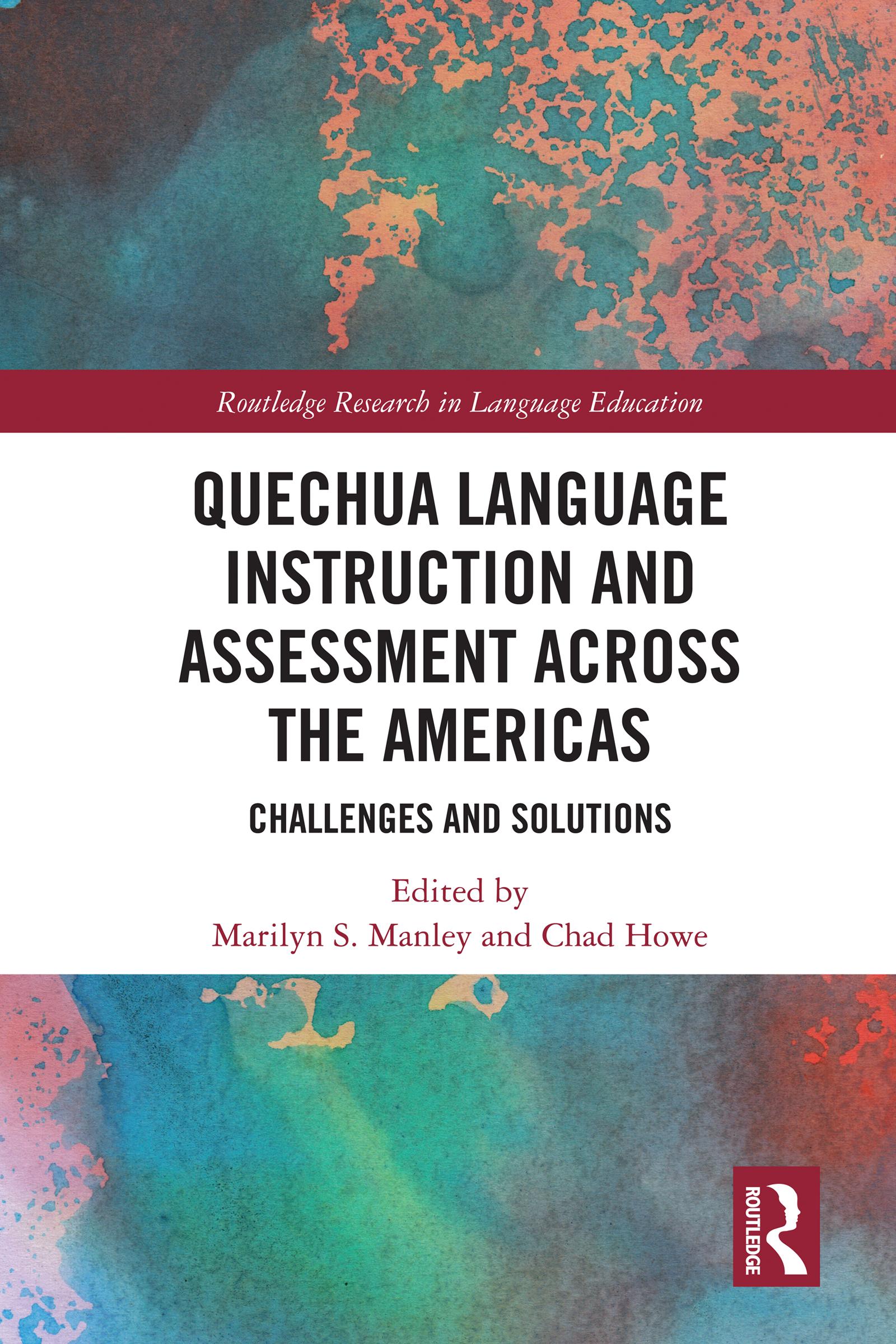
Quechua, with nearly ten million speakers living primarily across the Andes, stands as the most widely spoken Indigenous language of the Americas today. Yet, this less commonly taught language (LCTL) continues to face significant challenges. This work illuminates and interrogates current barriers to Quechua language instruction and assessment within the United States, Ecuador, Bolivia, and Peru. Collectively, the contributions to this volume offer a way forward with suggestions and solutions aimed at building the capacity of Quechua language stakeholders.
The volume describes barriers to effective Quechua language instruction and assessment, such as the problematic implementation of Intercultural Bilingual Education (IBE) in Peru and Ecuador, ineffective Quechua language learning materials, and inadequate Quechua language assessment instruments. To address these challenges, this work offers three primary solutions: expanding the target audience for Quechua language instruction and language learning materials, creating communicative language learning materials that reflect culturally appropriate, real-life situations and include nativized grammatical descriptions, and making necessary modifications to language proficiency assessment instruments. As such, it provides a blueprint for pushing Quechua language instruction and assessment beyond its current status and into a future in which instructors and students are offered high-quality, culturally grounded classroom experiences. These solutions may also apply to other LCTLs and, in particular, to other Indigenous languages of the Americas and beyond.
This timely volume, which responds to UNESCO's Global Call for Action in declaring 2022-2032 as the International Decade of Indigenous Languages, is essential reading for scholars, faculty, and students with interests in Indigenous languages, language acquisition (L1/L2), language pedagogy, language policy, sociolinguistics, linguistic anthropology, and decolonizing approaches to education.
Before Memmo my notes were scattered across PDFs. Now a workspace pulls everything into one place — I see exactly what's still left to study.
Memmo's summaries are gold before exams. I don't have to re-read 800 pages two weeks before — just the important parts.
The AI chat has saved me the night before an exam more than once. I just keep asking until I get it — no waiting on a study group to reply.
The quizzes hit exactly what I need to know. Memmo tracks what I get stuck on — so I only practice what's worth it.
Flashcards with spaced repetition are magic. Memmo knows when I'm about to forget something and brings it back.
The AI podcasts are my favorite. I listen on my way to school and get a recap without sitting at a computer.

Handbok i kvalitativa metoder
281 kr

Hållbar utveckling: en introduktion för ingenjörer och andra problemlösare
334 kr

Brymans Samhällsvetenskapliga metoder
390 kr

Projektledning
491 kr

Den orättvisa hälsan: om socioekonomiska skillnader i hälsa och livslängd
326 kr

Vetenskapsteori för nybörjare
196 kr

Organizational Leadership
429 kr

På väg mot läraryrket
172 kr

Det sociala livet i skolan: Socialpsykologiska perspektiv
253 kr

Betygsättningens didaktik
151 kr

Personality
402 kr

Studying Leadership
404 kr

Managing Innovation
477 kr

Introduktion till samhällsvetenskaplig metod
347 kr

The Psychology of Sex and Gender
698 kr

Evidens och kunskap för socialt arbete
207 kr

Introduction to Leadership
605 kr