
Before Memmo my notes were scattered across PDFs. Now a workspace pulls everything into one place — I see exactly what's still left to study.
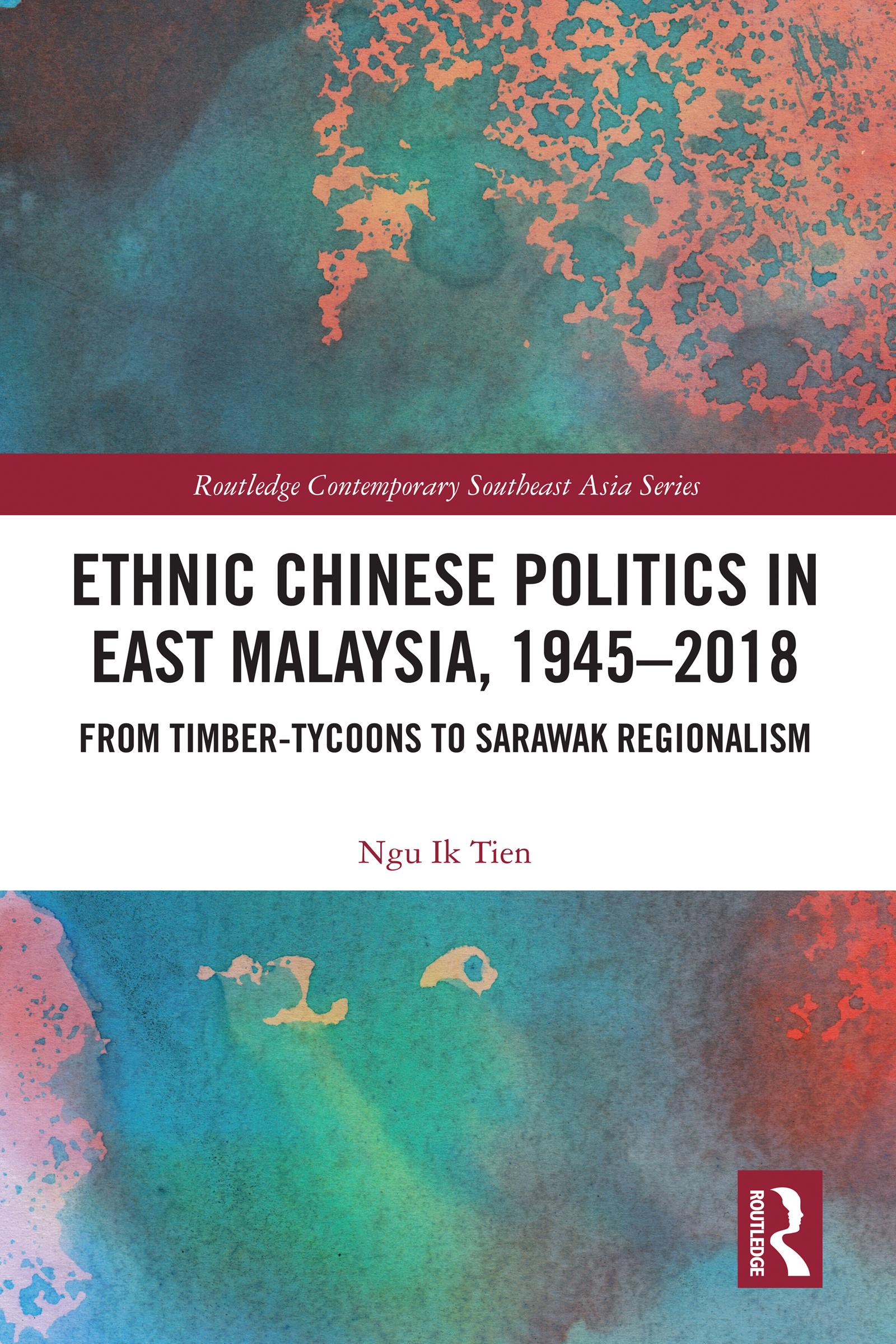
Ngu Ik Tien explores how Malaysia’s Barisan Nasional (BN) regime—once celebrated as a model of consociational democracy—achieved broad political domination through its structures and systems across the country, including in the Chinese-majority municipality of Sibu in Sarawak. However, the study reveals how the regime deviated from ideal consociational principles, ultimately alienating ethnic minorities and fueling the rise of subnational regionalism.
The book focuses primarily on the role of Chinese timber tycoons under the leadership of the Sarawak United Peoples’ Party (SUPP). Their influence over local social and political domains enabled them to broadly dominate local society. Through these local institutions, they established deeply rooted patron–client networks, parts of which were integrated into the Sarawak Barisan Nasional (SBN) machinery. However, growing local opposition meant that even politically well-connected timber tycoons could never achieve full domination. The increasing limits of these political structures led to the convergence of local and national forces calling for regime change and the subsequent rise of Sarawak regionalism discourse, which continues to structure Malaysian politics following BN’s fall from power in 2018. This provides valuable insights into how politics unfolds on the ground by decentering state-centric narratives to emphasize their entanglement with society and regime continuity in the present.
Ethnic Chinese Politics in East Malaysia, 1945–2018: From Timber-tycoons to Sarawak Regionalism is a valuable book for academics and scholars of Malaysian politics, consociational democracy, ethnonationalism, the ethnic Chinese political economy of Southeast Asia, and regionalism. It is also of interest to researchers and think tanks in political science, Southeast Asian studies, and comparative politics, as well as those studying regime transitions, state–society relations, and informal political networks.
Before Memmo my notes were scattered across PDFs. Now a workspace pulls everything into one place — I see exactly what's still left to study.
Memmo's summaries are gold before exams. I don't have to re-read 800 pages two weeks before — just the important parts.
The AI chat has saved me the night before an exam more than once. I just keep asking until I get it — no waiting on a study group to reply.
The quizzes hit exactly what I need to know. Memmo tracks what I get stuck on — so I only practice what's worth it.
Flashcards with spaced repetition are magic. Memmo knows when I'm about to forget something and brings it back.
The AI podcasts are my favorite. I listen on my way to school and get a recap without sitting at a computer.

Handbok i kvalitativa metoder
281 kr

Hållbar utveckling: en introduktion för ingenjörer och andra problemlösare
334 kr

Brymans Samhällsvetenskapliga metoder
390 kr

Projektledning
491 kr

Den orättvisa hälsan: om socioekonomiska skillnader i hälsa och livslängd
326 kr

Vetenskapsteori för nybörjare
196 kr

Organizational Leadership
429 kr

På väg mot läraryrket
172 kr

Det sociala livet i skolan: Socialpsykologiska perspektiv
253 kr

Betygsättningens didaktik
151 kr

Personality
402 kr

Studying Leadership
404 kr

Managing Innovation
477 kr

Introduktion till samhällsvetenskaplig metod
347 kr

The Psychology of Sex and Gender
698 kr

Evidens och kunskap för socialt arbete
207 kr

Introduction to Leadership
605 kr