
Before Memmo my notes were scattered across PDFs. Now a workspace pulls everything into one place — I see exactly what's still left to study.
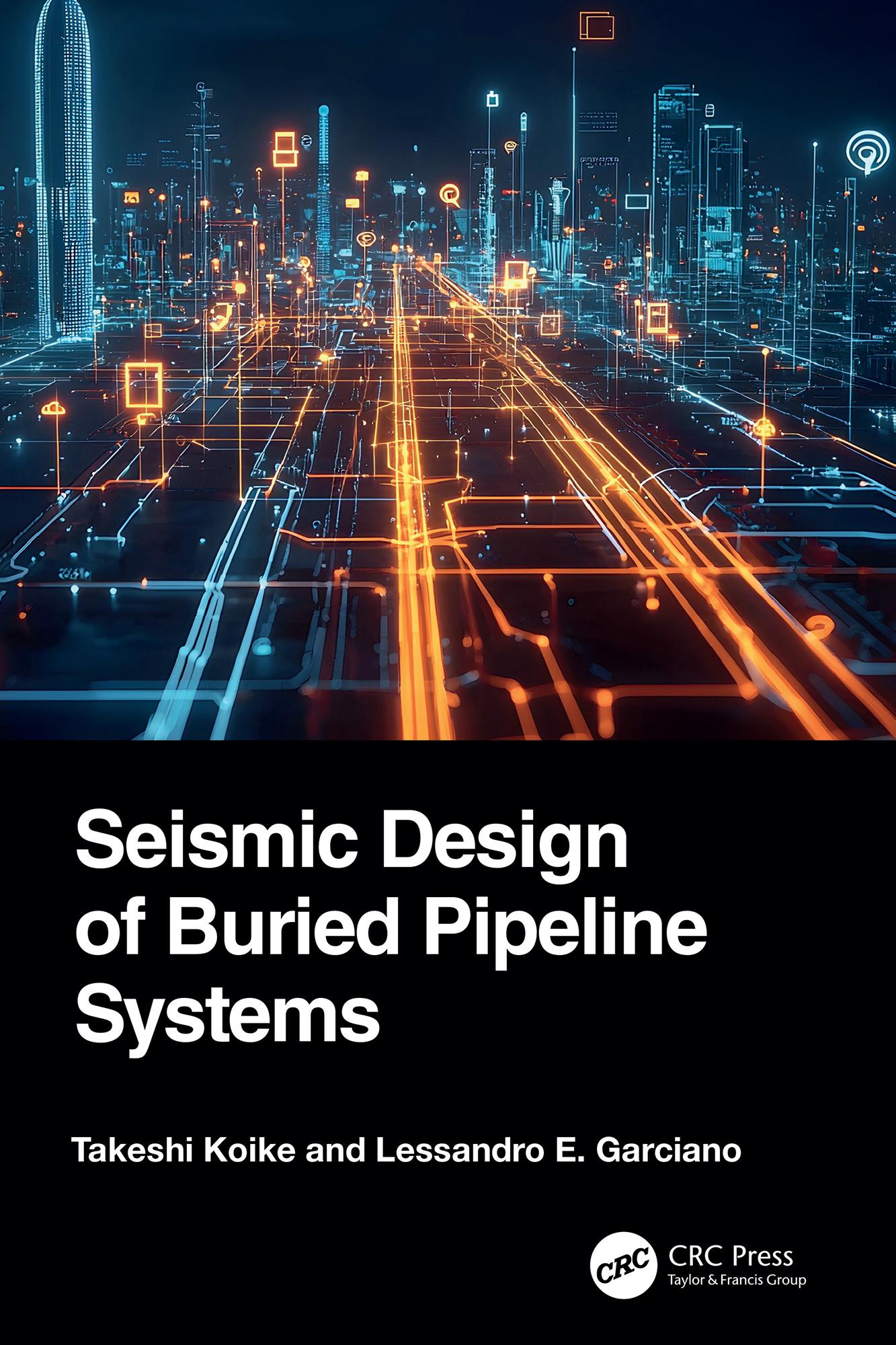
This book discusses the application of seismic design methods for lifeline earthquake engineering to buried pipelines so that readers can analyze their behavior and structural and functional characteristics, verify the results, and apply appropriate methods to design earthquake-resistant lifelines.
The authors focus on four key areas to provide readers with this understanding. First, they comprehensively explain seismic design methods for lifelines by systematically discussing the seismic design methods of expansion and contraction flexible joints. Second, they describe in detail the theoretical background of design formulas for seismic design of pipelines (the "slip concept") and verify the applicability of the design formulas to the elastoplastic state assumed by the current design method by comparing them with the finite element method (FEM) analysis results. Third, they explain how to verify the validity of FEM numerical analysis in line with the theoretical background of the design formulas. Fourth, they discuss the applicability of analytical models and theoretical formulas, the accuracy of analysis for evaluating load characteristic values, and ensuring the prediction accuracy of resistance strength evaluation formulas. This approach enables readers to deal with the nonlinear behavior of buried pipelines by deriving the formulas for straight and deformed pipe strains. They will then be able to verify the validity of FEM numerical analysis results and ensure the prediction accuracy of their resistance strength evaluations. Overall, the readers’ developed spatial, comprehensive, and chronological understanding of earthquake damage to urban lifelines will allow them to contribute to stronger disaster mitigation and faster disaster response in the event of damage to lifelines.
This book is a vital resource for practitioners and students to deepen their understanding of seismic design methods for lifelines. Researchers will also be able to use these findings as a reference for future technological development.
Before Memmo my notes were scattered across PDFs. Now a workspace pulls everything into one place — I see exactly what's still left to study.
Memmo's summaries are gold before exams. I don't have to re-read 800 pages two weeks before — just the important parts.
The AI chat has saved me the night before an exam more than once. I just keep asking until I get it — no waiting on a study group to reply.
The quizzes hit exactly what I need to know. Memmo tracks what I get stuck on — so I only practice what's worth it.
Flashcards with spaced repetition are magic. Memmo knows when I'm about to forget something and brings it back.
The AI podcasts are my favorite. I listen on my way to school and get a recap without sitting at a computer.

Handbok i kvalitativa metoder
281 kr

Hållbar utveckling: en introduktion för ingenjörer och andra problemlösare
334 kr

Brymans Samhällsvetenskapliga metoder
390 kr

Projektledning
491 kr

Den orättvisa hälsan: om socioekonomiska skillnader i hälsa och livslängd
326 kr

Vetenskapsteori för nybörjare
196 kr

Organizational Leadership
429 kr

På väg mot läraryrket
172 kr

Det sociala livet i skolan: Socialpsykologiska perspektiv
253 kr

Betygsättningens didaktik
151 kr

Personality
402 kr

Studying Leadership
404 kr

Managing Innovation
477 kr

Introduktion till samhällsvetenskaplig metod
347 kr

The Psychology of Sex and Gender
698 kr

Evidens och kunskap för socialt arbete
207 kr

Introduction to Leadership
605 kr