
Before Memmo my notes were scattered across PDFs. Now a workspace pulls everything into one place — I see exactly what's still left to study.
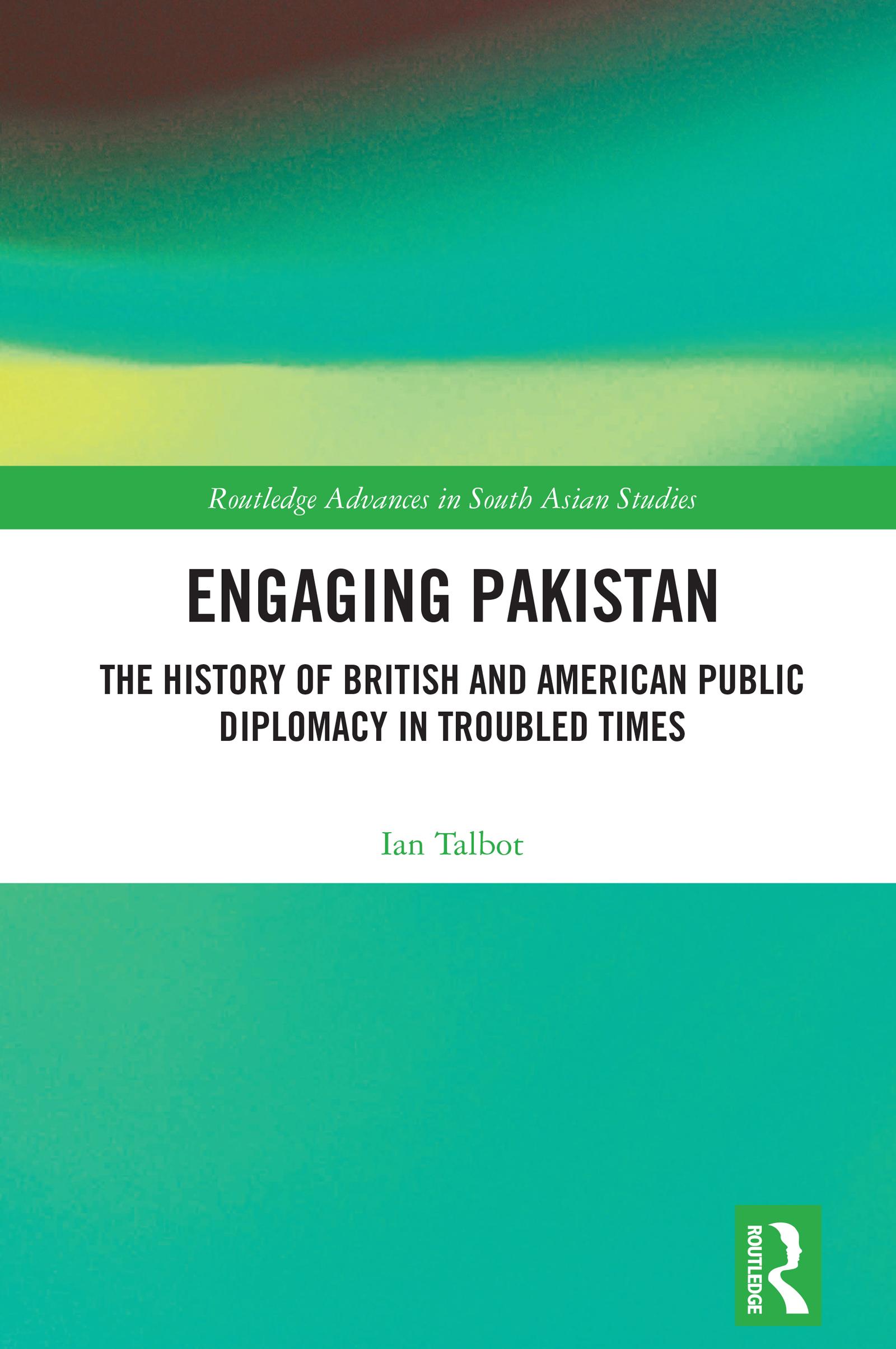
Engaging Pakistan examines the role of British and American public diplomacy in Pakistan. It focuses on case studies located in two periods (1955–1964 and 2008–2012) during which there was both intense public diplomacy activity and increasing public hostility, particularly towards the United States. Putting forth this juxtaposition of the two periods, the study provides an opportunity for a fine-grain analysis to contribute to wider theoretical and comparative studies of public diplomacy as well as provide valuable empirical material.
The author argues that limitations in the effectiveness of public diplomacy arise whenever foreign audiences perceive that a state’s foreign policy actions are illegitimate and inconsistent with its publicly proclaimed values. US unreliability in the 1960s and unilateralism four decades later undermined its soft power, despite the successes of individual public diplomacy initiatives. Anti-Americanism in Pakistan is usually linked with the aftermath of 9/11, but this volume will reveal that public mistrust stretched as far back as the 1960s. The Pakistani public trusted Britain far more, so that even when unpopular policies were adopted, there was not such a steep decline in its standing. Despite less funding, UK public diplomacy initiatives operated in a more favourable environment than that of the United States. The book focuses on five main areas of public diplomacy activities that generate soft power, namely, communication/information activities, educational exchanges and assistance, volunteering, cultural performances and exhibitions and high-profile visitors’ public engagement. These activities are examined in case studies from either a single time frame or covering both periods.
A pioneering study of British and American public diplomacy in Pakistan in the early Cold War and later post-9/11 eras, this book will be of interest to researchers on Modern South Asia, international relations, public diplomacy and diplomatic history, as well as those interested in wider subjects ranging from Cold War studies to sports history.
Before Memmo my notes were scattered across PDFs. Now a workspace pulls everything into one place — I see exactly what's still left to study.
Memmo's summaries are gold before exams. I don't have to re-read 800 pages two weeks before — just the important parts.
The AI chat has saved me the night before an exam more than once. I just keep asking until I get it — no waiting on a study group to reply.
The quizzes hit exactly what I need to know. Memmo tracks what I get stuck on — so I only practice what's worth it.
Flashcards with spaced repetition are magic. Memmo knows when I'm about to forget something and brings it back.
The AI podcasts are my favorite. I listen on my way to school and get a recap without sitting at a computer.

Handbok i kvalitativa metoder
281 kr

Hållbar utveckling: en introduktion för ingenjörer och andra problemlösare
334 kr

Brymans Samhällsvetenskapliga metoder
390 kr

Projektledning
491 kr

Den orättvisa hälsan: om socioekonomiska skillnader i hälsa och livslängd
326 kr

Vetenskapsteori för nybörjare
196 kr

Organizational Leadership
429 kr

På väg mot läraryrket
172 kr

Det sociala livet i skolan: Socialpsykologiska perspektiv
253 kr

Betygsättningens didaktik
151 kr

Personality
402 kr

Studying Leadership
404 kr

Managing Innovation
477 kr

Introduktion till samhällsvetenskaplig metod
347 kr

The Psychology of Sex and Gender
698 kr

Evidens och kunskap för socialt arbete
207 kr

Introduction to Leadership
605 kr