
Before Memmo my notes were scattered across PDFs. Now a workspace pulls everything into one place — I see exactly what's still left to study.
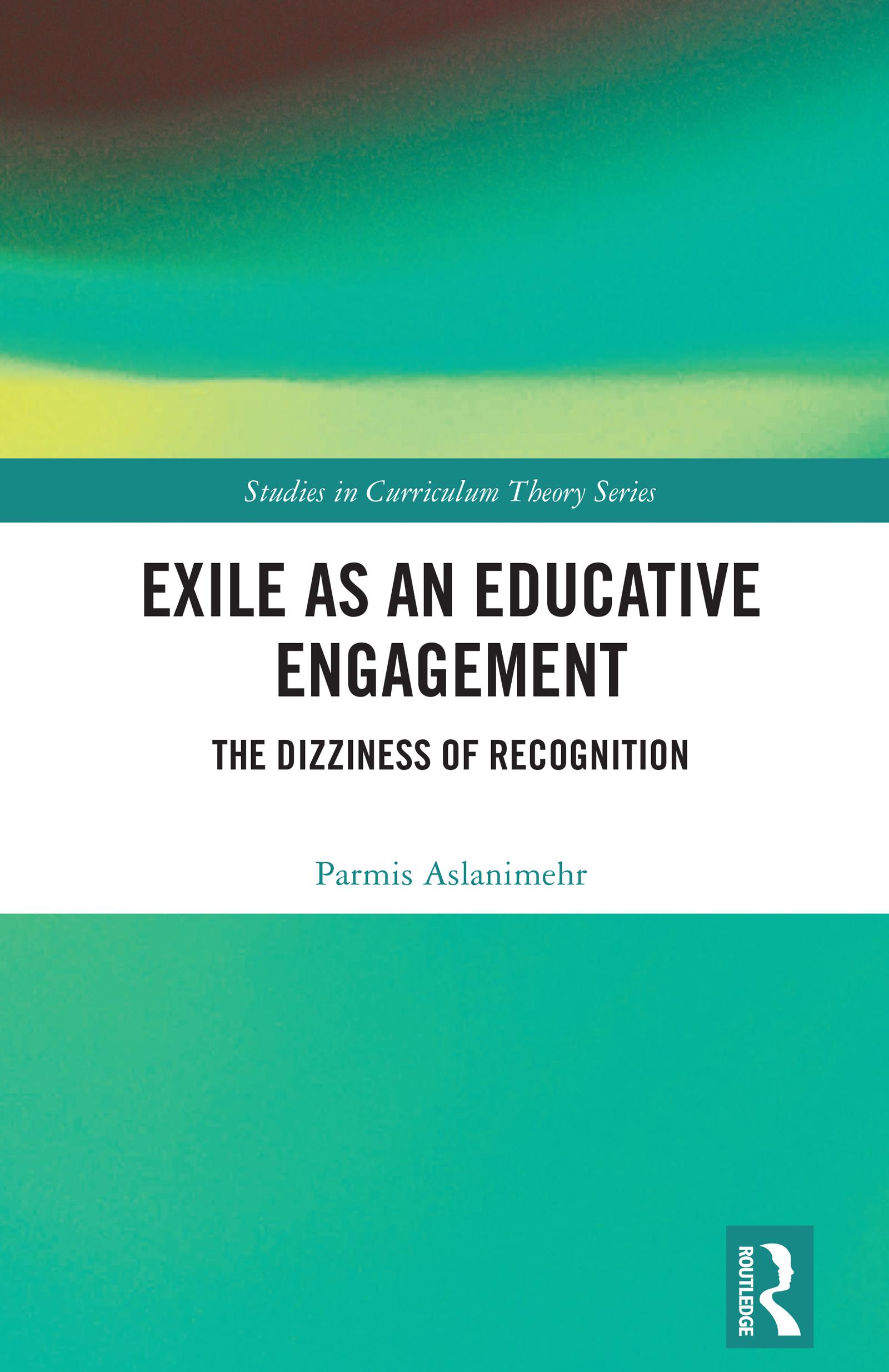
This book explores the concept of exile, experienced not as a physical displacement but as a subjective experience of disconnection from the Other. It further clarifies the notion of exilic subjectivity, whereby a hidden facet of the self—ineffable both to the Other and to the Self—causes a distance between self-comprehension and external perception. In doing so, it poses a challenge to recognition theory’s assertion that self-understanding occurs through interactions with Others. Engaging with the writings of Georg Wilhelm Friedrich Hegel, Charles Taylor, Axel Honneth, Søren Kierkegaard, and Rumi, the book explores the difficulties individuals encounter when transitioning their inwardly focused private identities into public spaces, such as educational institutions. It emphasizes the critical role educators can play in cultivating an atmosphere of attentive listening attuned to the unique experiences that may exile the self. Through the complex interplay of writings by thinkers such as Hegel, Kierkegaard, Rumi, Taylor, and Pinar, this work transcends traditional theories of recognition. Rather than resolving misrecognition, it embraces it as a central aspect of the human condition, examining the tension between self-perception and external acknowledgement. The text phenomenologically investigates “seeing” the Other and the risk of misrecognizing an individual’s innermost depths. These insights find resonance in academia, where even amid success, a chasm may persist, isolating students and educators from each other. As the self dwells in the uneasiness of estrangement, the discussion welcomes the ownership of silence and inwardness into the classroom. From this detached perspective, the possibility of recognizing the convergence of familiarity and strangeness before and within oneself may emerge.
This book is tailored for scholars, educators, and readers interested in the intersections of philosophy, education, and lived experience. It offers readers innovative approaches to understanding exile and recognition, fostering deeper engagement with the complexities of identity, alienation, and the self.
Before Memmo my notes were scattered across PDFs. Now a workspace pulls everything into one place — I see exactly what's still left to study.
Memmo's summaries are gold before exams. I don't have to re-read 800 pages two weeks before — just the important parts.
The AI chat has saved me the night before an exam more than once. I just keep asking until I get it — no waiting on a study group to reply.
The quizzes hit exactly what I need to know. Memmo tracks what I get stuck on — so I only practice what's worth it.
Flashcards with spaced repetition are magic. Memmo knows when I'm about to forget something and brings it back.
The AI podcasts are my favorite. I listen on my way to school and get a recap without sitting at a computer.

Handbok i kvalitativa metoder
281 kr

Hållbar utveckling: en introduktion för ingenjörer och andra problemlösare
334 kr

Brymans Samhällsvetenskapliga metoder
390 kr

Projektledning
491 kr

Den orättvisa hälsan: om socioekonomiska skillnader i hälsa och livslängd
326 kr

Vetenskapsteori för nybörjare
196 kr

Organizational Leadership
429 kr

På väg mot läraryrket
172 kr

Det sociala livet i skolan: Socialpsykologiska perspektiv
253 kr

Betygsättningens didaktik
151 kr

Personality
402 kr

Studying Leadership
404 kr

Managing Innovation
477 kr

Introduktion till samhällsvetenskaplig metod
347 kr

The Psychology of Sex and Gender
698 kr

Evidens och kunskap för socialt arbete
207 kr

Introduction to Leadership
605 kr