
Before Memmo my notes were scattered across PDFs. Now a workspace pulls everything into one place — I see exactly what's still left to study.
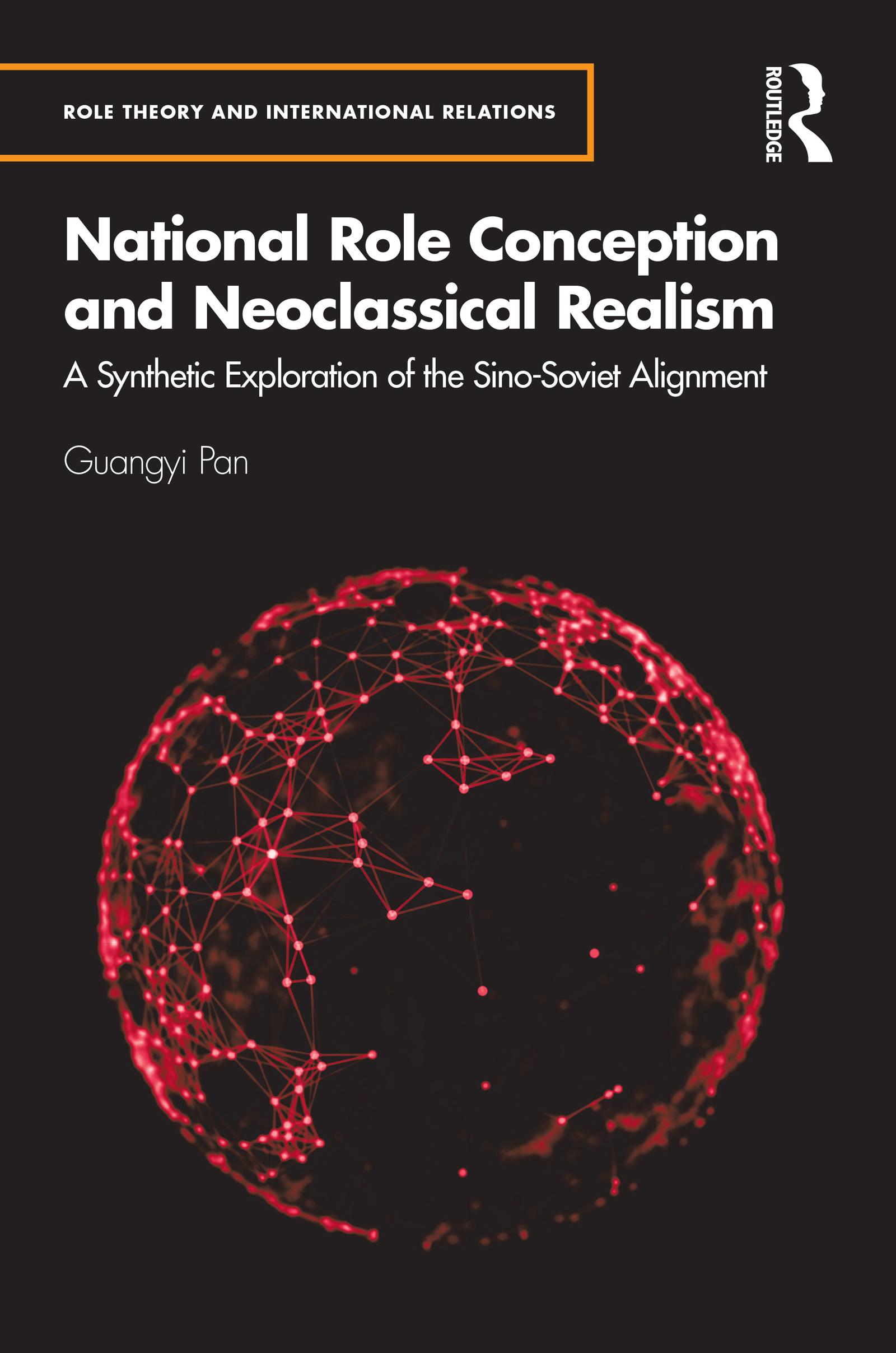
Despite China’s alignment with Russia being one of the most significant factors shaping the international order, the dynamics of their historic relationships and, more importantly, the sources of China’s alignment policy remain underexplored. In this book, National Role Conception and Neoclassical Realism, a synthetic exploration into the Sino-Soviet alignment, Guangyi Pan investigates this question by analysing the changes in China’s national role conception from a cross-level perspective.
Adding value to existing scholarly works on China’s decision-making logic, he examines two critical and dramatic moments in the history of Beijing’s alignment policy towards Moscow: the Sino-Soviet split in the 1960s and the normalisation in the 1980s. Based on massive historic documents and archives, he argues that the evolution of Beijing’s approach to aligning with Moscow results from its changing perception of China’s role in the world platform, especially its role relationship with the Soviet Union. The fundamental logic lies in how China positions itself, with the Soviet Union long serving as a mirror reflecting Beijing’s desired roles during pivotal transformations. By developing a more rigorous and coherent framework to analyse role conceptions, Guangyi Pan explores unit-level factors – including leader images, elite cohesion and political culture – alongside the impact of systemic stimuli. This approach constructs the complex process of role formation, evolution, performance and policy outcomes, offering a comprehensive understanding of China’s alignment with Russia throughout modern history.
Aimed primarily at scholars whose research fields include international relations theory, the Cold War history and politics of China, National Role Conception and Neoclassical Realism may also be of interest to foreign policymakers, students and political history enthusiasts.
Before Memmo my notes were scattered across PDFs. Now a workspace pulls everything into one place — I see exactly what's still left to study.
Memmo's summaries are gold before exams. I don't have to re-read 800 pages two weeks before — just the important parts.
The AI chat has saved me the night before an exam more than once. I just keep asking until I get it — no waiting on a study group to reply.
The quizzes hit exactly what I need to know. Memmo tracks what I get stuck on — so I only practice what's worth it.
Flashcards with spaced repetition are magic. Memmo knows when I'm about to forget something and brings it back.
The AI podcasts are my favorite. I listen on my way to school and get a recap without sitting at a computer.

Handbok i kvalitativa metoder
281 kr

Hållbar utveckling: en introduktion för ingenjörer och andra problemlösare
334 kr

Brymans Samhällsvetenskapliga metoder
390 kr

Projektledning
491 kr

Den orättvisa hälsan: om socioekonomiska skillnader i hälsa och livslängd
326 kr

Vetenskapsteori för nybörjare
196 kr

Organizational Leadership
429 kr

På väg mot läraryrket
172 kr

Det sociala livet i skolan: Socialpsykologiska perspektiv
253 kr

Betygsättningens didaktik
151 kr

Personality
402 kr

Studying Leadership
404 kr

Managing Innovation
477 kr

Introduktion till samhällsvetenskaplig metod
347 kr

The Psychology of Sex and Gender
698 kr

Evidens och kunskap för socialt arbete
207 kr

Introduction to Leadership
605 kr