
Before Memmo my notes were scattered across PDFs. Now a workspace pulls everything into one place — I see exactly what's still left to study.
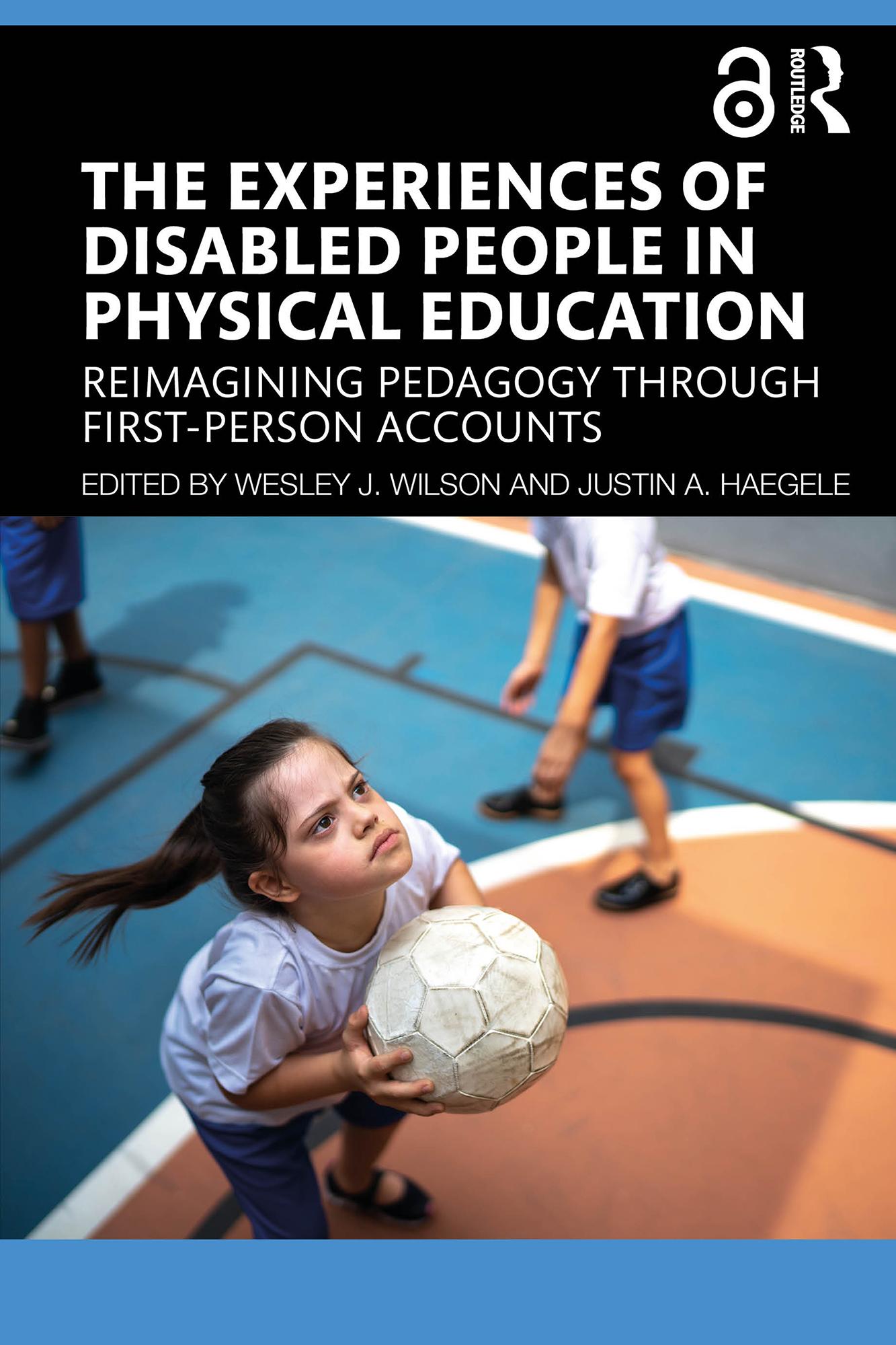
Bringing together a set of first-person accounts of physical education from the perspectives of disabled children and adults, this book puts disabled people’s voices in the foreground.
The book provides a rich set of case study material that deepens our understanding of the experiences of disabled people and challenges students, researchers, and practitioners to reflect critically upon their own positionality. The first part of the book discusses the ways in which disability has been conceptualized, how the voices of disabled people have sometimes been marginalized, and how nondisability power has historically framed the narratives of disabled people in physical education literature. It also discusses the innovative methods used in this book—such as storytelling through recorded conversations and drawings in addition to more traditional chapter writing—to empower disabled children and adults to act as authors of their own stories. Then the book presents the stories themselves in a variety of written, narrative, and alternative formats, a series of authentic accounts of the lived experiences of disabled people in physical education. Finally, the book concludes with the editors’ final thoughts and reflections about this collection of stories that can be used in the classroom to foster dialogue and encourage critical thinking. Importantly, these prompts have been co-constructed between the editors and the disabled people themselves.
This book is essential reading for any course in adapted physical education, physical education, or disability, for any pre- or in-service teacher, instructor, or coach working with disabled people, and for people who experience disability or their families with an interest in education, physical activity, or methods for elevating the voices of disabled people.
The Open Access version of this book, available at www.taylorfrancis.com, has been made available under a Creative Commons Attribution-Non-Commercial-No Derivatives (CC- BY- NC- ND) 4.0 license.
Before Memmo my notes were scattered across PDFs. Now a workspace pulls everything into one place — I see exactly what's still left to study.
Memmo's summaries are gold before exams. I don't have to re-read 800 pages two weeks before — just the important parts.
The AI chat has saved me the night before an exam more than once. I just keep asking until I get it — no waiting on a study group to reply.
The quizzes hit exactly what I need to know. Memmo tracks what I get stuck on — so I only practice what's worth it.
Flashcards with spaced repetition are magic. Memmo knows when I'm about to forget something and brings it back.
The AI podcasts are my favorite. I listen on my way to school and get a recap without sitting at a computer.

Handbok i kvalitativa metoder
281 kr

Hållbar utveckling: en introduktion för ingenjörer och andra problemlösare
334 kr

Brymans Samhällsvetenskapliga metoder
390 kr

Projektledning
491 kr

Den orättvisa hälsan: om socioekonomiska skillnader i hälsa och livslängd
326 kr

Organizational Leadership
429 kr

Vetenskapsteori för nybörjare
196 kr

På väg mot läraryrket
172 kr

Det sociala livet i skolan: Socialpsykologiska perspektiv
253 kr

Betygsättningens didaktik
151 kr

Personality
402 kr

Studying Leadership
404 kr

Managing Innovation
477 kr

Introduktion till samhällsvetenskaplig metod
347 kr

The Psychology of Sex and Gender
698 kr

Evidens och kunskap för socialt arbete
207 kr

Introduction to Leadership
605 kr