
Before Memmo my notes were scattered across PDFs. Now a workspace pulls everything into one place — I see exactly what's still left to study.
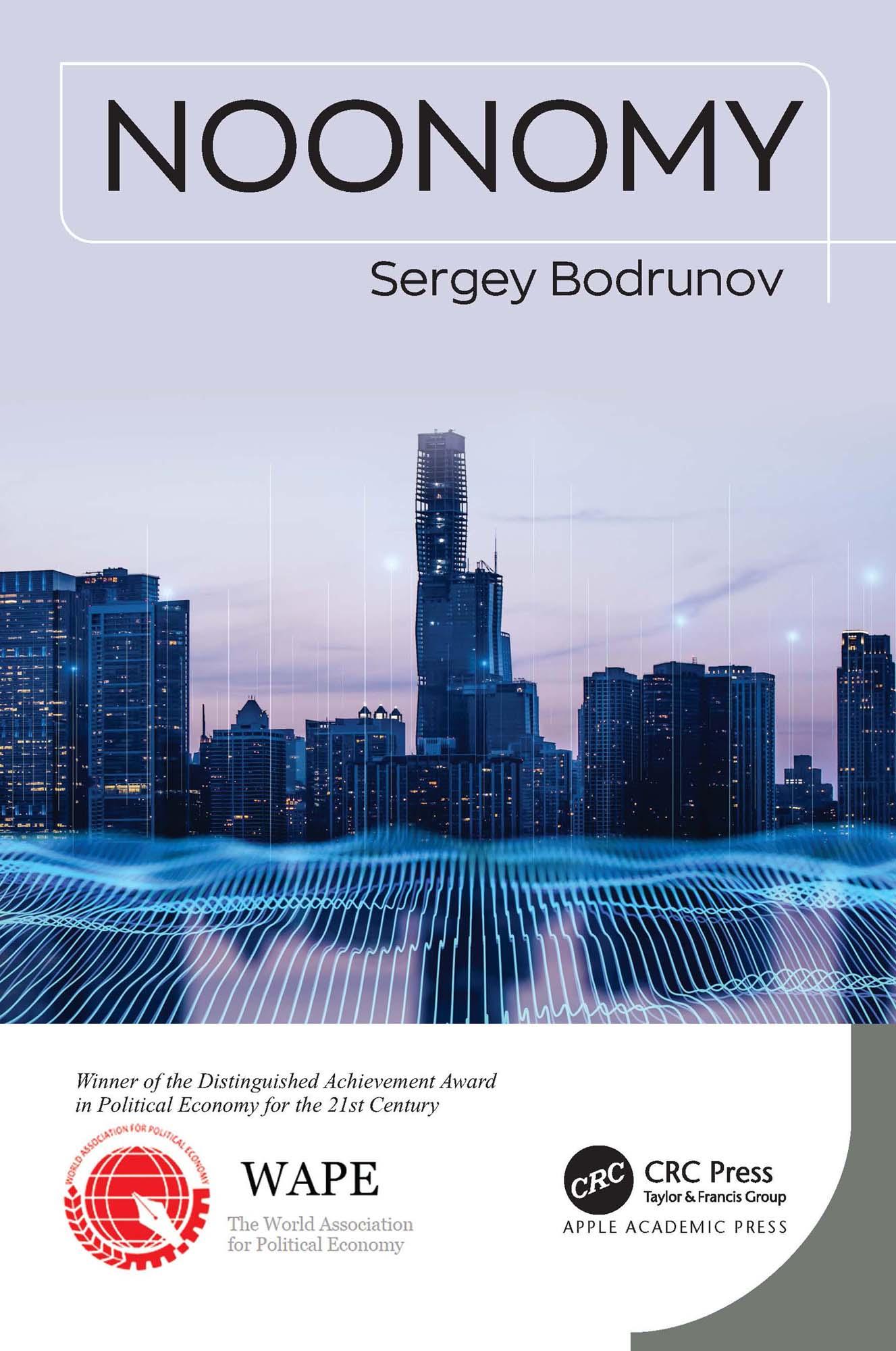
In this visionary work, the author suggests an original novel concept: the general theory of a new industrial society of the second generation that evolves toward a new quality of public existence–"noonomy." The volume explores the effect of modern technological shifts on human society. The author shows that technologies are about to undergo qualitative changes that will create new opportunities for personal development and the satisfaction of wants and, simultaneously, engender risks associated with growth opportunities of human interference with nature and technogenic stress on the environment. Based on the study of cutting-edge technologies and resulting socioeconomic shifts, Bodrunov makes the conclusion about the upcoming civilizational crisis. The crisis can be overcome through the formation of a new industrial society of the second generation reliant on knowledge-intensive material production and gradual removal of humans from immediate material production processes. These two trends can fully develop only subject to the transition from the current socioeconomic formation to a non-economic one–the noonomy.
The book determines the limits of humans as rational, self-interested agents who make decisions to maximize their own interests, who remain the key figure of mainstream economy. In order to move beyond these limits and prevent self-destruction of human civilization, the author proposes a new methodology for the organization of socioeconomic knowledge–noonomy, which uses technological progress to introduce a rational core into the management of the chaotically developing economy, something which, the author posits, we have failed to accomplish so far due to cultural regression and moral decay.
Systematically substantiating his theory by drawing on a wide range of sources and extensive empirical data, Dr. Bodrunov incorporates various components of rational socio-philosophical, political, and economic analysis with institutional theory and sociocultural analysis and focuses on the geopolitical economy approach to the issue under consideration.
The volume begins with a discussion of the basic principles of the research method used in the book along with the an explanation of how the key role of material production constitutes an essential principle that underlies the approach to explaining social development processes. The author emphasizes an essential and ever-increasing role of knowledge in the development of production technologies that occurs through a change in technological modes and is accompanied by changes in the structure of manufactured products and evolution in the level of saturation and structure of human wants.
The volume then assesses the first steps towards transitioning to a new stage of industrial production, a new type of knowledge-intensive material production that manufactures knowledge-intensive products. The volume considers the risks associated with the unchecked development of new technologies, which, while expanding opportunities for the satisfaction of human wants, also increases environmental stress and requires the need for finding occupations for people who used to be employed in dying professions. The volume examines how humans’ withdrawal from immediate production and the disappearance of economic relations serves as a non-economic way of regulating production activities of an autonomous technosphere by steering its development in accordance with personal development needs.
Introducing the English-speaking audience to a wide array of Russian twentieth-century authors that are little known abroad and whose studies on technological, economic and sociocultural transformations hold truly global significance, this eye-opening book will be of interest to those teaching and interested in the social philosophy of development of the human civilization and strategy of social and economic development.
Before Memmo my notes were scattered across PDFs. Now a workspace pulls everything into one place — I see exactly what's still left to study.
Memmo's summaries are gold before exams. I don't have to re-read 800 pages two weeks before — just the important parts.
The AI chat has saved me the night before an exam more than once. I just keep asking until I get it — no waiting on a study group to reply.
The quizzes hit exactly what I need to know. Memmo tracks what I get stuck on — so I only practice what's worth it.
Flashcards with spaced repetition are magic. Memmo knows when I'm about to forget something and brings it back.
The AI podcasts are my favorite. I listen on my way to school and get a recap without sitting at a computer.

Handbok i kvalitativa metoder
281 kr

Hållbar utveckling: en introduktion för ingenjörer och andra problemlösare
334 kr

Brymans Samhällsvetenskapliga metoder
390 kr

Projektledning
491 kr

Den orättvisa hälsan: om socioekonomiska skillnader i hälsa och livslängd
326 kr

Vetenskapsteori för nybörjare
196 kr

Organizational Leadership
429 kr

På väg mot läraryrket
172 kr

Det sociala livet i skolan: Socialpsykologiska perspektiv
253 kr

Betygsättningens didaktik
151 kr

Personality
402 kr

Studying Leadership
404 kr

Managing Innovation
477 kr

Introduktion till samhällsvetenskaplig metod
347 kr

The Psychology of Sex and Gender
698 kr

Evidens och kunskap för socialt arbete
207 kr

Introduction to Leadership
605 kr