
Before Memmo my notes were scattered across PDFs. Now a workspace pulls everything into one place — I see exactly what's still left to study.
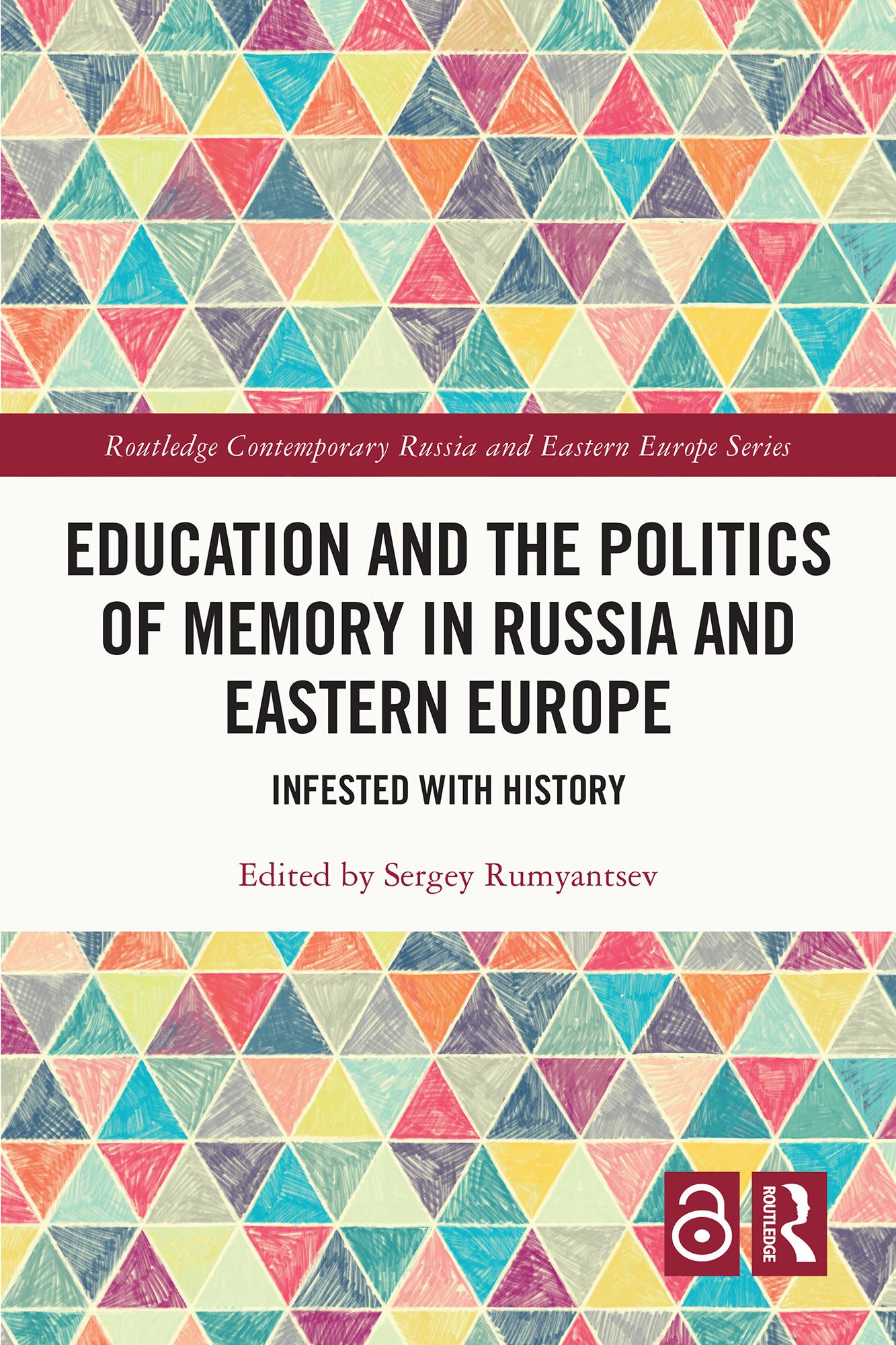
This book examines both formal and extracurricular education, and the politics of memory and historical narratives in Armenia, Azerbaijan, Russia, and Ukraine.
The misalignment between memory politics and history politics forms a central theme of this book. Structured in three parts, it focuses on school education in the post-Soviet states over the 30 years between the collapse of the Soviet Union and the 2022 Russian invasion of Ukraine. The chapters inquire as to how post-Soviet school education, politics of memory, and history politics became active participants in the production of state-approved ideology, patriotism, and a state-prescribed understanding of the national past. Armed conflicts in the territory of the former USSR not only saw numerous victims and refugees but also the emergence of new borders and unrecognized (de-facto) states, and the annexation of territories. They also contributed to the creation of new sites of memory, generated their own traditions of commemoration for the heroes and victims of these confrontations, and led to the reconstruction of historical narratives and the construction of new national myths. The research in this book foregrounds how the nationalization of the public space and the reconstruction of national historical narratives in the independent states reflect a desire to monopolize the power to interpret the past, with low tolerance of alternative accounts. In this light, the book covers issues such as the nation-state, Sovietization, national history creation, memory politics, religion, mass media, nationalism and patriotism, and analyzes the relationship of Azerbaijani and Armenian, Russian and Ukrainian societies with their histories and pasts.
A novel study on the topic of memory and history writing, this is a timely contribution to the field of Post-Soviet history and Russian and Eastern European Studies.
The Open Access version of this book, available at http://www.taylorfrancis.com, has been made available under a Creative Commons Attribution-Non Commercial-No Derivatives (CC-BY-NC-ND) 4.0 license.
Before Memmo my notes were scattered across PDFs. Now a workspace pulls everything into one place — I see exactly what's still left to study.
Memmo's summaries are gold before exams. I don't have to re-read 800 pages two weeks before — just the important parts.
The AI chat has saved me the night before an exam more than once. I just keep asking until I get it — no waiting on a study group to reply.
The quizzes hit exactly what I need to know. Memmo tracks what I get stuck on — so I only practice what's worth it.
Flashcards with spaced repetition are magic. Memmo knows when I'm about to forget something and brings it back.
The AI podcasts are my favorite. I listen on my way to school and get a recap without sitting at a computer.

Handbok i kvalitativa metoder
281 kr

Hållbar utveckling: en introduktion för ingenjörer och andra problemlösare
334 kr

Brymans Samhällsvetenskapliga metoder
390 kr

Projektledning
491 kr

Den orättvisa hälsan: om socioekonomiska skillnader i hälsa och livslängd
326 kr

Vetenskapsteori för nybörjare
196 kr

Organizational Leadership
429 kr

På väg mot läraryrket
172 kr

Det sociala livet i skolan: Socialpsykologiska perspektiv
253 kr

Betygsättningens didaktik
151 kr

Personality
402 kr

Studying Leadership
404 kr

Managing Innovation
477 kr

Introduktion till samhällsvetenskaplig metod
347 kr

The Psychology of Sex and Gender
698 kr

Evidens och kunskap för socialt arbete
207 kr

Introduction to Leadership
605 kr