
Before Memmo my notes were scattered across PDFs. Now a workspace pulls everything into one place — I see exactly what's still left to study.
Virtually every engineer and scientist must be able to collect, analyze, interpret, and properly use vast arrays of data. This means acquiring a solid foundation in the methods of data analysis and synthesis. Understanding the theoretical aspects is important, but learning to properly apply the theory to real-world problems is essential.
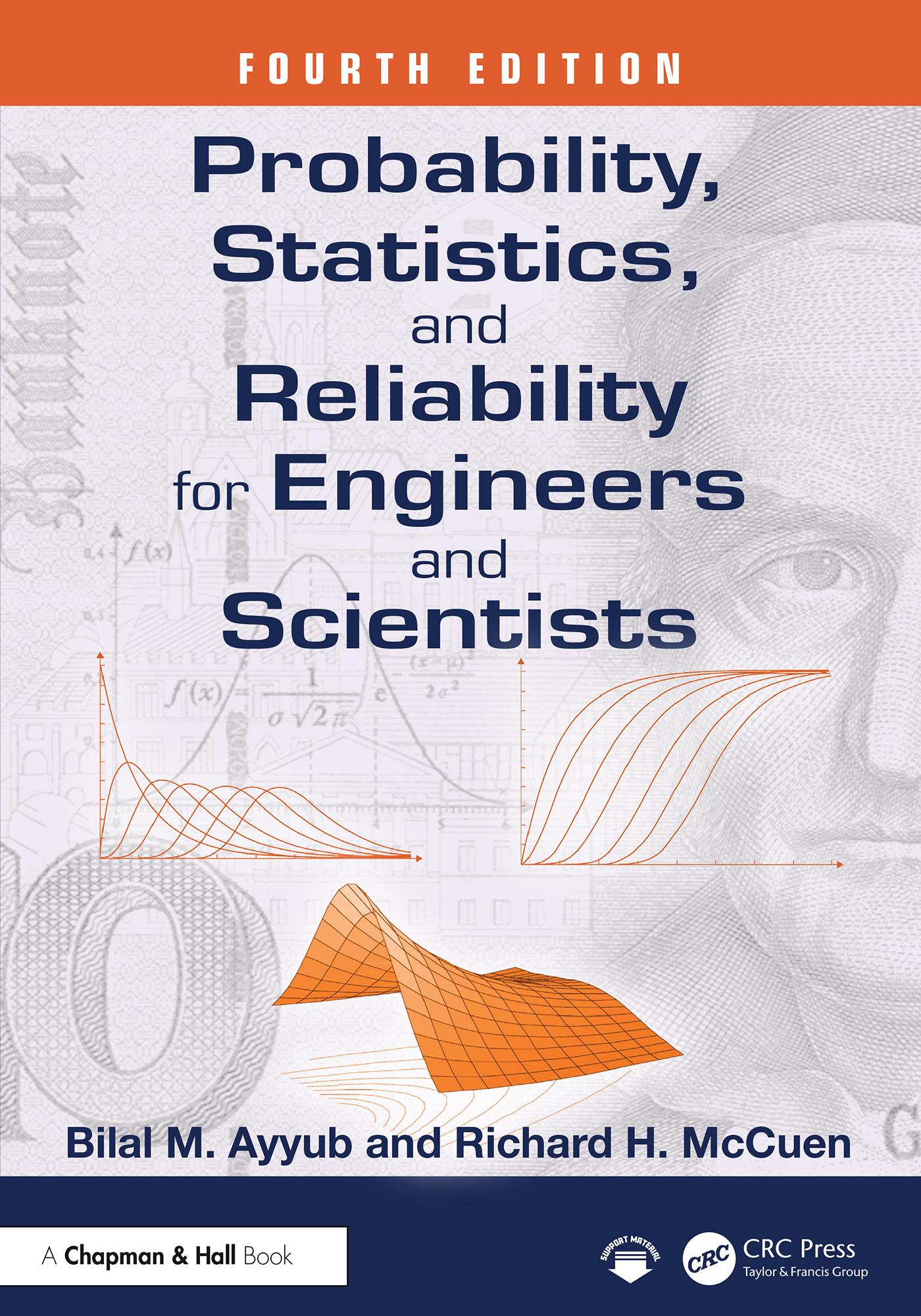
The goal of this popular and proven book is to introduce the fundamentals of probability, statistics, reliability, and risk methods to engineers and scientists for the purpose of data and uncertainty analysis and modeling in support of decision-making.
The primary objectives to the author’s approach include: (1) introducing probability, statistics, reliability, and risk methods to students and practicing professionals in engineering and the sciences; (2) emphasizing the practical use of these methods; and (3) establishing the limitations, advantages, and disadvantages of the methods. The book was developed with an emphasis on solving real-world technological problems that engineers and scientists are asked to solve as part of their professional responsibilities.
Upon graduation, engineers and scientists must have a solid academic foundation in methods of data analysis and synthesis, as the analysis and synthesis of complex systems are common tasks that confront even entry-level professionals.
The underlying theory, especially the assumptions central to the methods, is presented, but then the proper application of the theory is presented through realistic examples, often using actual data. Every attempt is made to show that methods of data analysis are not independent of each other. Instead, we show that real-world problem-solving often involves applying many of the methods presented in different chapters.
Probability, Statistics, and Reliability for Engineers and Scientists, here in its fourth edition, is a very popular textbook. Ultimately, readers will find its content of great value in problem-solving and decision-making, particularly in practical applications.
Before Memmo my notes were scattered across PDFs. Now a workspace pulls everything into one place — I see exactly what's still left to study.
Memmo's summaries are gold before exams. I don't have to re-read 800 pages two weeks before — just the important parts.
The AI chat has saved me the night before an exam more than once. I just keep asking until I get it — no waiting on a study group to reply.
The quizzes hit exactly what I need to know. Memmo tracks what I get stuck on — so I only practice what's worth it.
Flashcards with spaced repetition are magic. Memmo knows when I'm about to forget something and brings it back.
The AI podcasts are my favorite. I listen on my way to school and get a recap without sitting at a computer.

Handbok i kvalitativa metoder
281 kr

Hållbar utveckling: en introduktion för ingenjörer och andra problemlösare
334 kr

Brymans Samhällsvetenskapliga metoder
390 kr

Projektledning
491 kr

Den orättvisa hälsan: om socioekonomiska skillnader i hälsa och livslängd
326 kr

Vetenskapsteori för nybörjare
196 kr

Organizational Leadership
429 kr

På väg mot läraryrket
172 kr

Det sociala livet i skolan: Socialpsykologiska perspektiv
253 kr

Betygsättningens didaktik
151 kr

Personality
402 kr

Studying Leadership
404 kr

Managing Innovation
477 kr

Introduktion till samhällsvetenskaplig metod
347 kr

The Psychology of Sex and Gender
698 kr

Evidens och kunskap för socialt arbete
207 kr

Introduction to Leadership
605 kr