
Before Memmo my notes were scattered across PDFs. Now a workspace pulls everything into one place — I see exactly what's still left to study.
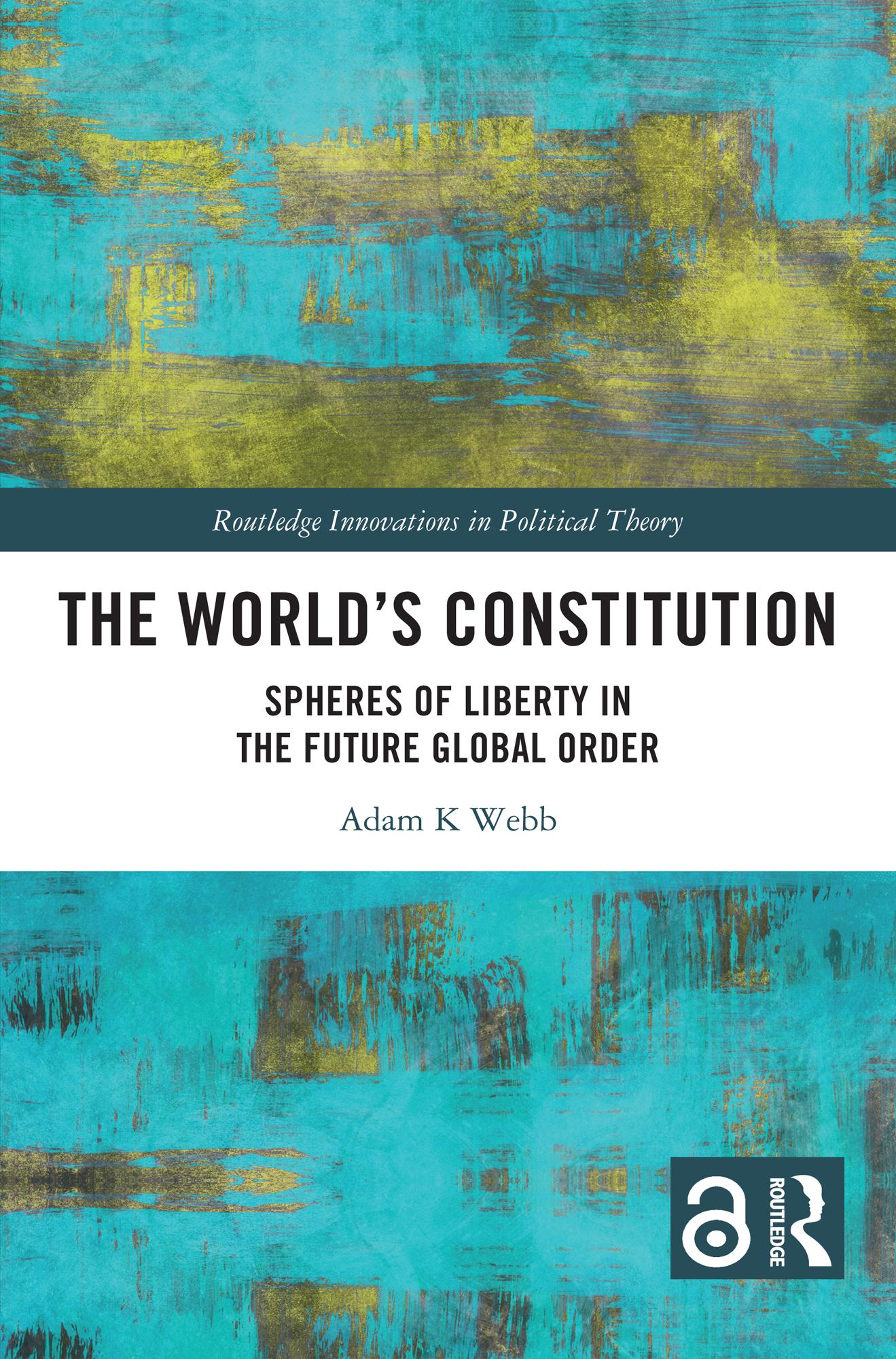
Global governance is tightening and foreshadows that world state formation will become a live political issue in this century. Some observers treat it as inevitable amid the urgency of global issues. They foresee a technocratic scaling up of the model of state authority that has prevailed at the national level for over two hundred years. Many critics and members of the public around the world look askance at that prospect. They rightly fear a moral vacuum of authority disconnected from the world’s traditions, and a concentration of power that would be damaging to liberty or even dystopian in its upshot. Still, they often merely aim to stand athwart the scaling up of political institutions, rather than actively trying to shape an alternative that can seize the global horizon.
The World’s Constitution: Spheres of Liberty in the Future Global Order offers a radically different vision of future world order that could work in a global space while shifting the balance of power from state back to society. It draws on older resources in political thought, both Western and non-Western, to upend mainstream notions of statehood and sovereignty that have been taken for granted for too long in the modern era. It offers an original ‘sphere pluralist’ framework that can reconcile liberty, tradition, and cosmopolitanism. As a book rooted in the past but mindful of future constitutional and policy challenges, it bridges ideas and real-world implications, with insights that cut across a wide range of topics from migration and social welfare to personal law systems and channels of representation. It opens an exciting debate about global constitutional futures that is likely to become more salient over the next couple of generations.
The Open Access version of this book, available at http://www.taylorfrancis.com, has been made available under a Creative Commons Attribution-Non Commercial-No Derivatives (CC-BY-NC-ND) 4.0 license.
Before Memmo my notes were scattered across PDFs. Now a workspace pulls everything into one place — I see exactly what's still left to study.
Memmo's summaries are gold before exams. I don't have to re-read 800 pages two weeks before — just the important parts.
The AI chat has saved me the night before an exam more than once. I just keep asking until I get it — no waiting on a study group to reply.
The quizzes hit exactly what I need to know. Memmo tracks what I get stuck on — so I only practice what's worth it.
Flashcards with spaced repetition are magic. Memmo knows when I'm about to forget something and brings it back.
The AI podcasts are my favorite. I listen on my way to school and get a recap without sitting at a computer.

Handbok i kvalitativa metoder
281 kr

Hållbar utveckling: en introduktion för ingenjörer och andra problemlösare
334 kr

Brymans Samhällsvetenskapliga metoder
390 kr

Projektledning
491 kr

Den orättvisa hälsan: om socioekonomiska skillnader i hälsa och livslängd
326 kr

Organizational Leadership
429 kr

Vetenskapsteori för nybörjare
196 kr

På väg mot läraryrket
172 kr

Det sociala livet i skolan: Socialpsykologiska perspektiv
253 kr

Betygsättningens didaktik
151 kr

Personality
402 kr

Studying Leadership
404 kr

Managing Innovation
477 kr

Introduktion till samhällsvetenskaplig metod
347 kr

The Psychology of Sex and Gender
698 kr

Evidens och kunskap för socialt arbete
207 kr

Introduction to Leadership
605 kr