
Before Memmo my notes were scattered across PDFs. Now a workspace pulls everything into one place — I see exactly what's still left to study.
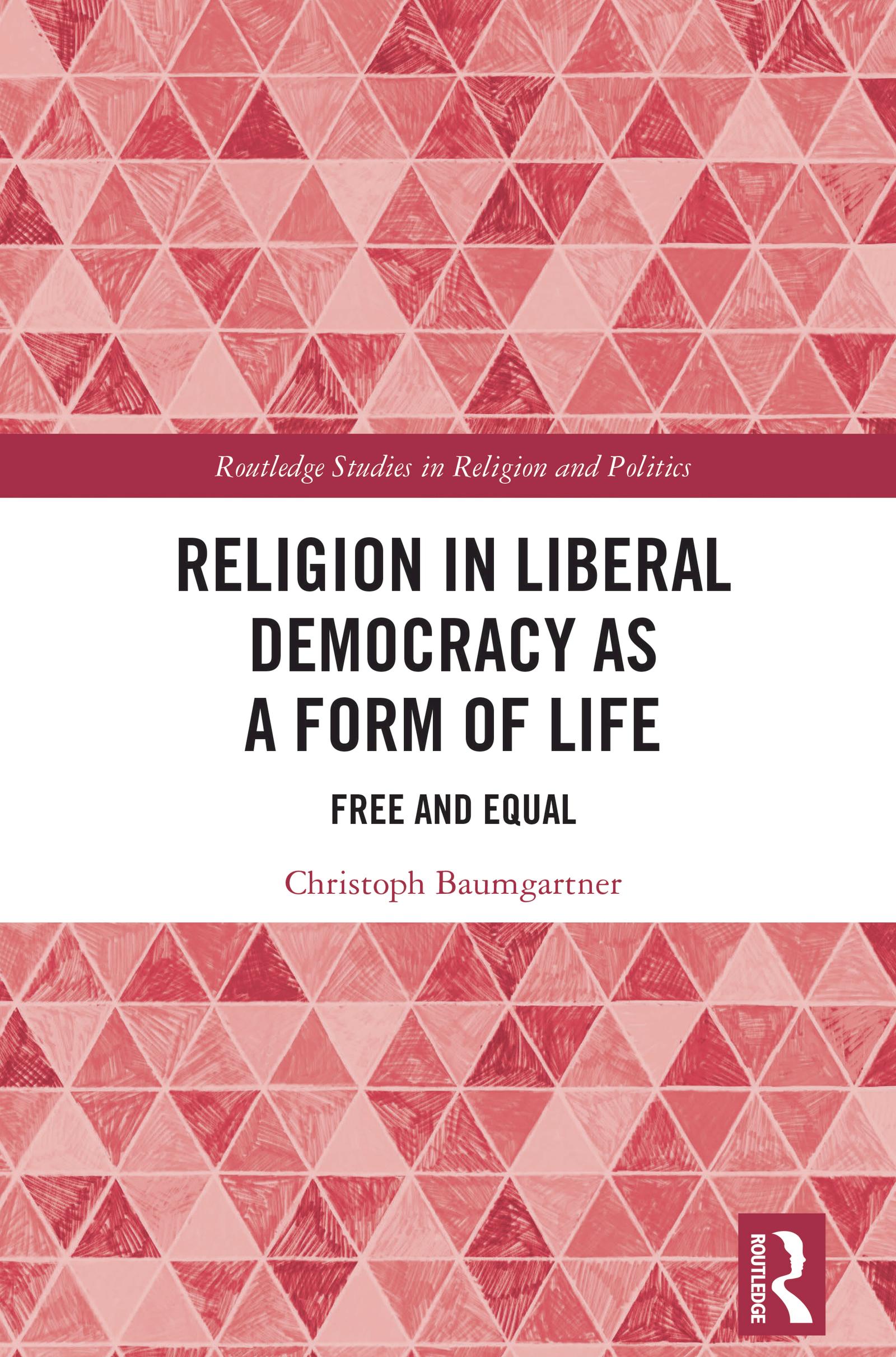
Religion in Liberal Democracy as a Form of Life advances a theory to deal with the challenges connected to the liberal democratic ideal that all people are free to codetermine the future of their society and equally entitled to their religion and beliefs, given the historical bias towards Christianity in politics and culture within many European societies.
Religious diversity and social and political participation are in fact fiercely contested issues. Critical scholars from philosophy and cultural theory contest that liberal political theories of freedom of religion can adequately deal with issues connected to an increasingly diversified and secularized religious field in historically Christian societies. Consequently, they claim that politics based on such theories cannot deliver on the promise to ensure conditions that allow all members of society equal religious freedom and political participation. By outlining historical developments, and by closely examining case studies of recent controversies about religious diversity in Germany and the Netherlands, this book identifies shortcomings of the currently predominant liberal account of freedom of religion or belief. Based on this analysis, the author proposes a more complex theory of liberal democracy as a form of life, with religion and religious freedom as components of it. This takes into account that informal norms, social structures, and predominant notions of belonging can function as powerful obstacles to freedom and equality, even if formal legal and political institutions prohibit discrimination based on religion. Construing liberal democracy as a “form of life”—that is, as a set of social practices, attitudes, and their institutional manifestations and material expressions—shifts the focus of critical analysis from the law to informal structures and components. This provides an understanding of the dynamics of (culturalized) religion in society, which has often been missing in political philosophical theories. The theory proposed in this book provides normative criteria for building liberal democracies that are tolerant with respect to religious differences and solidaric in terms of ensuring conditions that allow all members of society to codetermine, as equals, the future of society, irrespective of their religion or beliefs.
This book will appeal to scholars of political theory, social and political philosophy, religious studies, sociology, and anthropology.
Before Memmo my notes were scattered across PDFs. Now a workspace pulls everything into one place — I see exactly what's still left to study.
Memmo's summaries are gold before exams. I don't have to re-read 800 pages two weeks before — just the important parts.
The AI chat has saved me the night before an exam more than once. I just keep asking until I get it — no waiting on a study group to reply.
The quizzes hit exactly what I need to know. Memmo tracks what I get stuck on — so I only practice what's worth it.
Flashcards with spaced repetition are magic. Memmo knows when I'm about to forget something and brings it back.
The AI podcasts are my favorite. I listen on my way to school and get a recap without sitting at a computer.

Handbok i kvalitativa metoder
281 kr

Hållbar utveckling: en introduktion för ingenjörer och andra problemlösare
334 kr

Brymans Samhällsvetenskapliga metoder
390 kr

Projektledning
491 kr

Den orättvisa hälsan: om socioekonomiska skillnader i hälsa och livslängd
326 kr

Vetenskapsteori för nybörjare
196 kr

Organizational Leadership
429 kr

På väg mot läraryrket
172 kr

Det sociala livet i skolan: Socialpsykologiska perspektiv
253 kr

Betygsättningens didaktik
151 kr

Personality
402 kr

Studying Leadership
404 kr

Managing Innovation
477 kr

Introduktion till samhällsvetenskaplig metod
347 kr

The Psychology of Sex and Gender
698 kr

Evidens och kunskap för socialt arbete
207 kr

Introduction to Leadership
605 kr