
Before Memmo my notes were scattered across PDFs. Now a workspace pulls everything into one place — I see exactly what's still left to study.
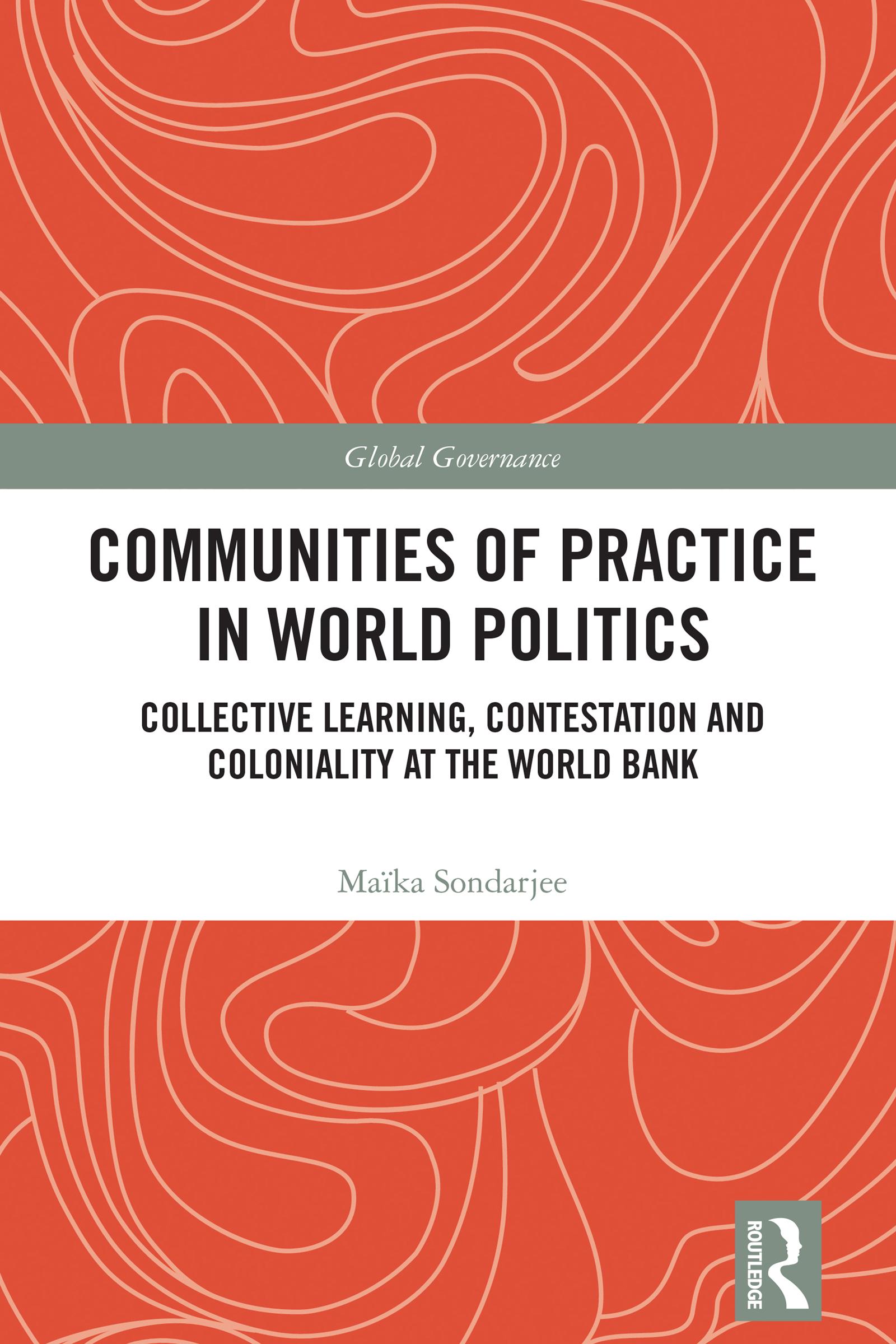
By defining international communities of practice (CoPs) as domains of knowledge, this book investigates the adoption of new international practices via collective learning—that is, the redefinition of what is acceptable and feasible. Explaining how inclusive practices at the World Bank became institutionalized, it shows that while changes in presidents can influence practices of international organizations, shifts in collective thinking are even more important to understand world ordering.
Collective learning happens at the boundaries between CoPs when practitioners interact with others inside or outside the formal walls of an organization—through processes of boundary encounters, boundary brokering, and the use of epistemic boundary objects. Since the 1980s, despite stability in their technocratic political rationality, World Bank employees arranged in CoPs collectively learned that program ownership and consultation in policymaking were more effective than top-down practices. However, while learning that more democratic practices rendered their projects and policies more effective, Bank employees did not fully challenge colonial epistemic hierarchies in North–South relations. This CoP framework draws from, combines, and extends various strands of cutting-edge IR scholarship (i.e., practice-oriented and constructivist IR), management theory (communities of practice), organizational studies (narratives and day-to-day procedures), as well as development and critical studies (feminist and decoloniality approaches).
This book will be of interest not only to scholars and students interested in IR theory, international organizations, development practices, and social theory but also to development workers and anyone interested in global governance.
Before Memmo my notes were scattered across PDFs. Now a workspace pulls everything into one place — I see exactly what's still left to study.
Memmo's summaries are gold before exams. I don't have to re-read 800 pages two weeks before — just the important parts.
The AI chat has saved me the night before an exam more than once. I just keep asking until I get it — no waiting on a study group to reply.
The quizzes hit exactly what I need to know. Memmo tracks what I get stuck on — so I only practice what's worth it.
Flashcards with spaced repetition are magic. Memmo knows when I'm about to forget something and brings it back.
The AI podcasts are my favorite. I listen on my way to school and get a recap without sitting at a computer.

Handbok i kvalitativa metoder
281 kr

Hållbar utveckling: en introduktion för ingenjörer och andra problemlösare
334 kr

Brymans Samhällsvetenskapliga metoder
390 kr

Projektledning
491 kr

Den orättvisa hälsan: om socioekonomiska skillnader i hälsa och livslängd
326 kr

Vetenskapsteori för nybörjare
196 kr

Organizational Leadership
429 kr

På väg mot läraryrket
172 kr

Det sociala livet i skolan: Socialpsykologiska perspektiv
253 kr

Betygsättningens didaktik
151 kr

Personality
402 kr

Studying Leadership
404 kr

Managing Innovation
477 kr

Introduktion till samhällsvetenskaplig metod
347 kr

The Psychology of Sex and Gender
698 kr

Evidens och kunskap för socialt arbete
207 kr

Introduction to Leadership
605 kr