
Before Memmo my notes were scattered across PDFs. Now a workspace pulls everything into one place — I see exactly what's still left to study.
Every day we interact with thousands of consumer products. We not only expect them to perform their functions safely, reliably, and efficiently, but also to do it so seamlessly that we don’t even think about it. However, with the many factors involved in consumer product design, from the application of human factors and ergonomics principles to reducing risks of malfunction and the total life cycle cost, well, the process just seems to get more complex. Edited by well-known and well-respected experts, the two-volumes of Handbook of Human Factors and Ergonomics in Consumer Product Design simplify this process.
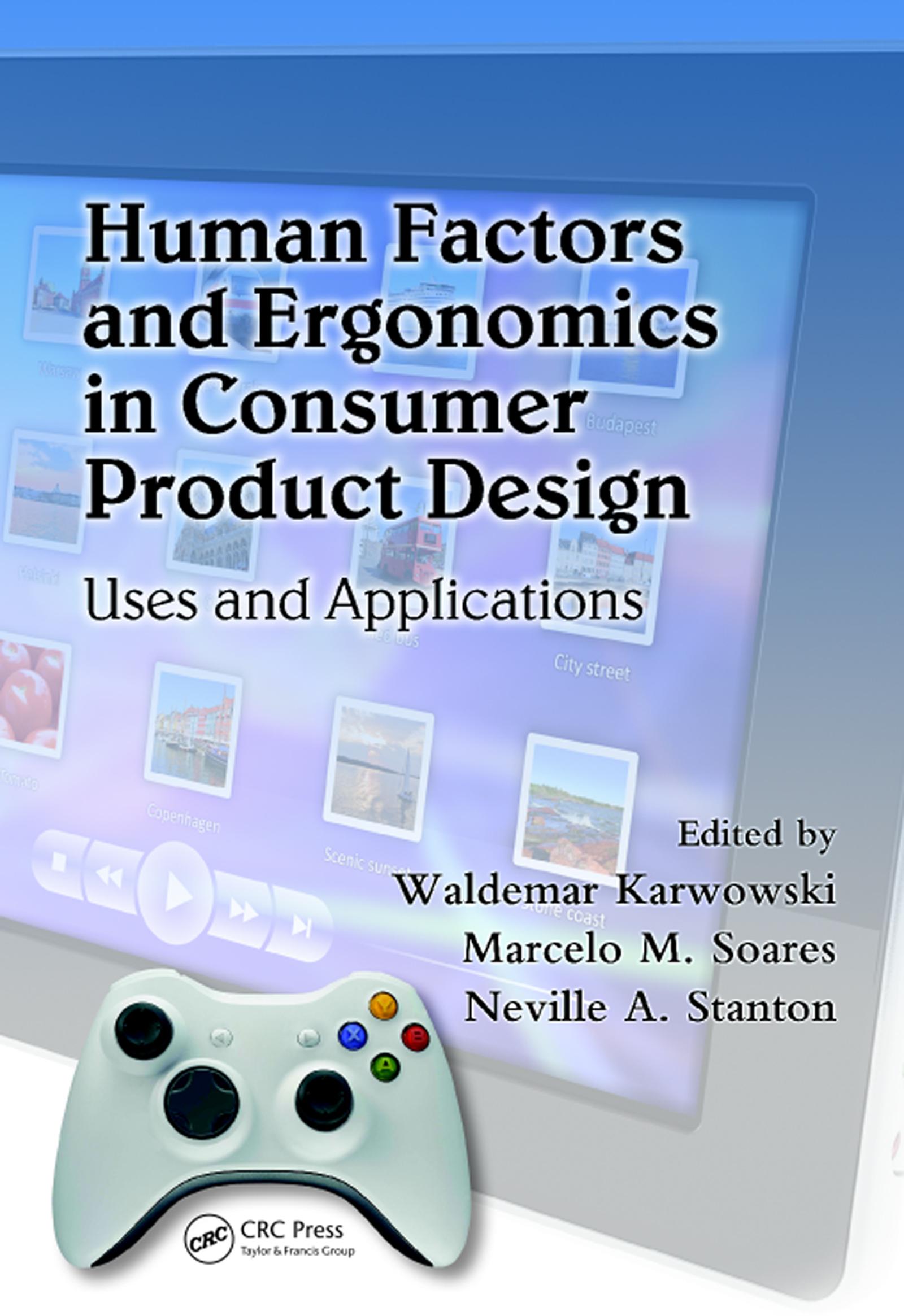
The second volume, Human Factors and Ergonomics in Consumer Product Design: Uses and Applications, discusses challenges and opportunities in the design for product safety and focuses on the critical aspects of human-centered design for usability. The book contains 14 carefully selected case studies that demonstrate application of a variety of innovative approaches that incorporate Human Factor and Ergonomics (HF/E) principles, standards, and best practices of user-centered design, cognitive psychology, participatory macro-ergonomics, and mathematical modeling. These case studies also identify many unique aspects of new product development projects, which have adopted a user-centered design paradigm as a way to attend to user requirements.
The case studies illustrate how incorporating HF/E principles and knowledge in the design of consumer products can improve levels of user satisfaction, efficiency of use, increase comfort, and assure safety under normal use as well as foreseeable misuse of the product. The book provides a comprehensive source of information regarding new methods, techniques, and software applications for consumer product design.
Before Memmo my notes were scattered across PDFs. Now a workspace pulls everything into one place — I see exactly what's still left to study.
Memmo's summaries are gold before exams. I don't have to re-read 800 pages two weeks before — just the important parts.
The AI chat has saved me the night before an exam more than once. I just keep asking until I get it — no waiting on a study group to reply.
The quizzes hit exactly what I need to know. Memmo tracks what I get stuck on — so I only practice what's worth it.
Flashcards with spaced repetition are magic. Memmo knows when I'm about to forget something and brings it back.
The AI podcasts are my favorite. I listen on my way to school and get a recap without sitting at a computer.

Handbok i kvalitativa metoder
281 kr

Hållbar utveckling: en introduktion för ingenjörer och andra problemlösare
334 kr

Brymans Samhällsvetenskapliga metoder
390 kr

Projektledning
491 kr

Den orättvisa hälsan: om socioekonomiska skillnader i hälsa och livslängd
326 kr

Vetenskapsteori för nybörjare
196 kr

Organizational Leadership
429 kr

På väg mot läraryrket
172 kr

Det sociala livet i skolan: Socialpsykologiska perspektiv
253 kr

Betygsättningens didaktik
151 kr

Personality
402 kr

Studying Leadership
404 kr

Managing Innovation
477 kr

Introduktion till samhällsvetenskaplig metod
347 kr

The Psychology of Sex and Gender
698 kr

Evidens och kunskap för socialt arbete
207 kr

Introduction to Leadership
605 kr