
Before Memmo my notes were scattered across PDFs. Now a workspace pulls everything into one place — I see exactly what's still left to study.
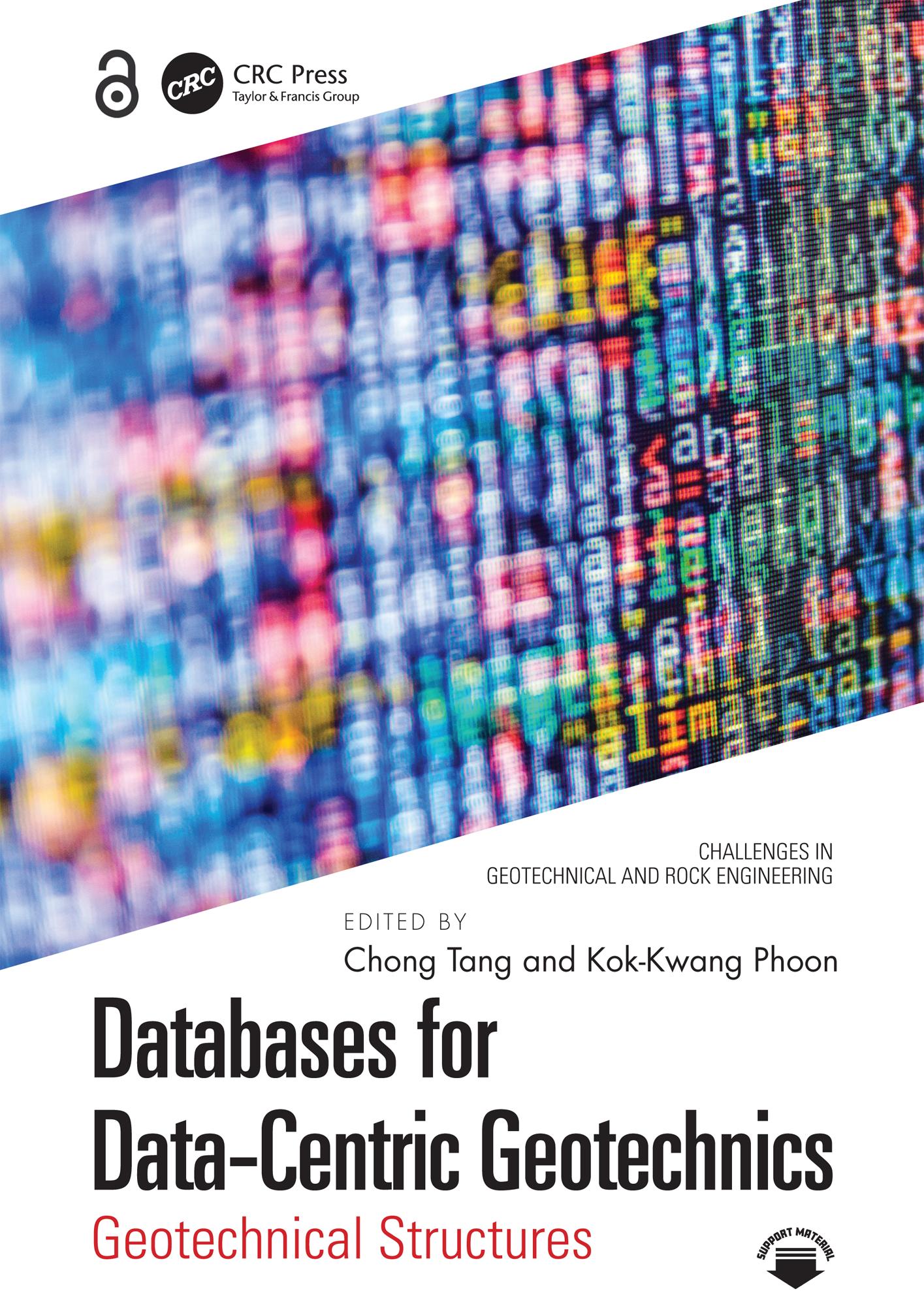
Databases for Data-Centric Geotechnics forms a definitive reference and guide to databases in geotechnical and rock engineering, to enhance decision-making in geotechnical practice using data-driven methods. This second volume pertains to geotechnical structures. The opening chapter presents a substantial survey of performance databases and the effectiveness of our prediction models in matching the field measurements in these databases, based on (1) full-scale field tests, (2) 39 prediction exercises organized as a part of international conferences, and (3) comparison between numerical analyses and in-situ or field measurements conducted by the French LCPC. The focus is on the evaluation of the statistical degree of confidence in predicting various of quantities of interest such as capacity and deformation. The following 18 chapters then present databases on the performance of shallow foundations, spudcan foundations, deep foundations, anchors and pipelines, retaining systems and excavations, and landslides. The databases were compiled from studies undertaken in many countries such as Australia, Belgium, Bolivia, Brazil, Canada, China, Egypt, France, Germany, Hungary, Iran, Ireland, Japan, Kenya, Malaysia, Netherlands, Norway, Poland, Portugal, South Africa, the United Kingdom and the United States.
This volume on geotechnical structures is a companion to the volume on site characterization. Databases for Data-Centric Geotechnics represents the most diverse and comprehensive assembly of database research in a single publication (consisting of two volumes) to date. It follows from Model Uncertainties for Foundation Design, also published by CRC Press, and suits specialist geotechnical engineers, researchers and graduate students.
Chapter 10 of this book is freely available as a downloadable Open Access PDF at http://www.taylorfrancis.com under a Creative Commons [Attribution (CC BY)] 4.0 license.
Before Memmo my notes were scattered across PDFs. Now a workspace pulls everything into one place — I see exactly what's still left to study.
Memmo's summaries are gold before exams. I don't have to re-read 800 pages two weeks before — just the important parts.
The AI chat has saved me the night before an exam more than once. I just keep asking until I get it — no waiting on a study group to reply.
The quizzes hit exactly what I need to know. Memmo tracks what I get stuck on — so I only practice what's worth it.
Flashcards with spaced repetition are magic. Memmo knows when I'm about to forget something and brings it back.
The AI podcasts are my favorite. I listen on my way to school and get a recap without sitting at a computer.

Handbok i kvalitativa metoder
281 kr

Hållbar utveckling: en introduktion för ingenjörer och andra problemlösare
334 kr

Brymans Samhällsvetenskapliga metoder
390 kr

Projektledning
491 kr

Den orättvisa hälsan: om socioekonomiska skillnader i hälsa och livslängd
326 kr

Organizational Leadership
429 kr

Vetenskapsteori för nybörjare
196 kr

På väg mot läraryrket
172 kr

Det sociala livet i skolan: Socialpsykologiska perspektiv
253 kr

Betygsättningens didaktik
151 kr

Personality
402 kr

Studying Leadership
404 kr

Managing Innovation
477 kr

Introduktion till samhällsvetenskaplig metod
347 kr

The Psychology of Sex and Gender
698 kr

Evidens och kunskap för socialt arbete
207 kr

Introduction to Leadership
605 kr