
Before Memmo my notes were scattered across PDFs. Now a workspace pulls everything into one place — I see exactly what's still left to study.
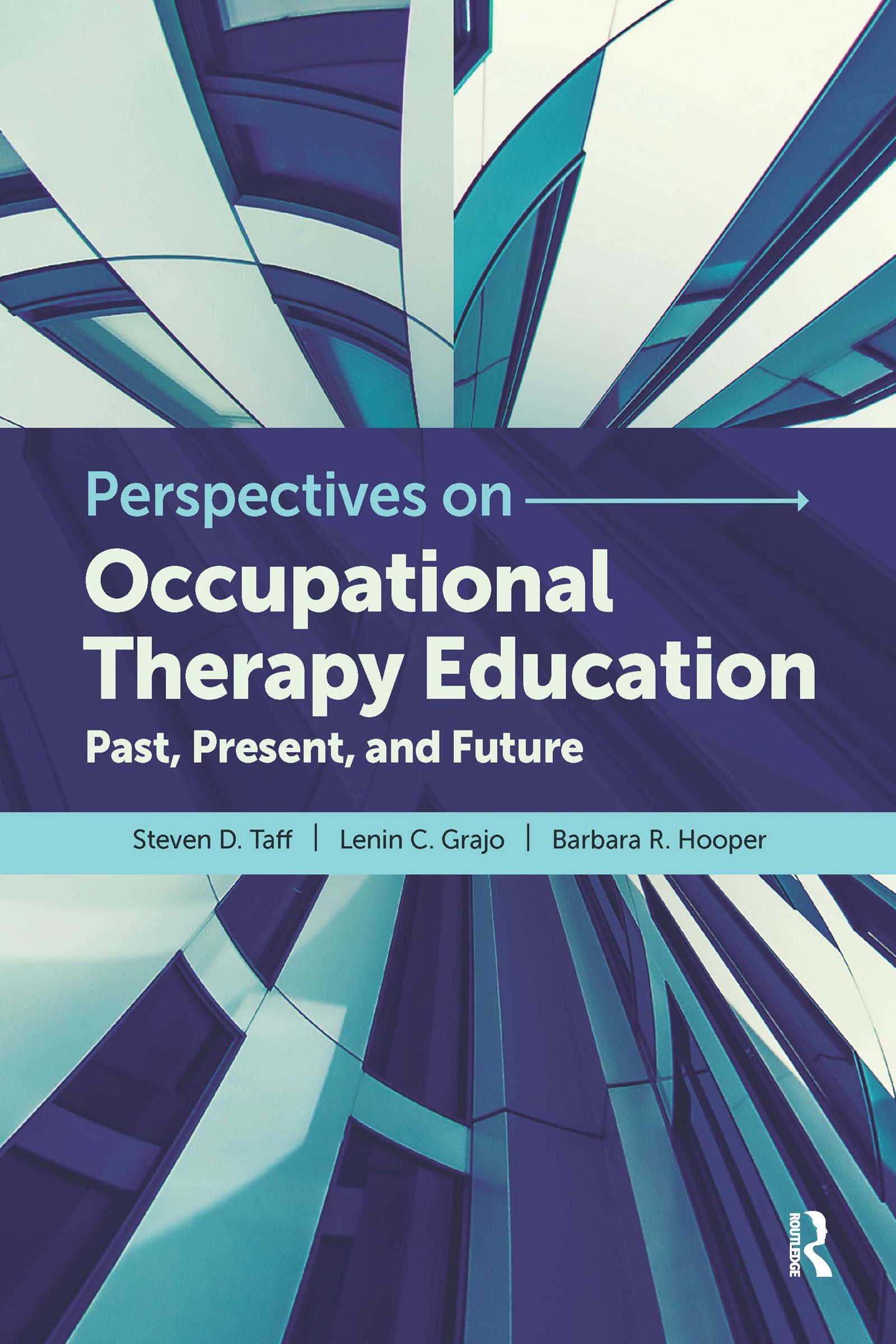
Perspectives on Occupational Therapy Education: Past, Present, and Future outlines a path forward for occupational therapy educators, incorporating the impact of historical context, contemporary issues and trends, and international viewpoints on the development of the profession.
With this mission in mind, Drs. Steven D. Taff, Lenin C. Grajo, and Barbara R. Hooper offer helpful tips, practical tools, and fresh insights to support current and future educators in developing their teaching philosophies and pedagogies. The book is divided into three main sections—past, present, and future—and examines:
• The history of occupational therapy education, including the influence of critical philosophies, their relationship to higher education and healthcare, and the growth of accreditation standards and professional degree programs.
• Current trends and challenges in healthcare and higher education, including bridging the gap between education and practice, the use of competency exams, expanding educational research, and promoting diversity and inclusion among faculty and students.
• International perspectives on the development and future of occupational therapy education from leading scholars in Africa, Australia, Europe, North America, South America, and Southeast Asia, including trends in educational technologies, fieldwork education and requirements, and inter-professional education.
An indispensable resource for educators, Perspectives on Occupational Therapy Education: Past, Present, and Future concludes with an imagining of the occupational therapy education landscape in the year 2050: a future in which occupational therapy educators are continuously responding to ongoing changes in health care policies, adapting to a more diverse and globally connected student population, and articulating the distinct value of occupational therapy in new and emerging areas of practice.
Included with the text are online supplemental materials for faculty use in the classroom.
Before Memmo my notes were scattered across PDFs. Now a workspace pulls everything into one place — I see exactly what's still left to study.
Memmo's summaries are gold before exams. I don't have to re-read 800 pages two weeks before — just the important parts.
The AI chat has saved me the night before an exam more than once. I just keep asking until I get it — no waiting on a study group to reply.
The quizzes hit exactly what I need to know. Memmo tracks what I get stuck on — so I only practice what's worth it.
Flashcards with spaced repetition are magic. Memmo knows when I'm about to forget something and brings it back.
The AI podcasts are my favorite. I listen on my way to school and get a recap without sitting at a computer.

Handbok i kvalitativa metoder
281 kr

Hållbar utveckling: en introduktion för ingenjörer och andra problemlösare
334 kr

Brymans Samhällsvetenskapliga metoder
390 kr

Projektledning
491 kr

Den orättvisa hälsan: om socioekonomiska skillnader i hälsa och livslängd
326 kr

Vetenskapsteori för nybörjare
196 kr

Organizational Leadership
429 kr

På väg mot läraryrket
172 kr

Det sociala livet i skolan: Socialpsykologiska perspektiv
253 kr

Betygsättningens didaktik
151 kr

Personality
402 kr

Studying Leadership
404 kr

Managing Innovation
477 kr

Introduktion till samhällsvetenskaplig metod
347 kr

The Psychology of Sex and Gender
698 kr

Evidens och kunskap för socialt arbete
207 kr

Introduction to Leadership
605 kr