
Before Memmo my notes were scattered across PDFs. Now a workspace pulls everything into one place — I see exactly what's still left to study.
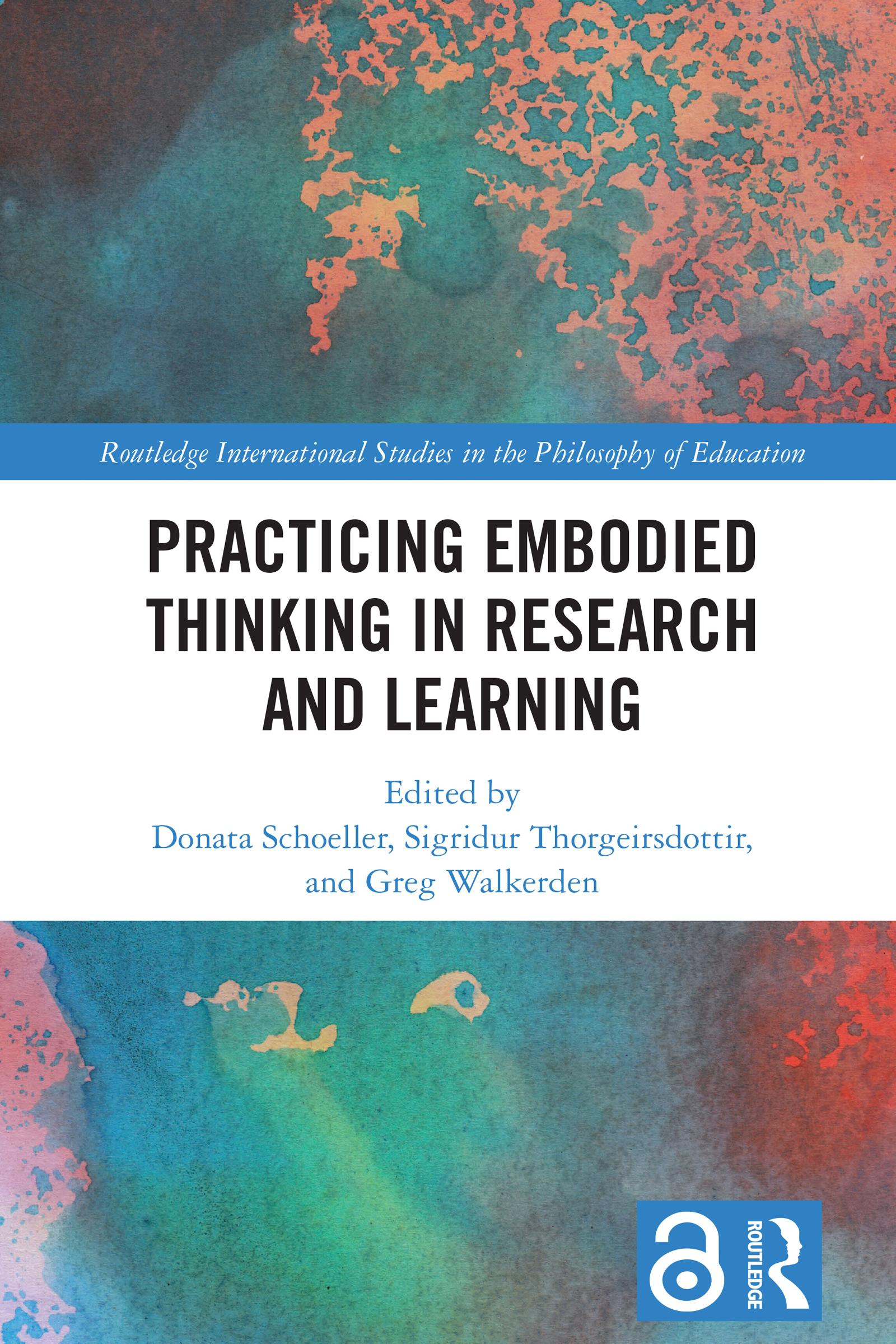
This book delves into the embodied ground of thinking, illuminating the transition from theorising about the embodied mind to actively practising embodied thinking in research, teaching, and learning. The authors speak from immersing themselves in novel methods that engage the felt, experiential dimensions of cognition in inquiry.
The turn to embodiment has sparked the development of new methodologies within phenomenology, pragmatism, and cognitive science. Drawing on Eugene Gendlin’s philosophical work on felt understanding, and Francesco Varela’s enactivist approach, contributors explore innovative embodied thinking methods such as Focusing, Thinking at the Edge, micro-phenomenology, and mindfulness practices. They demonstrate the practical applications of these methods in research, teaching, and learning, highlighting their liberating and empowering potential for researchers and students. In an age marked by information overload and societal polarisation, methods of embodied thinking provide an innovative edge to critique, complementing more traditional approaches to critical thinking with listening skills and reflexive care.
This book shows how heeding the essential, yet often overlooked, embodied grounds of critical and creative thinking can deepen and strengthen each of research, teaching, and learning. It will interest philosophers of education and educators in higher education in particular, as well as researchers and postgraduate students from philosophy, and the cognitive and social sciences, who are curious about how embodied thinking can enrich research, teaching, and learning.
The Open Access version of this book, available at www.taylorfrancis.com, has been made available under a Creative Commons Attribution-Non Commercial-No Derivatives (CC-BY-NC-ND) 4.0 license.
Before Memmo my notes were scattered across PDFs. Now a workspace pulls everything into one place — I see exactly what's still left to study.
Memmo's summaries are gold before exams. I don't have to re-read 800 pages two weeks before — just the important parts.
The AI chat has saved me the night before an exam more than once. I just keep asking until I get it — no waiting on a study group to reply.
The quizzes hit exactly what I need to know. Memmo tracks what I get stuck on — so I only practice what's worth it.
Flashcards with spaced repetition are magic. Memmo knows when I'm about to forget something and brings it back.
The AI podcasts are my favorite. I listen on my way to school and get a recap without sitting at a computer.

Handbok i kvalitativa metoder
281 kr

Hållbar utveckling: en introduktion för ingenjörer och andra problemlösare
334 kr

Brymans Samhällsvetenskapliga metoder
390 kr

Projektledning
491 kr

Den orättvisa hälsan: om socioekonomiska skillnader i hälsa och livslängd
326 kr

Organizational Leadership
429 kr

Vetenskapsteori för nybörjare
196 kr

På väg mot läraryrket
172 kr

Det sociala livet i skolan: Socialpsykologiska perspektiv
253 kr

Betygsättningens didaktik
151 kr

Personality
402 kr

Studying Leadership
404 kr

Managing Innovation
477 kr

Introduktion till samhällsvetenskaplig metod
347 kr

The Psychology of Sex and Gender
698 kr

Evidens och kunskap för socialt arbete
207 kr

Introduction to Leadership
605 kr