
Before Memmo my notes were scattered across PDFs. Now a workspace pulls everything into one place — I see exactly what's still left to study.
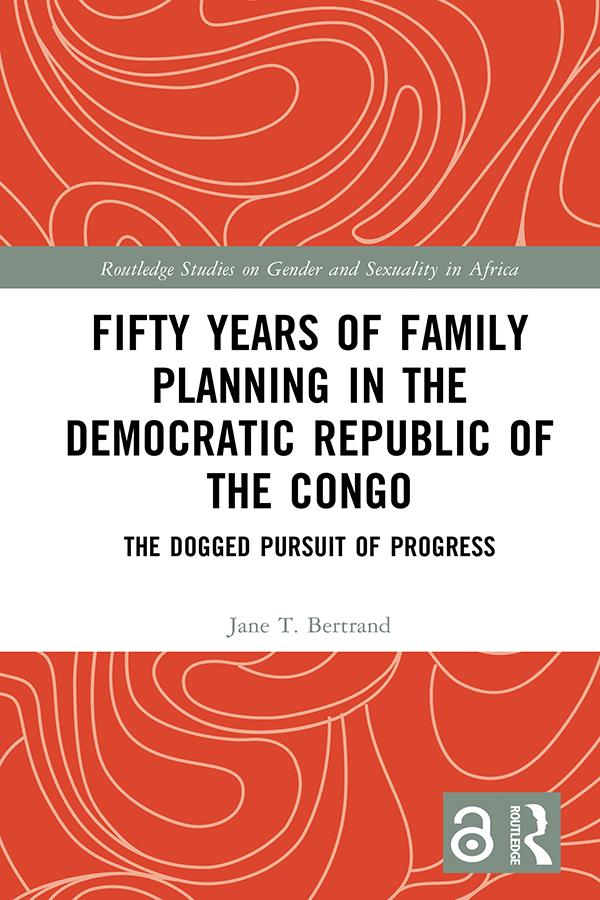
This book chronicles five decades of struggle to introduce family planning into one of the largest, most complex countries in sub-Saharan Africa: the Democratic Republic of the Congo (DRC).
Interweaving details of major political, social, and economic events into the history of family planning in DRC (formerly Zaïre), the book analyses the achievements and setbacks of five decades of programmatic work. President Mobutu’s 1972 discourse on Naissances Désirables (desirable births) opened the door to organized family planning programs, which gained considerable momentum in the 1980s despite societal norms favoring large families. Two pillages and armed conflict paralyzed development work during the decade of the 1990s, and family planning was one of multiple public health programs that struggled to regain lost ground in the 2000s. With new donor funding and implementing agencies, the 2010s witnessed rapid programmatic expansion and improved strategies. By 2018, family planning was operating as a well-oiled machine. But progress is fragile. The book ends by tracing the deleterious effects of the colonial period to contemporary programming and individual contraceptive use. It asks hard questions about donor financing. And it details the six conditions needed to accelerate family planning progress in the DRC, in pursuit of providing millions of Congolese women and men with the means of controlling their own fertility.
The book will be of interest to development and public health researchers and practitioners, as well as to historians of the Democratic Republic of the Congo.
The Open Access version of this book, available at http://www.taylorfrancis.com, has been made available under a Creative Commons Attribution-Non (CC-BY) 4.0 license.
Before Memmo my notes were scattered across PDFs. Now a workspace pulls everything into one place — I see exactly what's still left to study.
Memmo's summaries are gold before exams. I don't have to re-read 800 pages two weeks before — just the important parts.
The AI chat has saved me the night before an exam more than once. I just keep asking until I get it — no waiting on a study group to reply.
The quizzes hit exactly what I need to know. Memmo tracks what I get stuck on — so I only practice what's worth it.
Flashcards with spaced repetition are magic. Memmo knows when I'm about to forget something and brings it back.
The AI podcasts are my favorite. I listen on my way to school and get a recap without sitting at a computer.

Handbok i kvalitativa metoder
281 kr

Hållbar utveckling: en introduktion för ingenjörer och andra problemlösare
334 kr

Brymans Samhällsvetenskapliga metoder
390 kr

Projektledning
491 kr

Den orättvisa hälsan: om socioekonomiska skillnader i hälsa och livslängd
326 kr

Vetenskapsteori för nybörjare
196 kr

Organizational Leadership
429 kr

På väg mot läraryrket
172 kr

Det sociala livet i skolan: Socialpsykologiska perspektiv
253 kr

Betygsättningens didaktik
151 kr

Personality
402 kr

Studying Leadership
404 kr

Managing Innovation
477 kr

Introduktion till samhällsvetenskaplig metod
347 kr

The Psychology of Sex and Gender
698 kr

Evidens och kunskap för socialt arbete
207 kr

Introduction to Leadership
605 kr