
Before Memmo my notes were scattered across PDFs. Now a workspace pulls everything into one place — I see exactly what's still left to study.
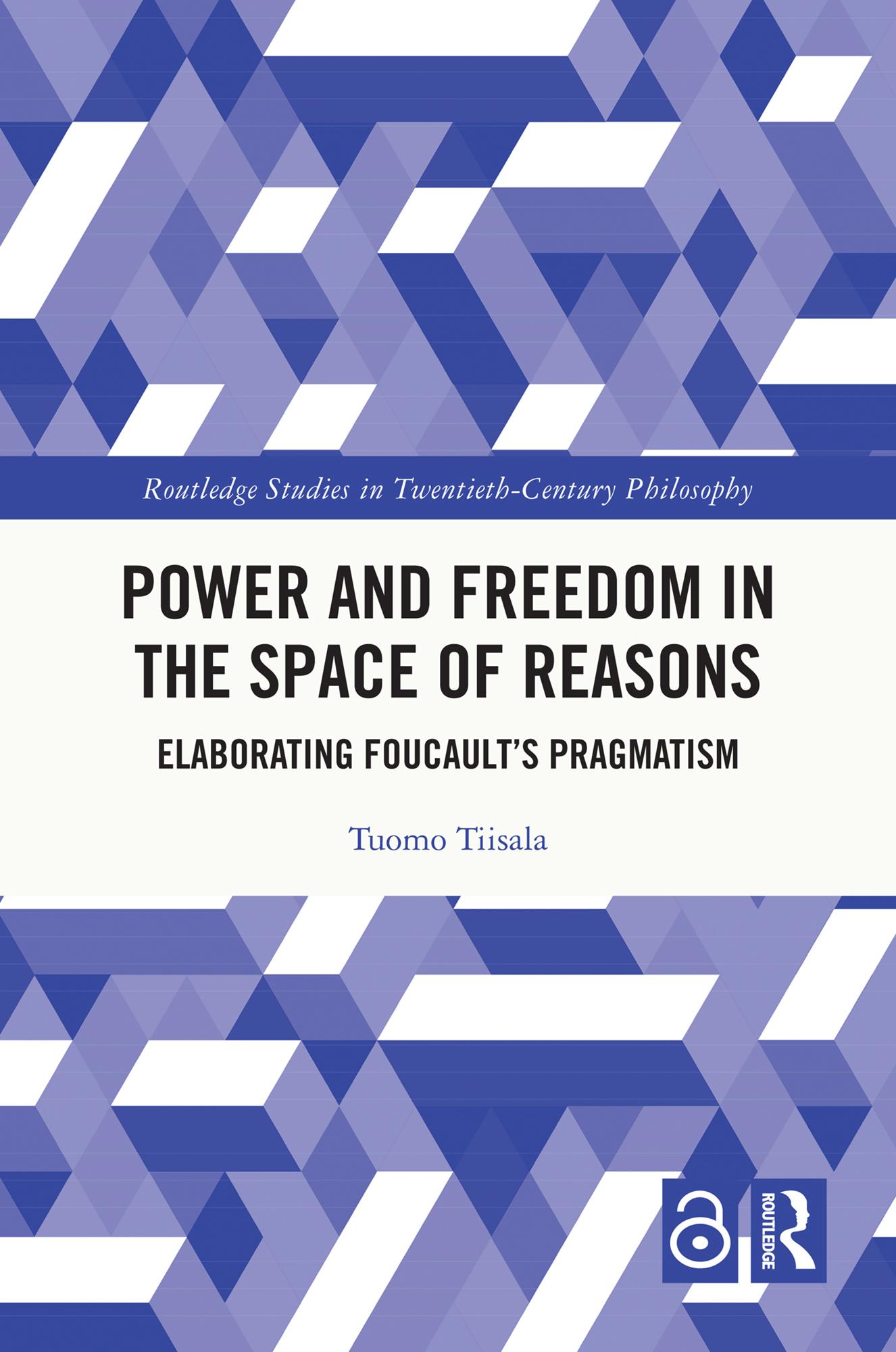
This book argues that the received view of the distinction between freedom and power must be rejected because it rests on an untenable account of the discursive cognition that endows individuals with the capacity for autonomy and self-governed rationality.
In liberal and Kantian approaches alike, the autonomous subject is a self-standing starting point whose freedom is constrained by relations of power only contingently because they are external to the subject’s constitution. Thus, the received view defines the distinction between freedom and power as a dichotomy. Michel Foucault is arguably the most important critic of that dichotomy. However, it is widely agreed that Foucault falls short of justifying the alternative view he develops, where power and freedom are essentially entangled instead. The book fills out the gap by investigating the social preconditions of discursive cognition. Drawing on pragmatist-inferentialist resources from the philosophy of language (Wittgenstein, Sellars, and Brandom), it presents a new interpretation of Foucault’s philosophy that is unified by his overlooked idea of “the archaeology of knowledge.” As a result, the book not only explains why and how power and freedom must be entangled but also what it means ethically to pursue and gain autonomy with respect to one’s own understanding.
Power and Freedom in the Space of Reasons will appeal to scholars and advanced students working in social and political philosophy, critical theory, ethics, philosophy of language, and the history of 20th-century philosophy.
The Open Access version of this book, available at www.taylorfrancis.com, has been made available under a Creative Commons Attribution-Non Commercial (CC-BY-NC) 4.0 license.
Any third party material in this book is not included in the OA Creative Commons license, unless indicated otherwise in a credit line to the material. Please direct any permissions enquiries to the original rightsholder.
This research was funded in whole or in part by the Austrian Science Fund (FWF) [10.55776/COE3]. For open access purposes, the author has applied a CC BY-NC public copyright license to any author-accepted manuscript version arising from this submission.
Published with the support of the Austrian Science Fund (FWF): 10.55776/PUB1157
Before Memmo my notes were scattered across PDFs. Now a workspace pulls everything into one place — I see exactly what's still left to study.
Memmo's summaries are gold before exams. I don't have to re-read 800 pages two weeks before — just the important parts.
The AI chat has saved me the night before an exam more than once. I just keep asking until I get it — no waiting on a study group to reply.
The quizzes hit exactly what I need to know. Memmo tracks what I get stuck on — so I only practice what's worth it.
Flashcards with spaced repetition are magic. Memmo knows when I'm about to forget something and brings it back.
The AI podcasts are my favorite. I listen on my way to school and get a recap without sitting at a computer.

Handbok i kvalitativa metoder
281 kr

Hållbar utveckling: en introduktion för ingenjörer och andra problemlösare
334 kr

Brymans Samhällsvetenskapliga metoder
390 kr

Projektledning
491 kr

Den orättvisa hälsan: om socioekonomiska skillnader i hälsa och livslängd
326 kr

Vetenskapsteori för nybörjare
196 kr

Organizational Leadership
429 kr

På väg mot läraryrket
172 kr

Det sociala livet i skolan: Socialpsykologiska perspektiv
253 kr

Betygsättningens didaktik
151 kr

Personality
402 kr

Studying Leadership
404 kr

Managing Innovation
477 kr

Introduktion till samhällsvetenskaplig metod
347 kr

The Psychology of Sex and Gender
698 kr

Evidens och kunskap för socialt arbete
207 kr

Introduction to Leadership
605 kr