
Before Memmo my notes were scattered across PDFs. Now a workspace pulls everything into one place — I see exactly what's still left to study.
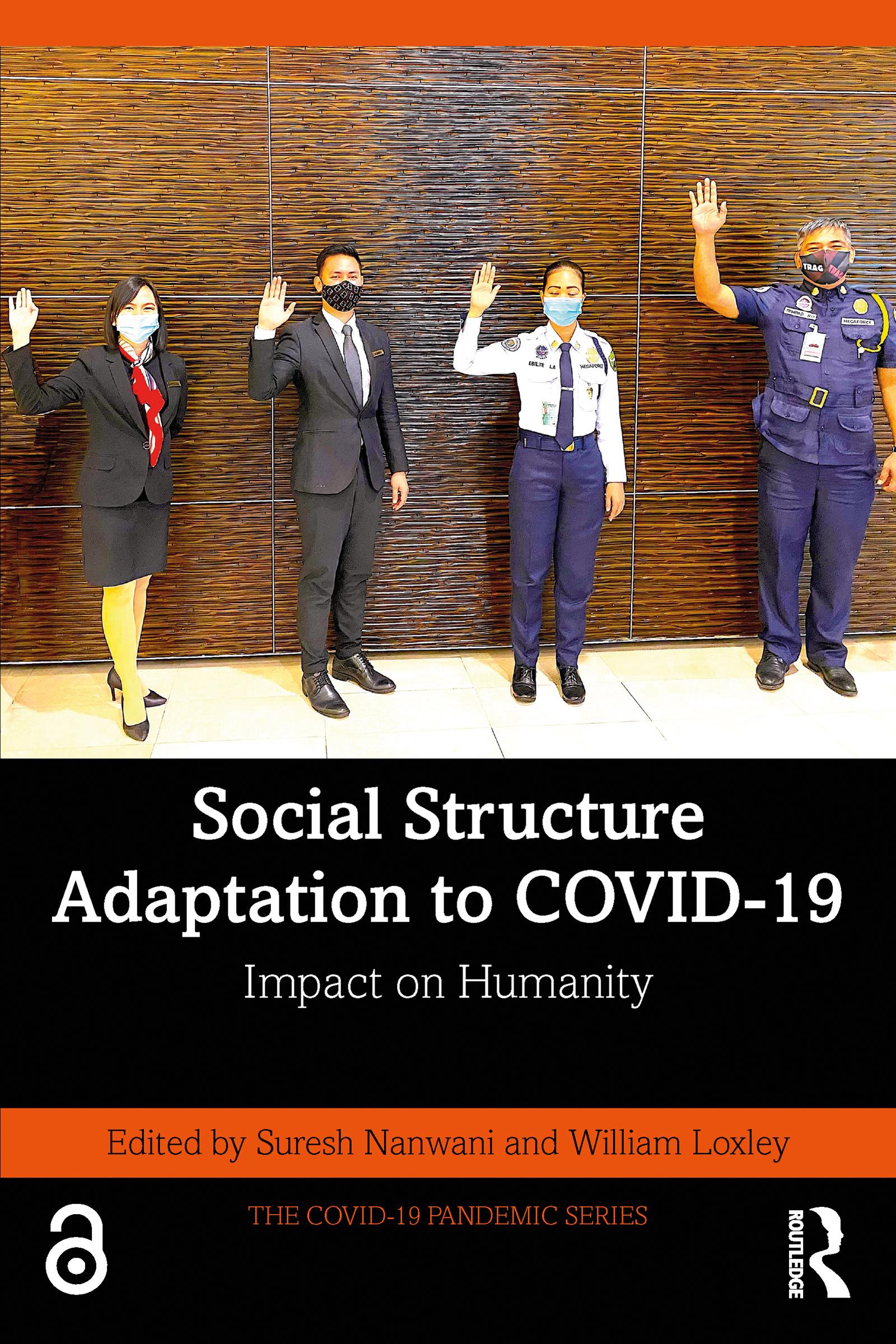
Social Structure Adaptation to COVID-19 offers global, interdisciplinary perspectives that examine how the COVID-19 pandemic has altered the development trajectory of schools, public health, the workforce, and technology adoption. It explores social themes in society, economy, policy, and culture and draws on a social framework to describe key functions of societal adaptation to the pandemic.
Edited by Suresh Nanwani and William Loxley, the volume is grounded in the study of system components and their objectives to improve overall well-being given the ill effects of the COVID-19 pandemic. Chapters explore interconnected social networks and how sectors restructured themselves to stabilize or transform society. International contributors from 20 countries offer case studies that highlight key themes including personal connectivity, societal equality, well-being, big data, and national resilience. They predict how impactful the pandemic might be in reshaping the future and assess how the COVID-19 pandemic has affected school system shutdown, public health collapse, business closures, public policy failure, and technology-driven social media acceleration.
Offering insights into how institutions and sectors work together in times of crisis, and how COVID-19 has restructured social behavior, Social Structure Adaptation to COVID-19 will be valuable reading for scholars and students of sociology, political science, anthropology, comparative international development, psychology, and education. It will also be of interest to policymakers concerned with education, work and organizations, and media and technology.
The Open Access version of this book, available at www.taylorfrancis.com, has been made available under a Creative Commons Attribution-Non Commercial-No Derivatives (CC-BY-NC-ND) 4.0 international license.
Before Memmo my notes were scattered across PDFs. Now a workspace pulls everything into one place — I see exactly what's still left to study.
Memmo's summaries are gold before exams. I don't have to re-read 800 pages two weeks before — just the important parts.
The AI chat has saved me the night before an exam more than once. I just keep asking until I get it — no waiting on a study group to reply.
The quizzes hit exactly what I need to know. Memmo tracks what I get stuck on — so I only practice what's worth it.
Flashcards with spaced repetition are magic. Memmo knows when I'm about to forget something and brings it back.
The AI podcasts are my favorite. I listen on my way to school and get a recap without sitting at a computer.

Handbok i kvalitativa metoder
281 kr

Hållbar utveckling: en introduktion för ingenjörer och andra problemlösare
334 kr

Brymans Samhällsvetenskapliga metoder
390 kr

Projektledning
491 kr

Den orättvisa hälsan: om socioekonomiska skillnader i hälsa och livslängd
326 kr

Organizational Leadership
429 kr

Vetenskapsteori för nybörjare
196 kr

På väg mot läraryrket
172 kr

Det sociala livet i skolan: Socialpsykologiska perspektiv
253 kr

Betygsättningens didaktik
151 kr

Personality
402 kr

Studying Leadership
404 kr

Managing Innovation
477 kr

Introduktion till samhällsvetenskaplig metod
347 kr

The Psychology of Sex and Gender
698 kr

Evidens och kunskap för socialt arbete
207 kr

Introduction to Leadership
605 kr