
Before Memmo my notes were scattered across PDFs. Now a workspace pulls everything into one place — I see exactly what's still left to study.
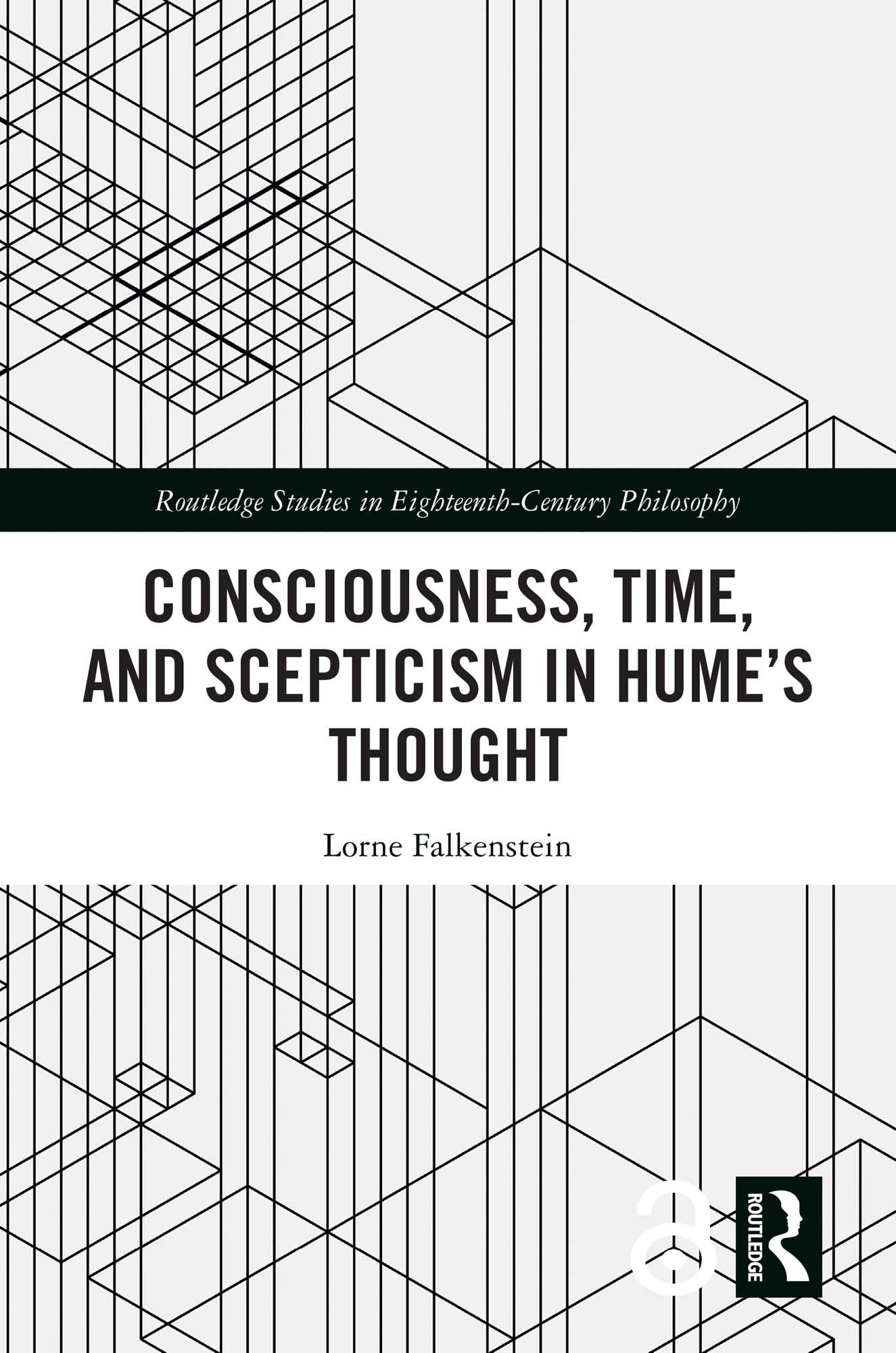
David Hume’s philosophical work presents the reader with a perplexing mix of constructive accounts of empirically guided belief and destructive sceptical arguments against all belief. This book reconciles this conflict by showing that Hume intended his scepticism to be remedial. It immunizes us against the influence of “unphilosophical” causes of belief, determining us to proportion our beliefs to the evidence.
In making this case, this book develops Humean positions on topics Hume did not discuss in detail but that are of interest to contemporary philosophers: consciousness and the unity of consciousness, temporal experience, visual spatial perception, the experience of colour and other qualia, objective experience, and spatially extended minds. It also challenges currently accepted interpretations of Hume’s views on the finite divisibility of space and time, vacuum, the duration of unchanging objects, and identity over time. It deals with criticisms of Hume that were raised by his contemporaries, notably by Thomas Reid, draws attention to earlier seventeenth‑ and eighteenth‑century work that has bearing on the interpretation of Hume’s thought, and compares Hume’s achievements with those of later nineteenth‑century psychologists and philosophers.
Consciousness, Time, and Scepticism in Hume’s Thought will appeal to scholars and advanced students interested in Hume, history of philosophy, and early modern theories of perception, time, and consciousness.
The Introduction and Chapter 1 of this book are freely available as downloadable Open Access PDFs at http://www.taylorfrancis.com under a Creative Commons Attribution-Non Commercial-No Derivatives CC-BY-NC-ND 4.0 license.
Before Memmo my notes were scattered across PDFs. Now a workspace pulls everything into one place — I see exactly what's still left to study.
Memmo's summaries are gold before exams. I don't have to re-read 800 pages two weeks before — just the important parts.
The AI chat has saved me the night before an exam more than once. I just keep asking until I get it — no waiting on a study group to reply.
The quizzes hit exactly what I need to know. Memmo tracks what I get stuck on — so I only practice what's worth it.
Flashcards with spaced repetition are magic. Memmo knows when I'm about to forget something and brings it back.
The AI podcasts are my favorite. I listen on my way to school and get a recap without sitting at a computer.

Handbok i kvalitativa metoder
281 kr

Hållbar utveckling: en introduktion för ingenjörer och andra problemlösare
334 kr

Brymans Samhällsvetenskapliga metoder
390 kr

Projektledning
491 kr

Den orättvisa hälsan: om socioekonomiska skillnader i hälsa och livslängd
326 kr

Vetenskapsteori för nybörjare
196 kr

Organizational Leadership
429 kr

På väg mot läraryrket
172 kr

Det sociala livet i skolan: Socialpsykologiska perspektiv
253 kr

Betygsättningens didaktik
151 kr

Personality
402 kr

Studying Leadership
404 kr

Managing Innovation
477 kr

Introduktion till samhällsvetenskaplig metod
347 kr

The Psychology of Sex and Gender
698 kr

Evidens och kunskap för socialt arbete
207 kr

Introduction to Leadership
605 kr