
Before Memmo my notes were scattered across PDFs. Now a workspace pulls everything into one place — I see exactly what's still left to study.
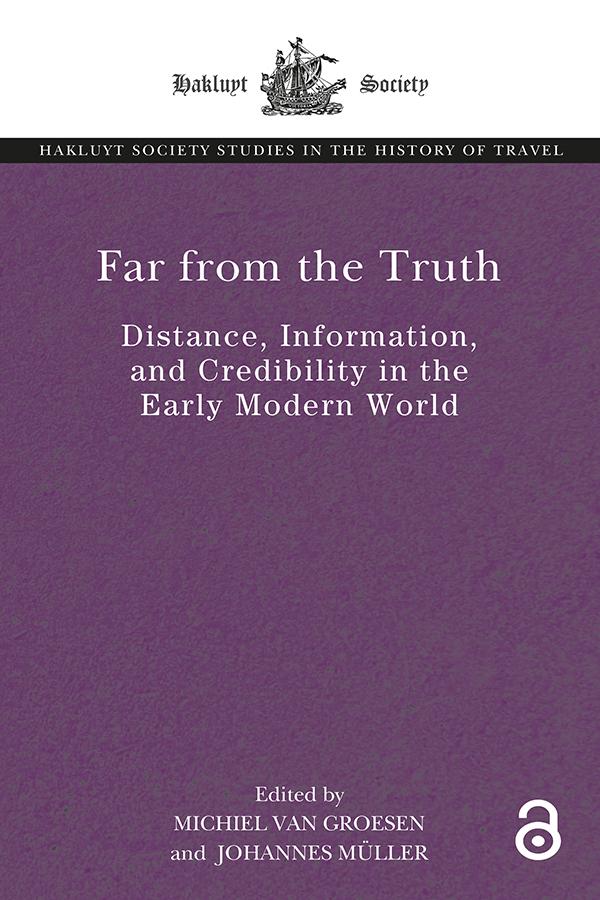
Information and knowledge were essential tools of early modern Europe’s global ambitions. This volume addresses a key concern that emerged as the competition for geopolitical influence increased: how could information from afar be trusted when there was no obvious strategy for verification? How did notions of doubt develop in relation to intercultural encounters? Who were those in the position to use misinformation in their favour, and how did this affect trust? How, in other words, did distance affect credibility, and which intellectual and epistemological strategies did early modern Europe devise to cope with this problem?
The movement of information, and its transformations in the process of gathering, ordering, and disseminating, makes it necessary to employ both a global and a local perspective in order to understand its significance. The rise of print, leading to various new forms of mediation, played a crucial role everywhere, inspiring theories of modernization in which media served as agents of new connections and, eventually, of globalization. Paradoxically, during the entire period between 1500 and 1800, the demise of distance through various strategies of verification coincided with constructions of otherness that emphasized the cultural and geographical difference between Europe and the worlds it encountered.
Ten leading scholars of the early modern world address the relationship between distance, information, and credibility from a variety of perspectives. This volume will be an essential companion to those interested in the history of knowledge and early modern encounters, as well as specialists in the history of empire and print culture.
The Open Access version of this book, available at http://www.taylorfrancis.com, has been made available under a Creative Commons Attribution-Non Commercial-No Derivatives (CC-BY-NC-ND) 4.0 license.
Before Memmo my notes were scattered across PDFs. Now a workspace pulls everything into one place — I see exactly what's still left to study.
Memmo's summaries are gold before exams. I don't have to re-read 800 pages two weeks before — just the important parts.
The AI chat has saved me the night before an exam more than once. I just keep asking until I get it — no waiting on a study group to reply.
The quizzes hit exactly what I need to know. Memmo tracks what I get stuck on — so I only practice what's worth it.
Flashcards with spaced repetition are magic. Memmo knows when I'm about to forget something and brings it back.
The AI podcasts are my favorite. I listen on my way to school and get a recap without sitting at a computer.

Handbok i kvalitativa metoder
281 kr

Hållbar utveckling: en introduktion för ingenjörer och andra problemlösare
334 kr

Brymans Samhällsvetenskapliga metoder
390 kr

Projektledning
491 kr

Den orättvisa hälsan: om socioekonomiska skillnader i hälsa och livslängd
326 kr

Organizational Leadership
429 kr

Vetenskapsteori för nybörjare
196 kr

På väg mot läraryrket
172 kr

Det sociala livet i skolan: Socialpsykologiska perspektiv
253 kr

Betygsättningens didaktik
151 kr

Personality
402 kr

Studying Leadership
404 kr

Managing Innovation
477 kr

Introduktion till samhällsvetenskaplig metod
347 kr

The Psychology of Sex and Gender
698 kr

Evidens och kunskap för socialt arbete
207 kr

Introduction to Leadership
605 kr