
Before Memmo my notes were scattered across PDFs. Now a workspace pulls everything into one place — I see exactly what's still left to study.
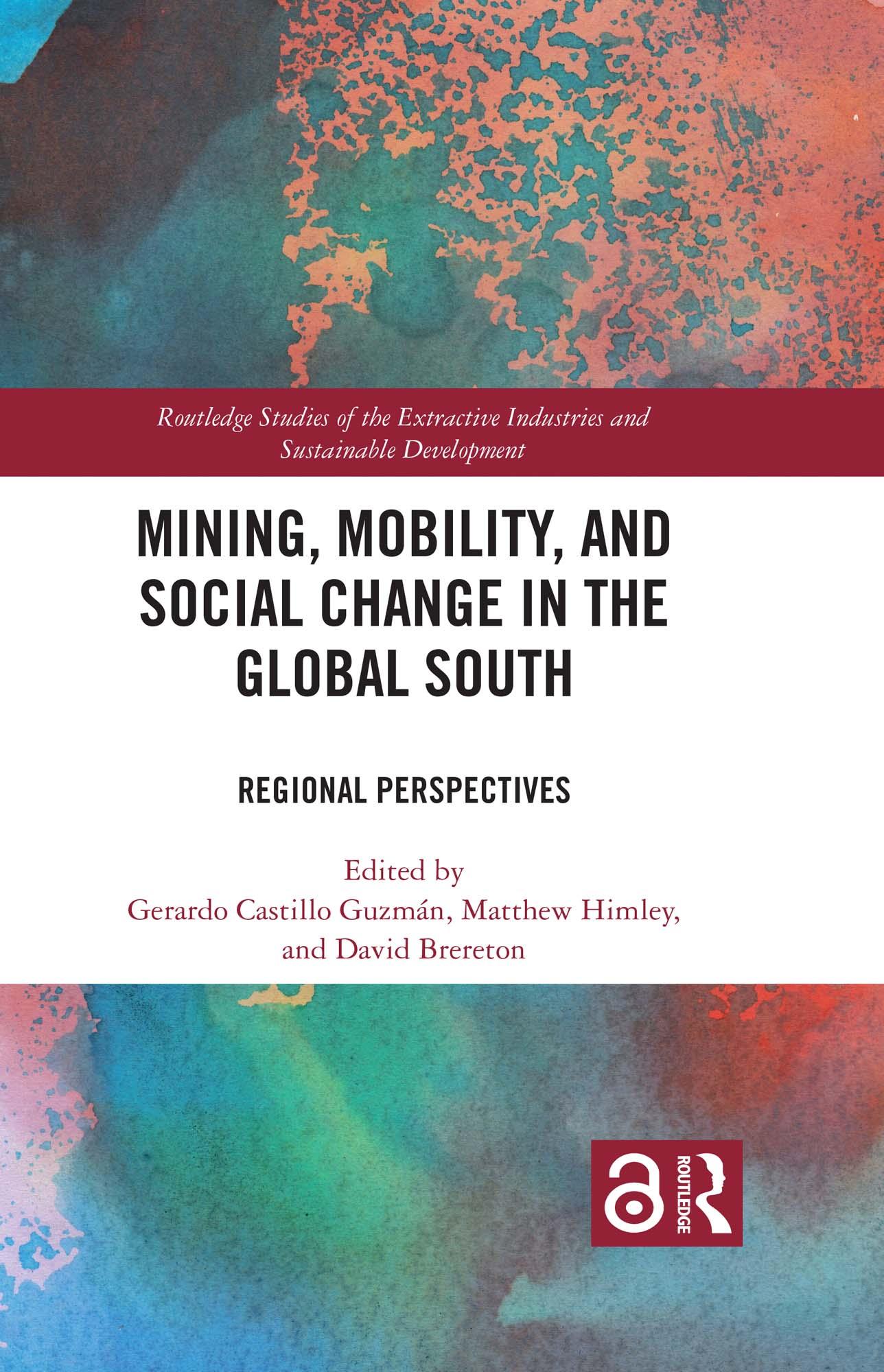
This volume focuses on how, why, under what conditions, and with what effects people move across space in relation to mining, asking how a focus on spatial mobility can aid scholars and policymakers in understanding the complex relation between mining and social change.
This collection centers the concept of mobility to address the diversity of mining-related population movements as well as the agency of people engaged in these movements. This volume opens by introducing both the historical context and conceptual tools for analyzing the mining-mobility nexus, followed by case study chapters focusing on three regions with significant histories of mineral extraction and where mining currently plays an important role in socio-economic life: the Andes, Central and West Africa, and Melanesia. Written by authors with expertise in diverse fields, including anthropology, development studies, geography, and history, case study chapters address areas of both large- and smallscale mining. They explore the historical-geographical factors shaping mining-related mobilities, the meanings people attach to these movements, and the relations between people’s mobility practices and the flows of other things put in motion by mining, including capital, ideas, technologies, and toxic contamination. The result is an important volume that provides fresh insights into the social geographies and spatial politics of extraction.
This book will be of great interest to students and scholars of mining and the extractive industries, spatial politics and geography, mobility and migration, development, and the social and environmental dimensions of natural resources more generally.
Chapter 6 of this book is freely available as a downloadable Open Access PDF at http://www.taylorfrancis.com under a Creative Commons [Attribution-Non Commercial-No Derivatives (CC-BY-NC-ND)] 4.0 license
Before Memmo my notes were scattered across PDFs. Now a workspace pulls everything into one place — I see exactly what's still left to study.
Memmo's summaries are gold before exams. I don't have to re-read 800 pages two weeks before — just the important parts.
The AI chat has saved me the night before an exam more than once. I just keep asking until I get it — no waiting on a study group to reply.
The quizzes hit exactly what I need to know. Memmo tracks what I get stuck on — so I only practice what's worth it.
Flashcards with spaced repetition are magic. Memmo knows when I'm about to forget something and brings it back.
The AI podcasts are my favorite. I listen on my way to school and get a recap without sitting at a computer.

Handbok i kvalitativa metoder
281 kr

Hållbar utveckling: en introduktion för ingenjörer och andra problemlösare
334 kr

Brymans Samhällsvetenskapliga metoder
390 kr

Projektledning
491 kr

Den orättvisa hälsan: om socioekonomiska skillnader i hälsa och livslängd
326 kr

Organizational Leadership
429 kr

Vetenskapsteori för nybörjare
196 kr

På väg mot läraryrket
172 kr

Det sociala livet i skolan: Socialpsykologiska perspektiv
253 kr

Betygsättningens didaktik
151 kr

Personality
402 kr

Studying Leadership
404 kr

Managing Innovation
477 kr

Introduktion till samhällsvetenskaplig metod
347 kr

The Psychology of Sex and Gender
698 kr

Evidens och kunskap för socialt arbete
207 kr

Introduction to Leadership
605 kr